
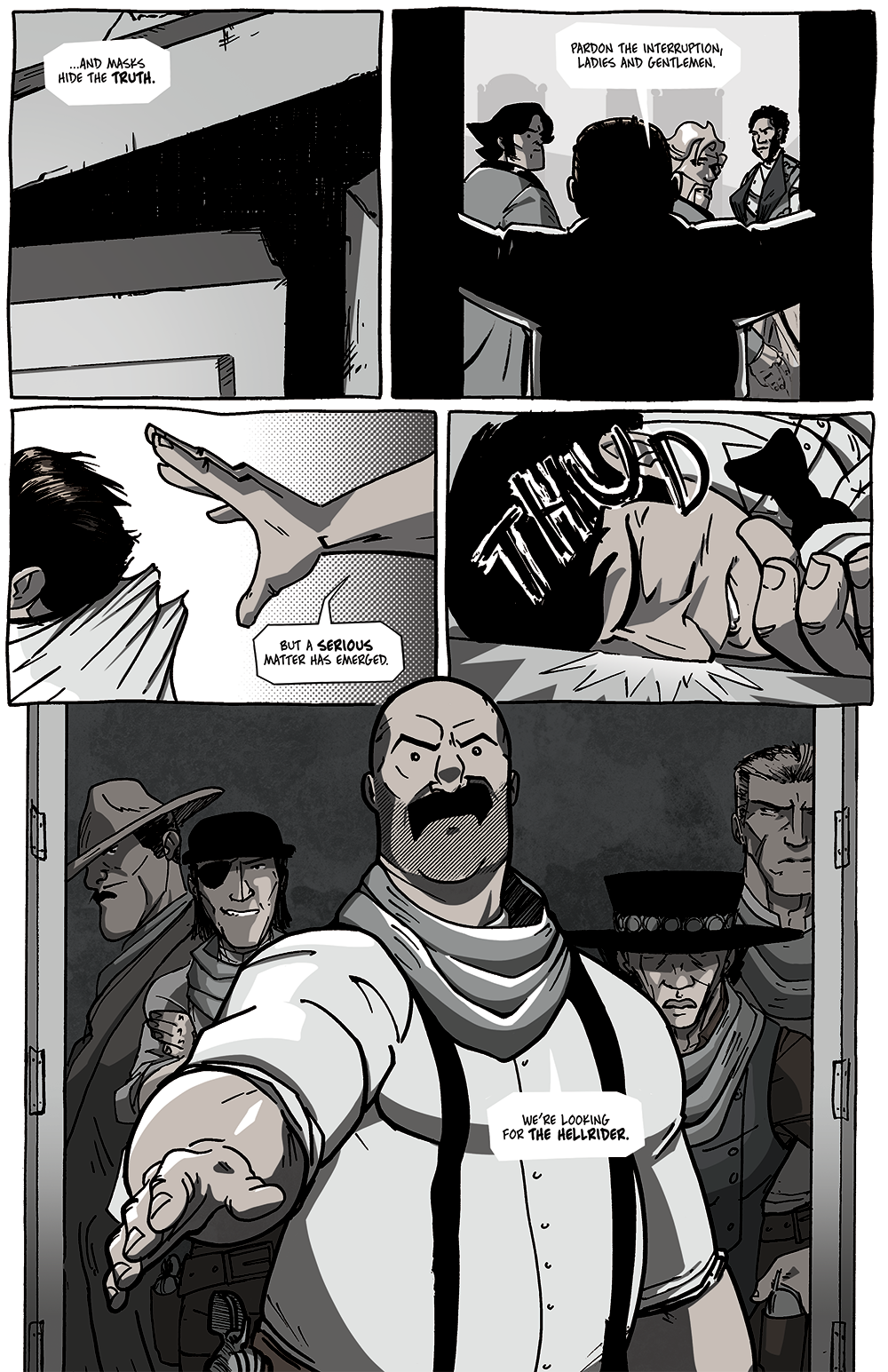

A Serious Matter
I remember thumbnailing this scene in a remote cabin in Humbolt County, a woodsy, coastal empty place at the very northern end of California. It was July and we had run away up there to escape the fireworks with our dog, who has a very hard time with fireworks, and the remote corners of California not only tend to be rather sparsely populated but also tend to disallow fireworks celebrations due to all the trees up there that are known to have the ability to catch fire quite well. The cabin was tiny but comfortable, retrofitted with modern amenities like electricity (which I can’t say has been true for some cabins we have stayed in before), which allowed me to take my thumbnailing station (i.e., the iPad) and continue work on Chapter 6.
Thumbnailing is an interesting part of the process. I would argue its definition has become very loose with how multipurpose and useful technology has become. Originally, thumbnailing was called so because the idea was you would make small sketches of what would become the final page (perhaps, even, the size of a thumbnail?). It was about discovering composition and layout––how did the action flow from one panel to the next, from one page to the next, like a bird’s eye view of the entire story. For some people (like myself) that is a very helpful stage of the process because one doesn’t have to worry about correctness––proportions, perspective, good linework, etc. It was just about putting everything in place.
For some, though, it slows the process; they like to work things out on the page so as to not lose the energy of the sketch, a sentiment I can wholly understand. So, they work it out on the page, which (I would guess) involves a lot of erasing, but it certainly narrows the gap between stages of the process. Others work completely digitally, so the difference between multiple stages––from thumbnailing to penciling to inking and coloring––is minimal since every stage happens in the same place.
For me, as a cartoonist whose process went backward by many people’s estimation (when I started making comics in 2007, I was completely digital and now do much of the work on paper), I like having the discrete stages where thumbnails are a specific document I create so I can use it as a guide when I create the next document (drawing the actual page). There may be a time or, at least, a future project, where a more streamlined process will work better for me, but I’ll take that as it comes. As long as it does two things: 1. allows me to make the best comics I can make and 2. helps me get projects done.
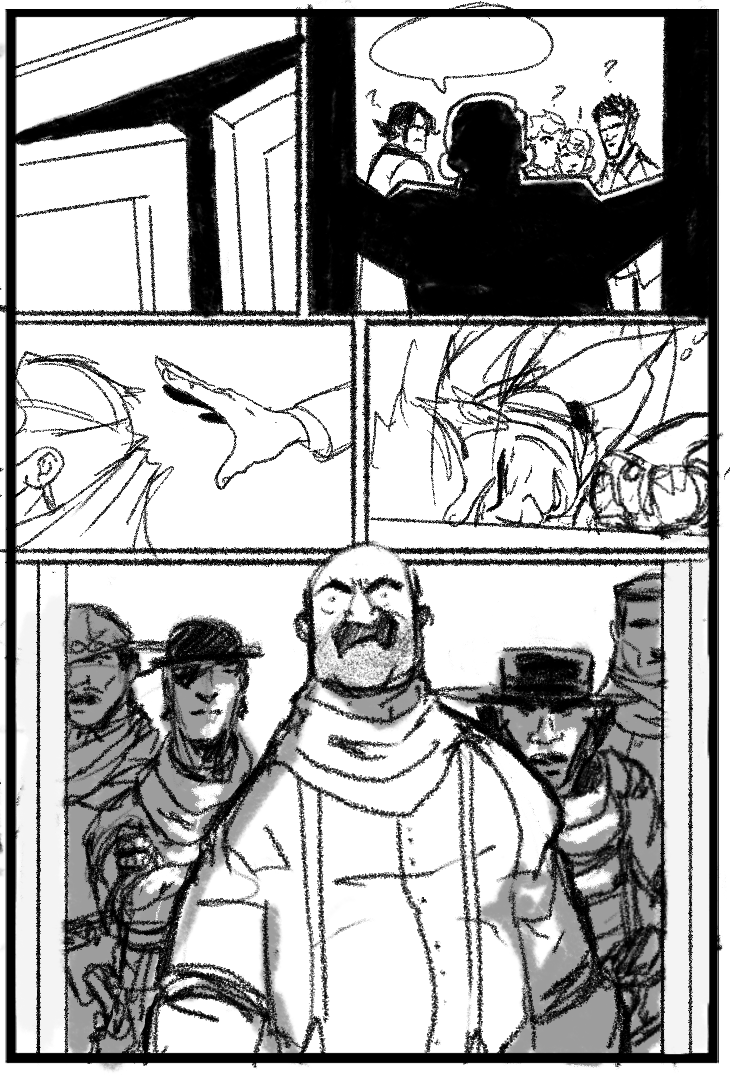
The thumbnail design for this page. Click for larger version.
Discussion ¬