

Future Designs
In a way, each chapter of Long John had a major art lesson that was learned while making it. Chapter 1 was about learning if I could make a comic on my own. Chapter 2 was about learning to keep going. From that point on, the lessons become much more focused and concrete. In chapter 3 I learned about drawing fight scenes. Chapter 4 taught me about drawing interiors. Chapter 5 was about sharpening my skills with perspective. Chapter 6 became a lesson in lighting.
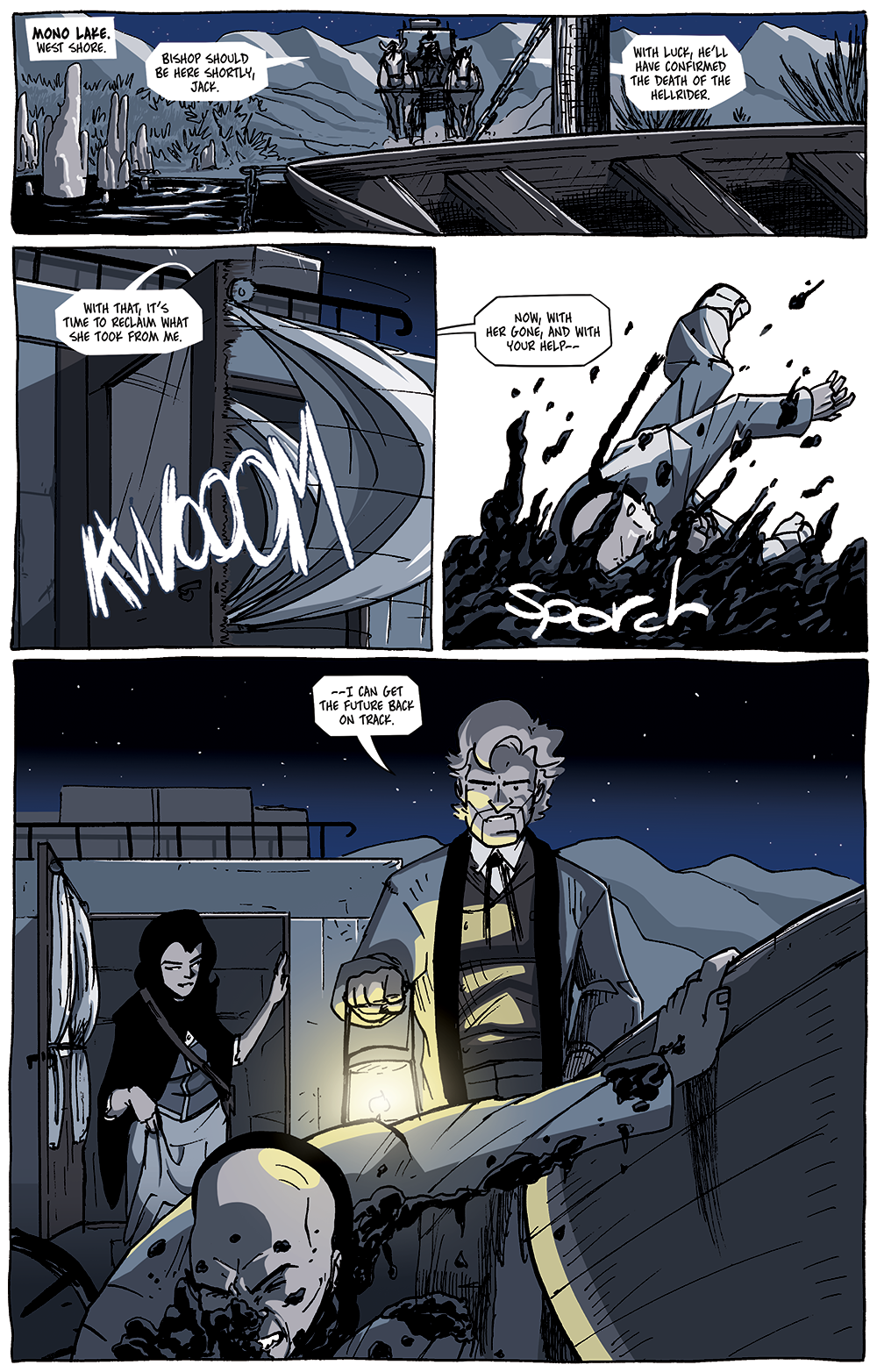
A majority of this chapter takes place at night, and with that comes means for illumination––something I hadn’t really worried about in the chapters leading up to this because most scenes took place under the shine of the sun. Here, though, we have the joy of campfires and lanterns, things that are bright but don’t offer full illumination. It also messed with my limited color range because neither black, beige, gray, or brown really give the effect of a lantern or campfire. White could but it could come across as so glaring to the point of distraction. So, we added yellow to the palette.
That being said, I spent a long time in the previous campfire scene trying to find a highlight technique that looked good that I started panicking. I knew how to use shadows, but light is kind of a different story. After spending hours playing with different ideas, I finally felt comfortable (not completely sold, though) the idea I landed on in panel 2 of this page. How the light hit Long John and, especially, the burned fence post looked really nice and (most importantly) in-style with the rest of the art.
It wasn’t until panel 3 of the next page where it clicked for me. Finding the right approach to lighting faces––the balance between having too much illumination and too little––made it “feel” like the light of a camp fire even if it wasn’t 100% scientifically accurate.
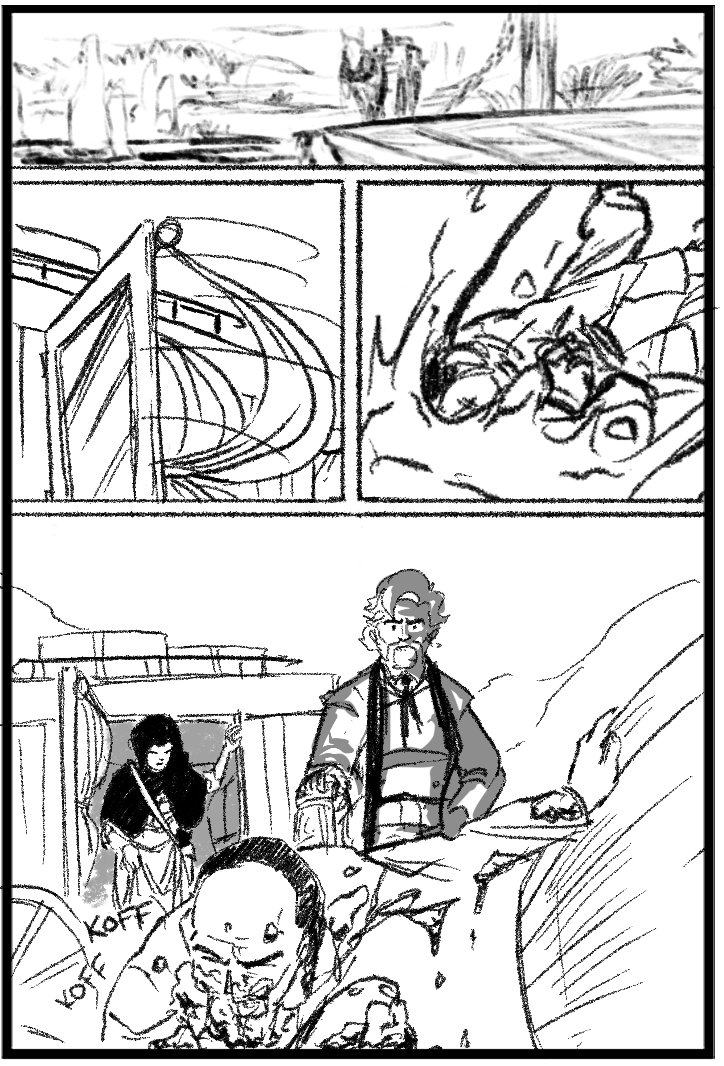
Thumbnail for this page. Click for larger version.
Discussion ¬