
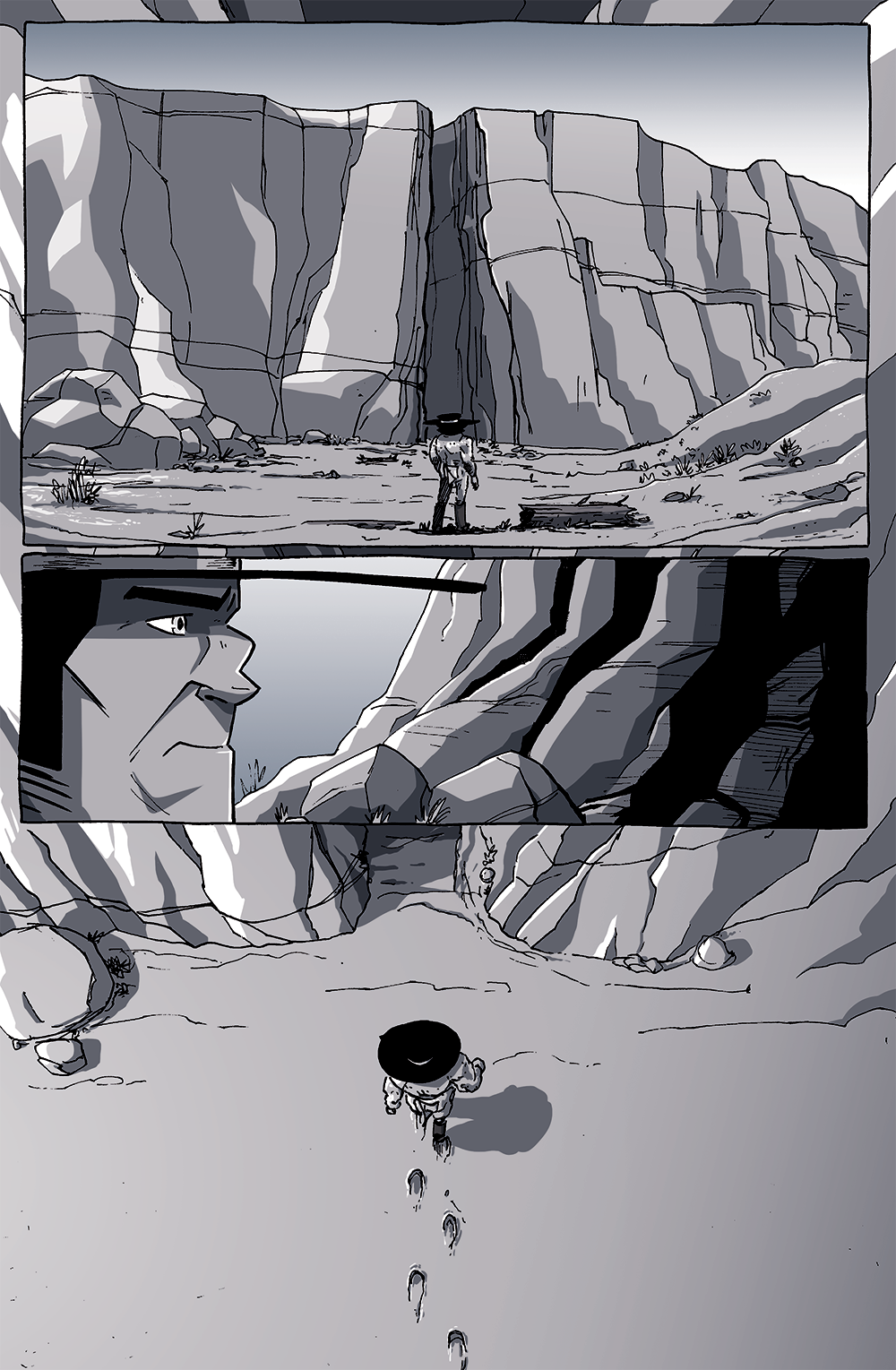

Into the Maze
While I have stated that Long John is done mostly as a love letter to this part of California––the eastern Sierra Nevada mountains––I do take liberties with the history for the sake of telling this story. But there are things I stick to and try to incorporate because it emphasizes the area, things like town names at the time, pulling in stories of what happened in the region and incorporating them, maintaining distances and elevation between places (because elevation is such a huge part of this region––for more information, see the extra content in the back of Volume 5), trying to use era-appropriate clothing designs (why you don’t see many curved brimmed hats––those didn’t really gain popularity until the 20th century) and hardware, etc.
However, I can’t forget that I’m telling Long John’s story and that must come first. Also, it’s a comic and visuals are as malleable as the words that are written and I try to make an engaging comic in every available way while respecting the history and the place as often as I can.
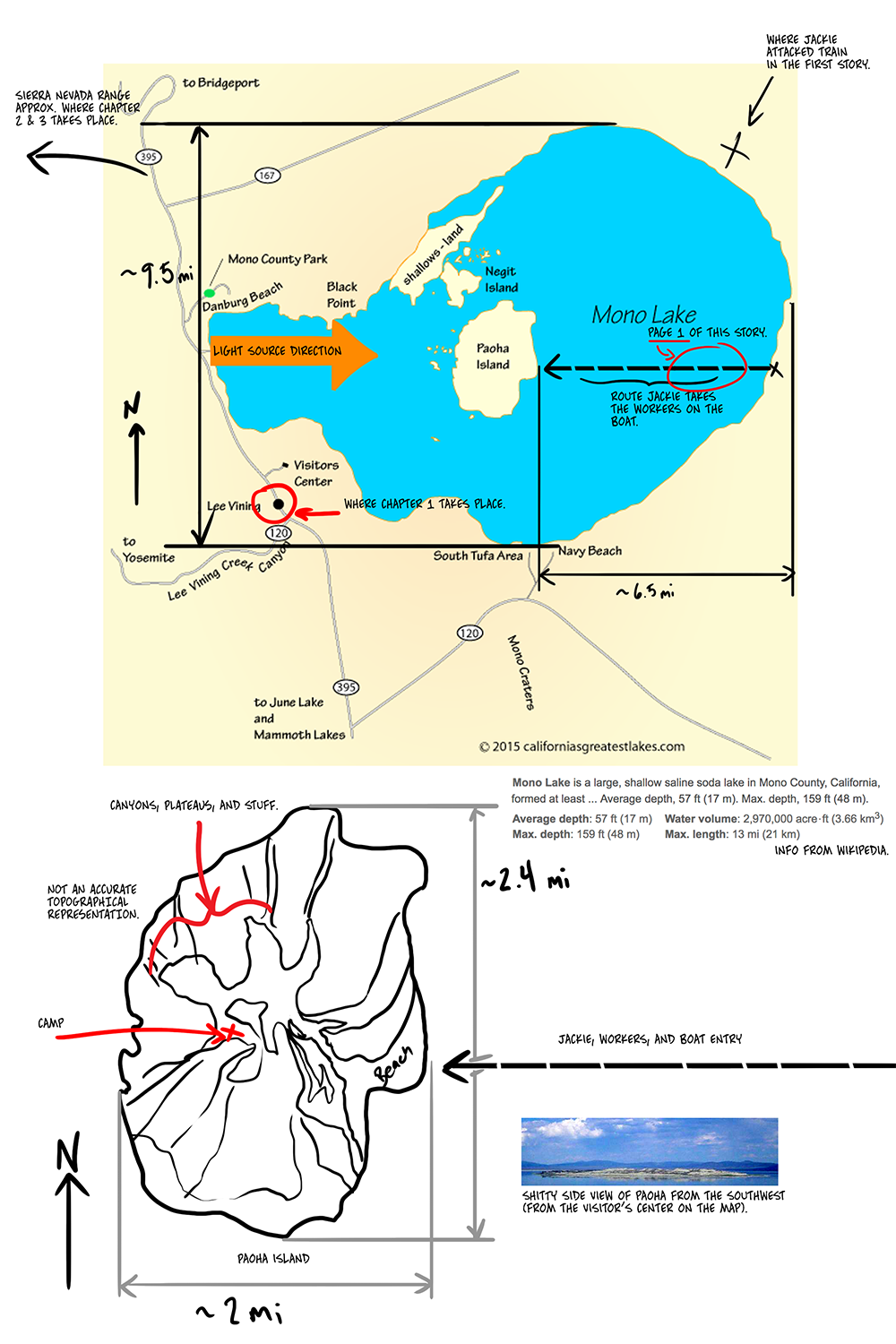
A guide to Paoha Island made as reference for Josh Tobey when he illustrated the Hellrider Jackie story in Volume 4. Click image for a larger version.
I say all of that because I’ve never been to Paoha Island. Obviously, you can see it from the shore. It is described as having peaks of about 200 feet, but generally, it’s pretty flat and arid. It is, however, a big island––about 2 miles long and 3.5 square miles in area. I wish I had gone out and stomped around it a bit, and maybe I still will, but it is a trek to get out there and back. The Paoha Island in this story is a fictional place made to provide a trial and change for the protagonist and it’s the biggest liberty I’ve taken in representing the region. That is especially true for what comes next.
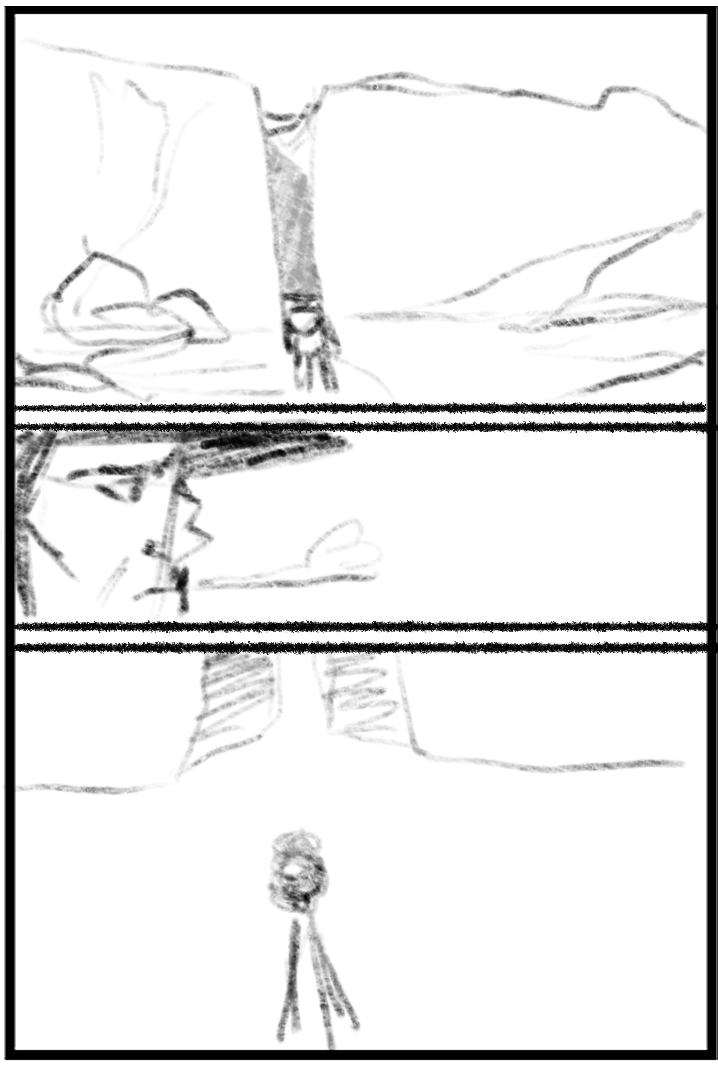
The thumbnail drawing for this page. Click for larger version.
Discussion ¬