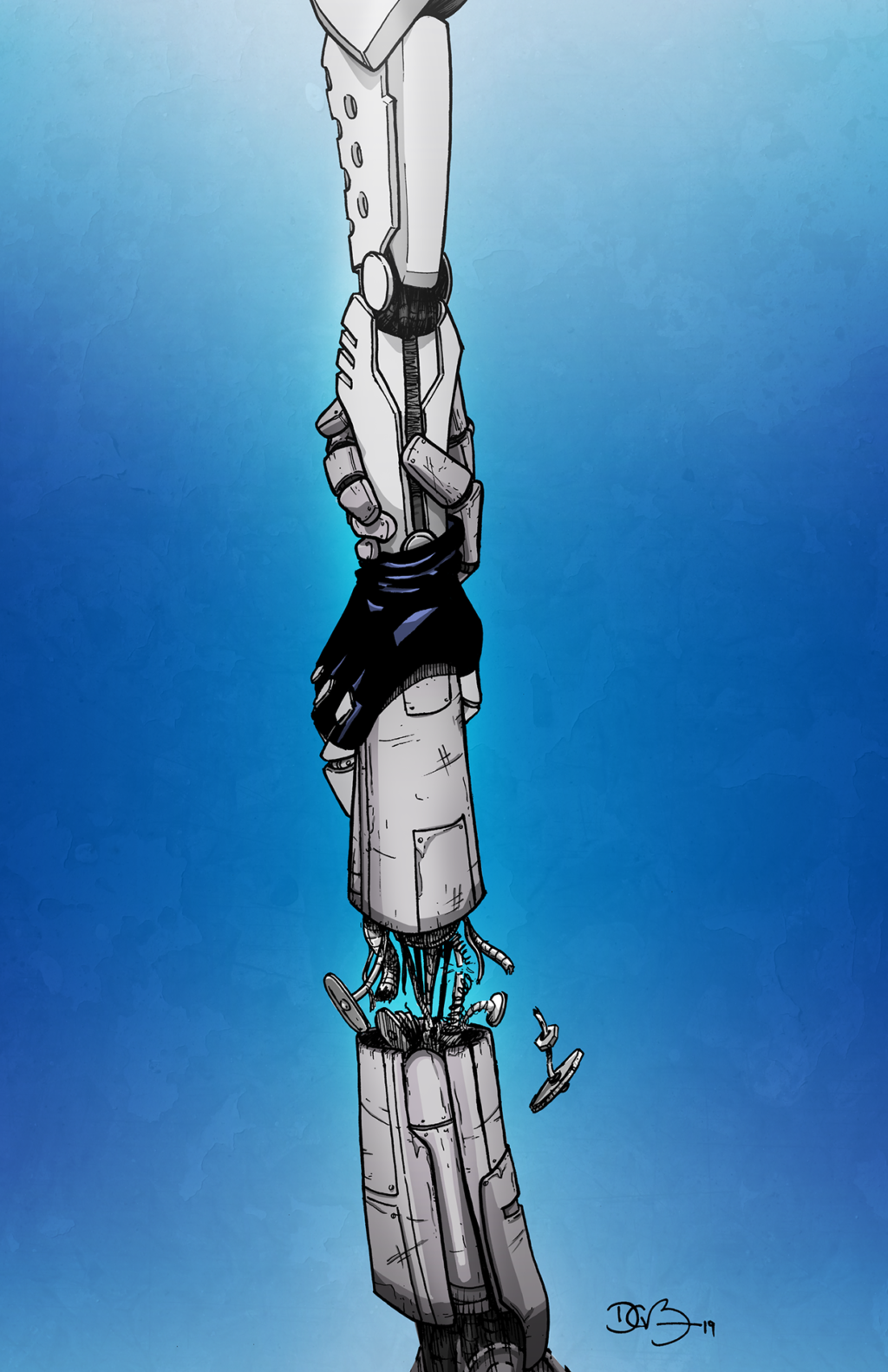
I became a fan of the property generally known as Battle Angel in my teens when I found the 2-episode animated Original Video Animation (OVA) at a rental store. Battle Angel is incredibly important to me––a member of the pantheon of aesthetic and tonal inspirations next to X-Men: God Loves, Man Kills, Highlander, The Road Warrior and Teenage Mutant Ninja Turtles (the gorgeous 1990 live action movie).
Battle Angel, to me, became my baseline for futuristic science-fiction: a dusty, exhausted cyberpunk future where the downtrodden live a beaten-down life literally underneath––and in the shadow of––the unknown but ever-present “betters” above them. Battle Angel takes place in a nigh-post apocalyptic future United States in a city called the Scrapyard (or Iron City, depending on the medium), a ramshackle patchwork town that surrounds a dump, a pile of detritus dumped onto the community from the city of Zalem, a shining metropolis that actually floats above the Scrapyard.
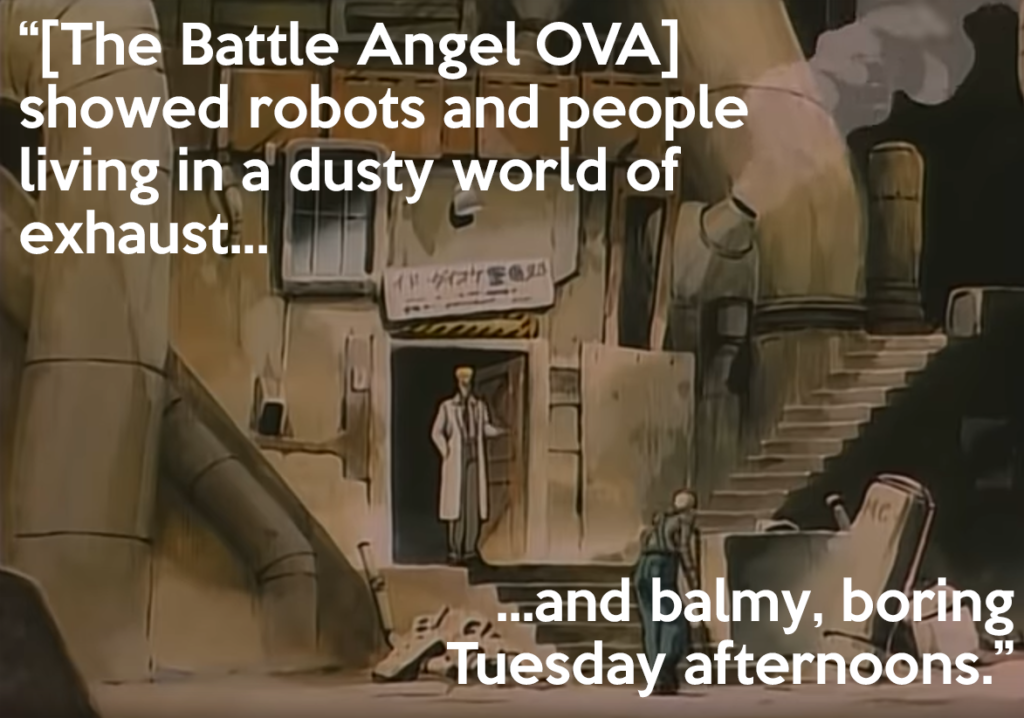
Though I eventually found the original manga afterward––and actually read it years afterward––it was, admittedly, the animated version that really became the definitive version for me. It captured that exhausted defeat that I responded to (similar to what I respond to in the Mad Max series and what I love about The Postman) and showed robots and people living their lives in a dusty world of exhaust and balmy, boring Tuesday afternoons. It felt lived in, I guess, and I liked the story that the environment told, especially because the animated episodes told you next to nothing about the history or the culture of this strange but intriguing world.
Director James Cameron bought the rights to Battle Angel years ago, and his argument––which is actually fair––is that he was waiting for technology to catch up with his vision. Finally, in 2019, Alita: Battle Angel was released.
And it is fine.
In my adulthood, I have become intrigued by the idea of adaptation, and I am happy that we have a big-budget Battle Angel movie that, to me, works pretty well. There are a lot of good choices the movie makes, especially with regard to Alita’s story and how they present it. The biggest surprise, contrary to what Cameron has said in interviews over the years, is that it is clearly more an adaptation of the OVA than of the comic, though interesting bits of both are woven together fairly seamlessly. While realizing this made me quite critical, it also made my ecstatic deep down in my nostalgic core.
My biggest gripe (among some other, smaller, narrative ones) is that the thing that I fell in love with––that dusty, exhausted, resigned world––wasn’t there. Everything was too clean. Citizens were too happy or nonchalant about their situation. In the comic and anime, everybody knew they were under the heels of their elitist overseers; in the new movie, people are going to sporting events wearing clean, new jerseys with their faces painted the colors of their favorite teams––a sign of leisure and stability––something that this world did not have in previous versions. As a result, some of the charm of the franchise and story was missing in this movie.
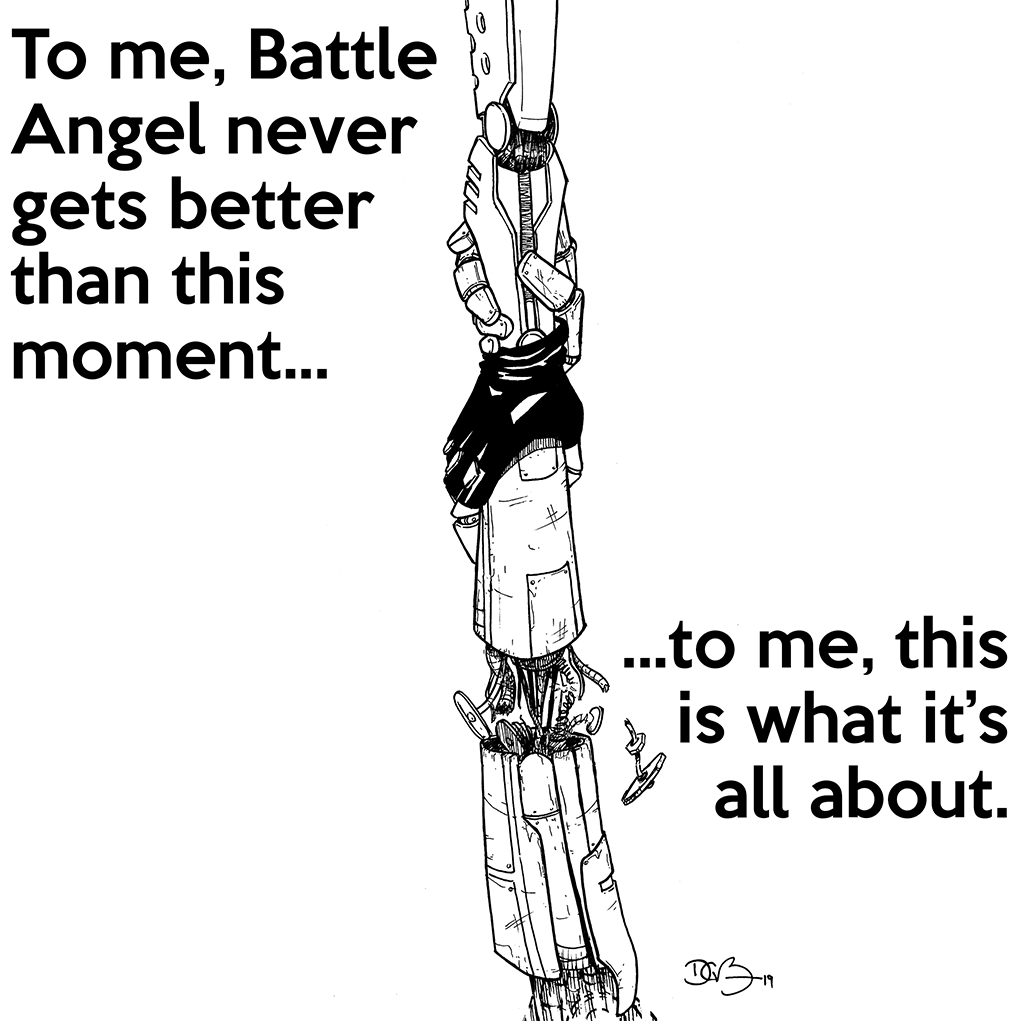
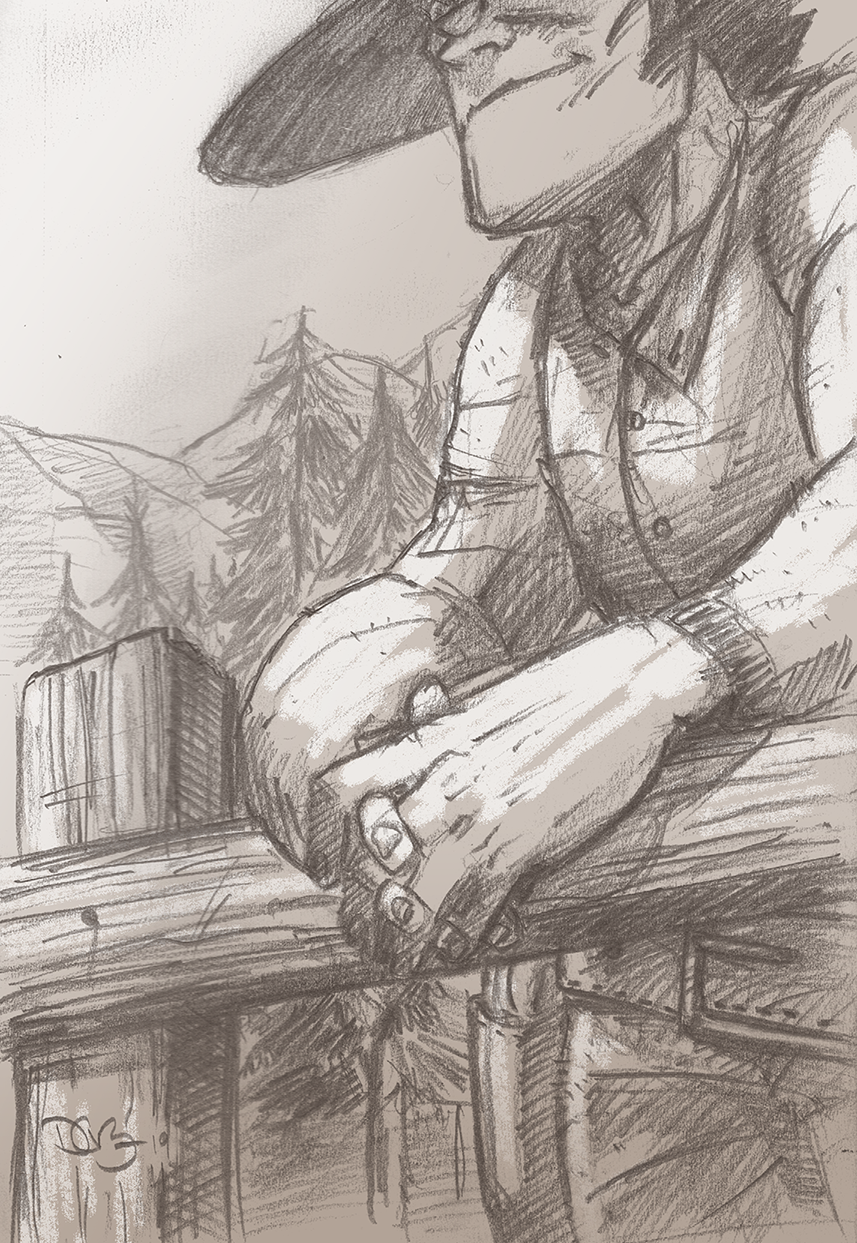
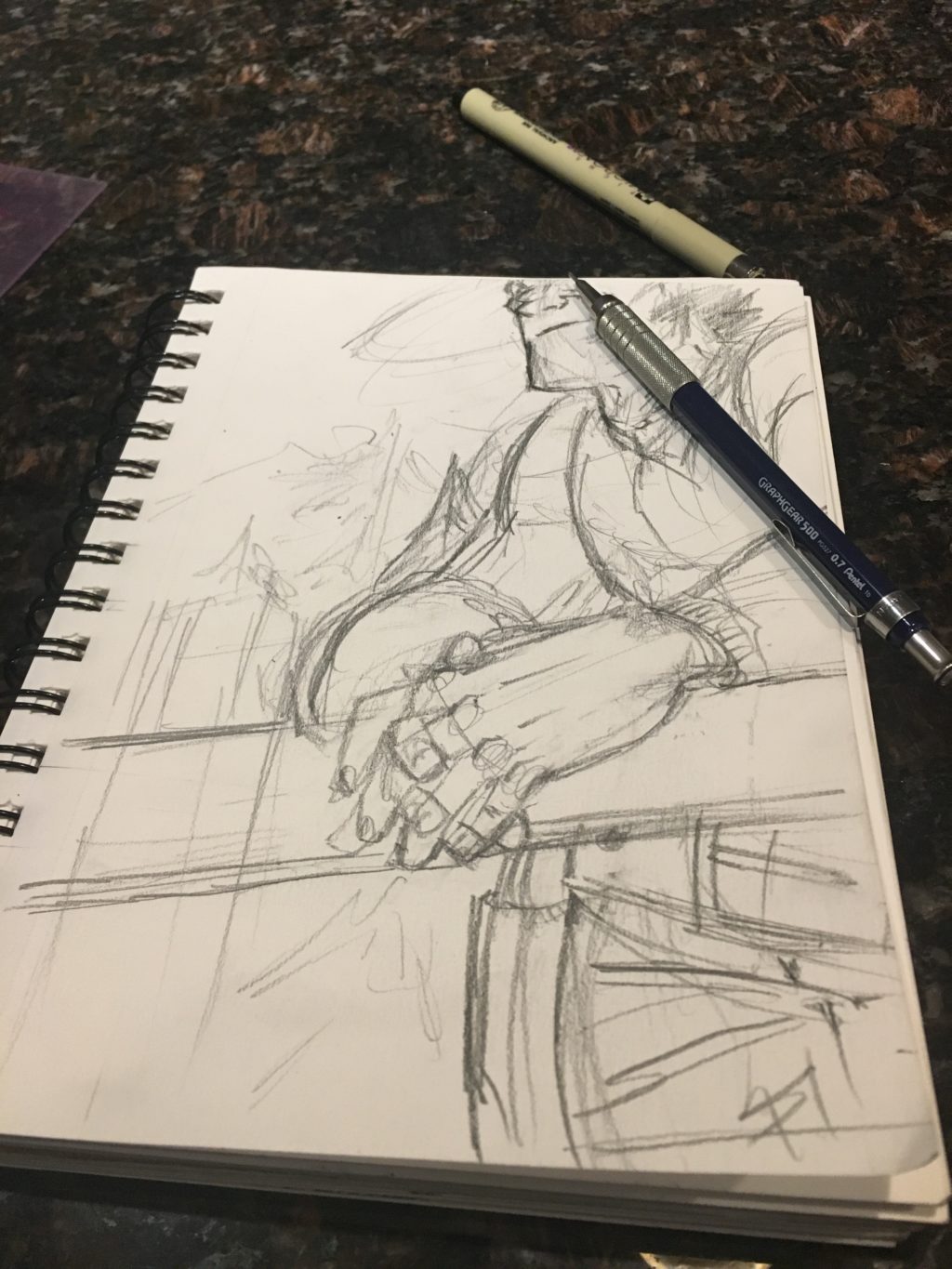
All was redeemed, however, by the moment I illustrated above. It’s the moment that hit me hardest when I first watched the anime and got choked up to see in its original form in the manga and was ecstatic to see lovingly and accurately rendered in the new movie.
To me, Battle Angel never gets better than this moment. To me, this is what Battle Angel is about: a lone (and lonely) figure that holds onto hope and optimism in a world settled in its self-maintained nest of societal oppression and all are destined to fail. It may not be an ethos I agree with, but it does strike a chord in my core. Maybe it’s the thing I’m consistently fighting against not only with my creative endeavors but with my own self-doubt and anxiety.
The result of all this being––albeit just a pair of robot hands clutching each other––one of the best drawings I think I’ve ever done.
––––––––––––––––––––––––––––––––––––––––––––
When left to pull from my artistic subconscious––when a blank page sits before me and there’s no story to tell or blocking to figure out for a scene––I have an instinctive pull toward drawing hands.
I like drawing hands. I find them to be similar to faces where they can be, at one moment, graceful and, in the next, angular and menacing. They embody the gradient of human interaction, as well. To some our hands give comfort and solace, to others they dole violence and might.
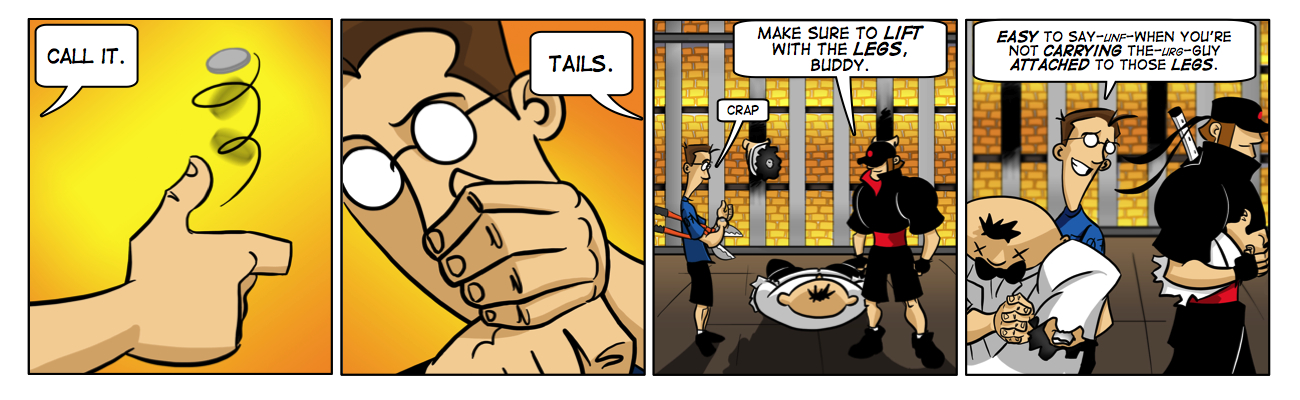
In the third comic I ever drew (during my previous series), the first two panels were close-ups of hands. That go-to became a visual refrain (some may call it a crutch) throughout that series and is one which has continued through Long John without fail and completely unintentionally.
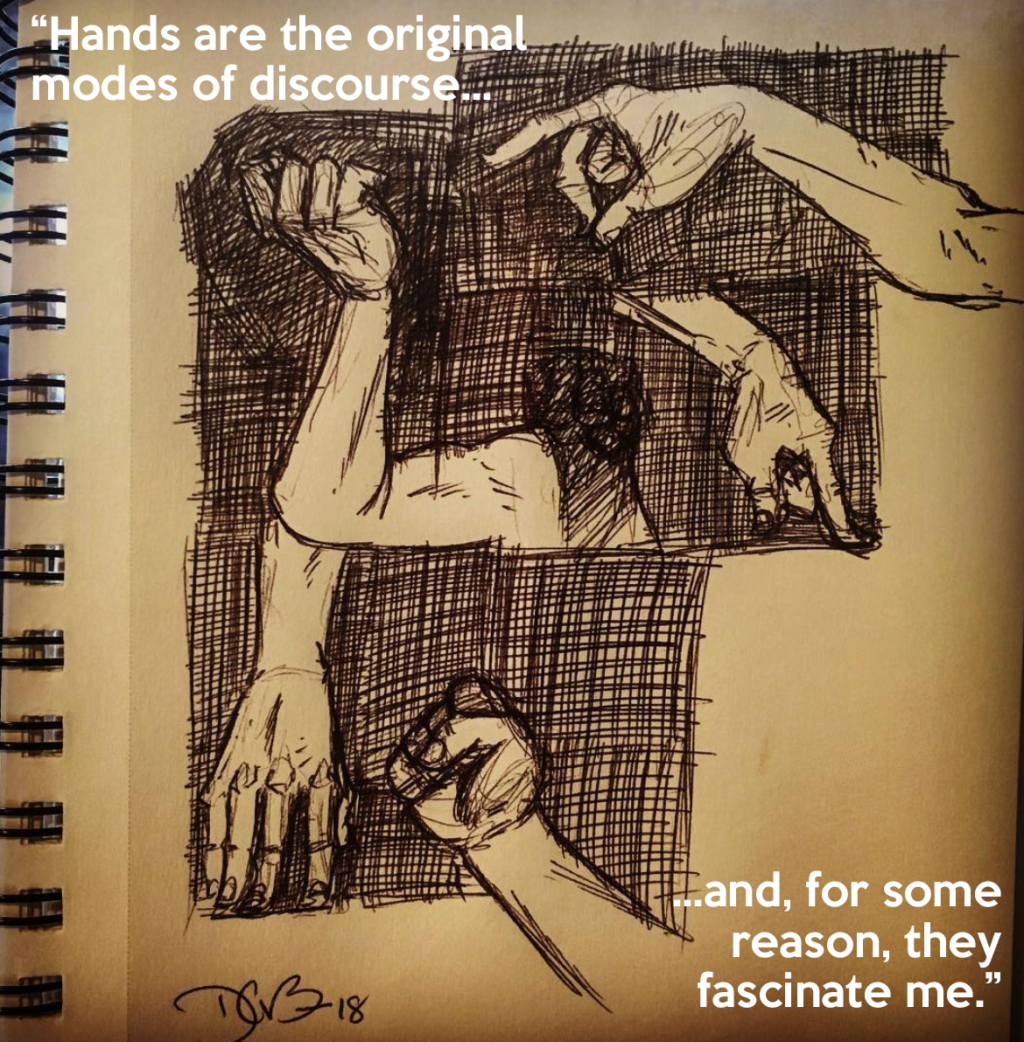
However, hands are our main physical connections to other people––friend, family, and foe. They are the original modes of discourse and, for some reason, they fascinate me.
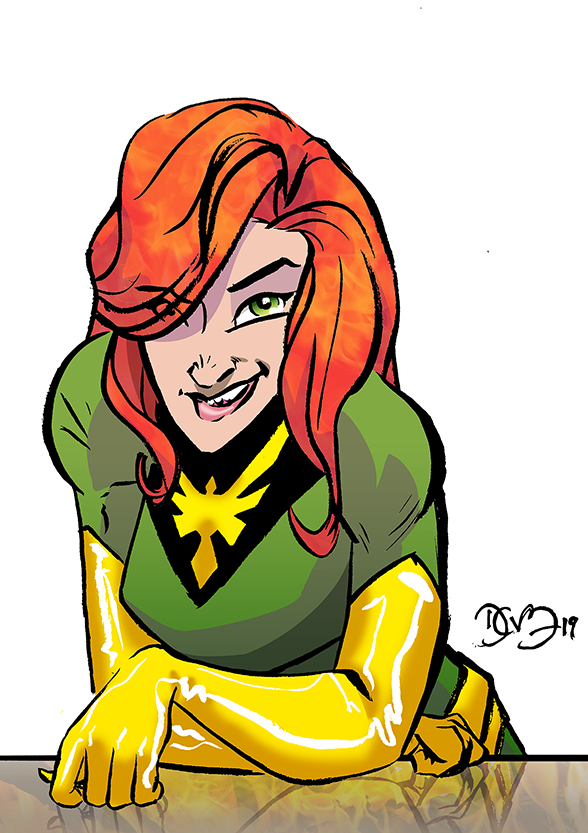
Outside of drawing comics, the fascination perpetuates through my art as the three most popular drawings I have posted online are hand-focused as well. Without knowing it, my own predilection for drawing hands has created an accidental series of images––all homages/fan art––that, now that I’m aware of it, shows me a road I should continue down if digital thumbs-ups and illuminated hearts are to be believed.
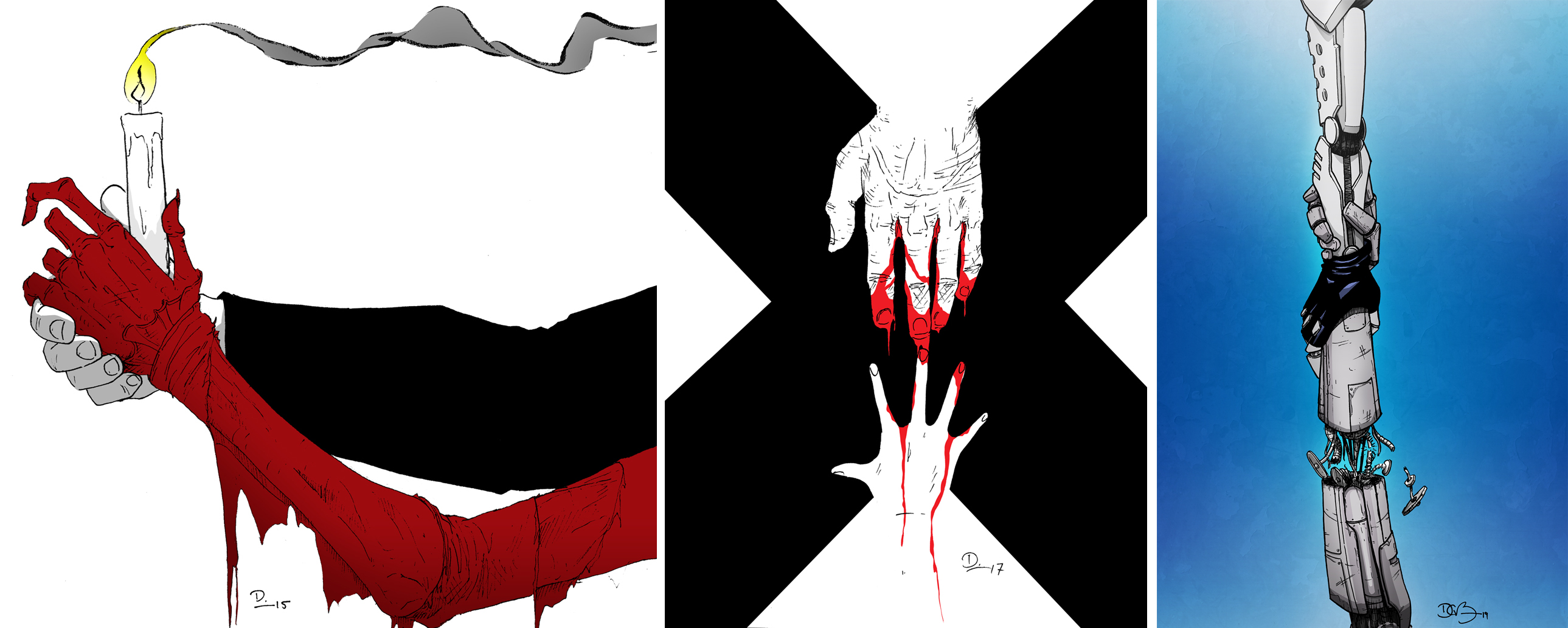
I stay away from making (and especially selling) fan art for a variety of reasons. The big reason is artistic; yes, I have a style, but when I’m drawing characters I love from stories that mean a lot to me, I feel an urge toward faithful recreation and the result ends up looking like art drawn by a guy trying to not draw in his own style.
By simply focusing on hands, I can retain my own artistic sensibilities while also being more expressive with the end result. To me, this is better than if I were attempting to draw the faces and poses for these characters, knowing that they don’t look like how I think they should look (because that ideal is defined by the styles of other, better artists in my head), forever an echo of what they actually are.
And when it comes to art from a completely different culture, such as manga and anime (where Battle Angel Alita/Battle Angel/Gunnm comes from), the mere attempt to draw those characters seems like I’m committing an act of appropriation (and me alone; I have no problem with people drawing their favorite characters). But I have that reaction to any fan art I think I want to do.
With that in mind, there’s a translation, a filter, the ideas from these stories that I love go through when I draw this “good” fan art––technically, a “D. Bethel filter”––and what comes out the other side is as emotional and representational an expression of these properties and characters as I can do and have it still feel like “me.”
Time after time, it involves close-ups of hands.
I will say, however, that the Crimson Peak drawing that started all of this was an idea suggested by my wife. I had the idea of one of the characters dancing with the main ghost haunting the movie (which has narrative significance, no spoilers) and, as I was fretting over angles and poses, she said to try drawing just the hands since that was the most important and interesting part anyway. As soon as she said to zoom in on the hands, it all clicked into place.
I guess, subconsciously, that realization opened a door that I all to often just walked by and––especially lately––I feel much more free and open to drawing anything now that I know I have a grasp on a method that results in something that looks like a D. Bethel drawing and not simply an imitator. It’s not because it’s easy to draw––hands are not easy to draw––it’s just that their language is clearer to me than trying to create an entire scene or character pinup, though those would undoubtedly sell better.