• Newest Comic
  • About
    • Synopsis
    • Characters
    • Author
    • F.A.Q.
  • Archive
    • Comic Archive
    • Blog Archive
  • Links
    • Press
    • Connect
    • D. Bethel’s Work
    • Contact
    • Friends of Long John
  • Shop
    • Online Store
    • E-Books
  • YouTube

Long John

Losing Every Thing Changes Everything

Sketch Fridays #14 – Lemmy, et al.

Jan15
by DBethel on 15 January 2016
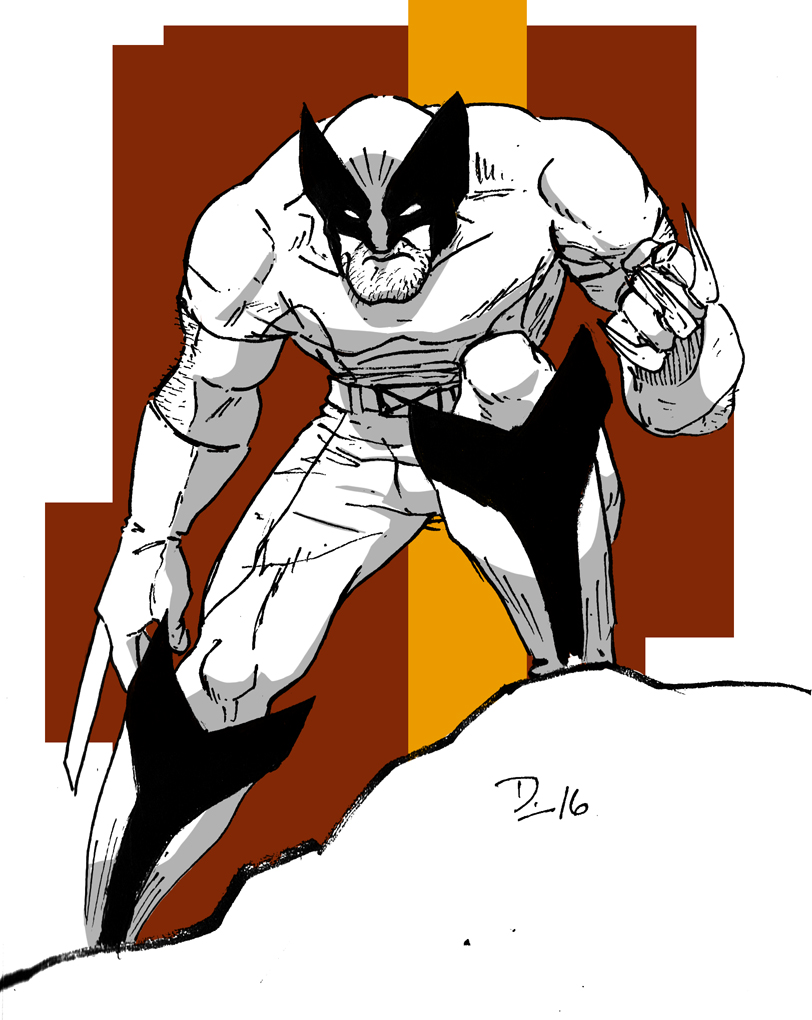
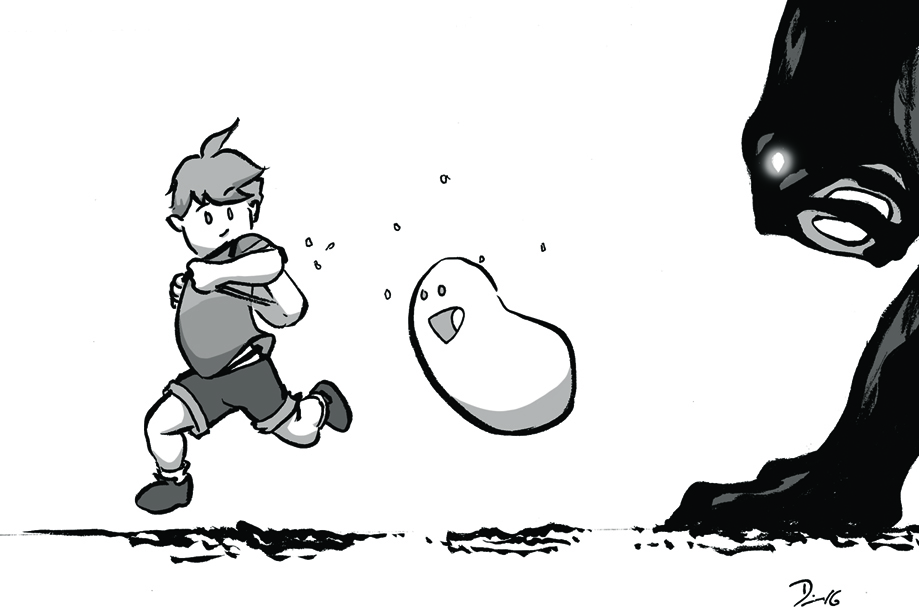
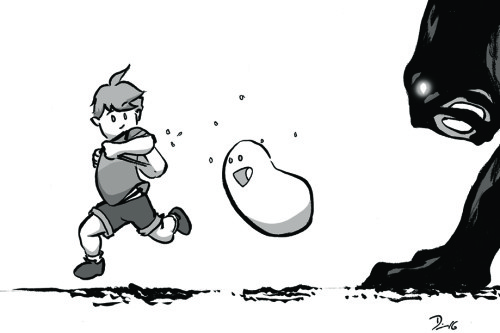
Sketch Fridays #14 - Lemmy

Sketch Fridays #14 – Lemmy. Click to Enlarge.

Celebrities die every day. They only seem to go unnoticed because their celebrity is limited to a specific segment where the loss is tangible among those fans even if the ripple doesn’t reach the greater culture.

Since January started, the deaths of (at least) three celebrities caused a glut of captioned pictures, fan art, and 140-character eulogies across the internet. Surely, people in modern American culture exist who do not know who Lemmy Kilmister, David Bowie, and/or Alan Rickman were, but what ostensibly makes their deaths different is that their popular reach spread across multiple fandoms and media.

I was not necessarily more familiar with one over the rest; I would, in fact, argue that I was reasonably detached from all three of them and don’t profess any specific idolatry. Mostly, they were names filed into my pop culture registry, whose facts and biographies and philosophies I acquired over time but to whom I declared no allegiance. The trio is a fascinating cluster if only because, through a certain lens, they are all singular personalities instantly recognizable.

Lemmy, and his heavy metal/hard rock band Motörhead (ignore the umlaut), became known as a heavy metal stalwart because, from start to finish, he made the same music. Rather than viewing that as a deficit, in the metal community it means that he’s dependable. Listeners often go to metal as a form of release and, believe it or not, as a way to calm down and center themselves. It’s raw nerve rendered as volume and every aspect of the music––from instrumentation to lyrics to vocal stylings––work together to create a safe place to release the dark thoughts or simple bad moods we all feel. It’s unity through extended middle fingers pointing outwards.

Through the heavy metal din, Lemmy became a bedrock for the genre because any time a Motörhead album came out, you knew exactly what you were getting. Even though he dallied with acoustic music or as a songwriter for Ozzy Osbourne (or, more recently, as a member of a heavy metal army in the interesting Double Fine video game, Brütal Legend––again, ignore the umlaut), his stamp was always visible on anything he touched. Likewise, his persona was carved in stone and that became a point of solace for not only many fans, but musicians as well. Despite being gruff in personality and appearance, it was widely known that he was generous with his fame and efforts for up and coming musicians and his dedication to them––even when their fame peaked and fell––sealed his place as the heavy metal godfather.

David Bowie, of course, superficially represents the exact opposite of everything Lemmy stood for. However, the mercuriality of Bowie became his defining characteristic––we expected it, wanted it, and he always changed. Despite the constant ch-ch-changes (sorry), there was always an edge that poked through the veneer––perhaps it was his signature eyes, or the angularity of his features, his voice, or his songwriting––but as much of a chameleon Bowie was, what he always made evident was that he was making this change for a reason. He used the variety of media at his disposal because it was the right way to say what he needed to say. In that way, he became dependable as a consummate performance artist.

As discussed on the most recent episode of my podcast, Bowie was probably the artist (of the three) with whom I was least familiar. I knew a lot about him and his career, but was never a consumer of it aside from his role as the Goblin King in Labyrinth and his music used in the recent video game, Metal Gear Solid V: The Phantom Pain. (Oh, and “Let’s Dance” because it started the career of Stevie Ray Vaughan, and “Under Pressure” because Queen is rad.) Despite that, even I could hear the Bowieness of a song I’d never heard before, and the throughline is clear from Labyrinth to his collaborations with Nine Inch Nails even if it sounds like a completely different person at the microphone. It is just clear.

Of the three, Alan Rickman probably has a place in many people’s hearts more out of nostalgia than anything else. Fans of Die Hard are evangelical about the movie and hold up Rickman as the patron saint of action movie villains based on his portrayal of Hans Gruber. More recently, of course, he is beloved as the tragic Severus Snape from the Harry Potter film franchise. Within my walls, he is remembered for his turns in Dogma (as the Metatron, the voice of God) and Love Actually (where, coincidentally, he played a character named Harry).

Despite the variety of roles he brought to life, he never really “disappears” in the way that we describe some character actors. His intrinsic presence is too powerful––every angle on his face points down, his voice destroys subwoofers in homes across the world, there is an ache of sarcasm that sits on his shoulders––that it’s less that his characters are memorable and more that he is. I don’t mean to diminish his ability––he continues to be amazing to watch on screen––but like many actors out there, he transcended his profession and became “Alan Rickman.” People do impressions of Rickman, not of Snape or Gruber (or the Sheriff of Nottingham––holy cow, he was great in that movie).

What I’m arguing is that these three stand out in their deaths because they were more than just the roles they played, so to speak. Something set them apart from their work and it became more about finding the “them” in their work almost more than appreciating the work itself. And while that was surely not their goal––perhaps they would have derided such an assessment––what inevitably links the three is that there are truly no imitators out there.

Oh and this:

'Nuff Said.

 Comment 

Sketch Fridays #13 – Building on Napkins

Jan08
by DBethel on 8 January 2016
Sketch Fridays #13 - Drawing for Dad. Click for larger version.

Sketch Fridays #13 – Building on Napkins. Click for larger version.

When discussing influence and inspiration, artists tend to look outward at things and people and objects, using those as maps of talent showing how to get to where we currently stand. It makes sense because artists are, by the very nature of how drawing works, construction workers on a less physically demanding scale. A drawing is built not grown or blossomed. It takes a lot of work to make a world, with paper or canvas or screen becoming the window through which the viewer observes and reflects, so to speak.

I do the same thing, looking outward at my inspirations. I have written about many of them already.

However, I am in the position––perhaps the lucky position, perhaps damning––of being the third generation artist in my family. We all used the skill to varying degrees, but it is safe to say that my grandfather, my father, and I all gravitated toward art and practiced it even if the reasons and goals differed.

A drawing by my grandfather for my father.

A drawing by my grandfather for my father. Date unknown. Likely early 1950s.

My grandfather, A.C.W. Bethel––but who went by “Charlie”––worked as a professional commercial artist, making adverts for a relative’s pharmaceutical company while pulling down some commission work on the side.

My father, A.C.W. Bethel––but who goes by “Walt” (and is, interestingly enough, not a junior)––showed incredible talent very young. He seemed to have pursued it with serious focus for awhile, but got drawn away by the lure of academia (I guess that also runs in the family) and became a Philosophy professor. However, he still draws all the time, mostly cartoons on napkins at restaurants for whomever he dines with or for the wait staff. And that’s where this week’s sketch starts.

Pencil drawing my father made at 18.

Pencil drawing by my father at 18. I don’t draw cars, by the way.

Over the years––since college, I believe––my father has drawn his cartoons with a recurring character that, despite being unnamed, has acquired a fullness of character all his own, though based heavily on my father and acting as a vehicle for his own cheesy jokes (by my father’s own admission; he lives for polite laughs and groans from recipients). In nearly every cartoon, he draws an anthropomorphic wolf who is usually sitting at a table with a glass of wine. The wolf falls in love too easily and, in the concise mythos of his world, exists solely to be rejected by women (represented as cats) out of his league.

The cartoons are Sisyphean in scope: the wolf always tries and he always fails. However, the emotional clarity of the art (always drawn in a matter of seconds with a fountain pen on a napkin or small notepad my dad keeps in his jacket pocket) makes what could be a pathetic or, perhaps, uncomfortably self-effacing cartoon instead innocuous and charming.

It has gotten to the point that, at the restaurants my father frequents, he is well-known as the “cartoon guy” and that, combined with his pleasant demeanor, he is always very well-treated. However, it’s a recursive relationship in that the great treatment the staff show him at restaurants is a major reason why he regularly dines there.

A fascinating aspect of the art my dad practices is its sense of impermanence. Being that they are drawn with such speed on canvases meant to be disposable––receipts, napkins, etc.––they are hard to keep around. I have looked around my house, knowing that I have many, but it’s almost as if they secret themselves away between shelves or spines of books. Or, perhaps, they just wither with time.

In 2014, my father moved. After forty years living on the central coast of California, he pulled up stakes and settled in San Diego county. He and I talked a lot about his decision, and a lot (not all, of course) of what he would end up missing about his long-time home would be the restaurants he regularly attended. The particular restaurant that became his haunt was the Spirit of San Luis, an eatery adjacent to the San Luis Obispo County Regional Airport. He became close friends with the owners––they exchange Christmas cards––and all of the staff knew my dad by name and vice versa. He would say hello to every employee by name as he entered and headed toward his table; the staff would ask him how recent plans or events had turned out since they last saw him. The feeling was not one of entitlement but familial; it was just how things were, a relationship built over decades. From his regular table he looked out over the runway with a glass of chardonnay and prime rib, watching planes take off and land while reading a book or magazine. It’s a sense of belonging that touches on Romanticism.

Shortly after the 2015 New Year I went down to visit him. I knew he missed home, but was excited at his future in San Diego. On this occasion, I decided I wanted to give him something that not only represented his former home but also showed that I had thought of him (and continue thinking about him), his situation, and understood, to a degree, what he left behind but was also eager to move forward. So, I decided to try and fold the things he loved into one: his wolf, his restaurant, and my art.

I’ve been able to draw his wolf character for awhile; it’s not that difficult but capturing the linework that comes with the speed at which he draws is inimitable. But in terms of basic construction, I can get it down pretty well. However, this was a drawing for him and not just be a pastiche of his style, which could be morbid. When this project first percolated, it started by asking the simple question: What would his wolf look like in my style? It went easier than expected, and my first attempt pleased me. To my eyes, it not only captured the basic look of his wolf (the necessary shapes), but also the relaxed, slightly sarcastic, and hopeless romantic attitude he exuded.

Translating Dad's wolf into my style.

Translating Dad’s wolf into my style. A sloppy version of how my father draws it is at the top left.

I tried to create a basic amalgam of everything his cartoons do into a single image, and have it take place at the Spirit of San Luis. Most of his cartoons are of the wolf trying to charm a cat-waitress and the punchline usually revolves around the waitress rejecting him through the gesture of offering him a cup of coffee. These are accompanied by a light, entendre-based question from the wolf and a very concise and clear declaration from the waitress. Rather than coming up with a joke, knowing it would probably be too forced and/or something he had already used and, thus, fall into pastiche territory, I decided to try it silent, with the sentiment intimated through posture and structure. So, with research and memory I tried to put the pieces together.

Figuring out the layout in ballpoint pen.

Figuring out the layout in ballpoint pen.

I had never really drawn anything as an expression before. My art rests heavily on narrative. But I found that I was going by feel a bit while drawing this; not in the sense that I was eyeballing proportions or things like that, but I course-corrected whenever the pose/background/layout didn’t capture a sense of “dad.” In that sense, this is probably the only piece of “art” I’ve ever made in that I was not only telling a story but I was trying to say something, albeit something incredibly personal to a very specific audience of one.

In the final drawing, I see all of the influences; there’s a little bit of Chuck Jones, a little bit of Dave Stevens (which I never thought would come out in my art), a bit of the European artists that have also popped up in Long John, and of course I see my dad’s work in here. However, just by sitting down and writing this out, thinking about the nearly century’s worth of my family putting pen to paper, I can’t ignore the bedrock of inspiration that supports this drawing and all of my art in general. All three of us came to art independently. I think my dad eventually asked my grandfather for advice or lessons, but we all started with a desire to try and make lines connect. Even though it’s not something I can point to or show, it’s good to know that it’s there, a figurative set of tools each generation seemed to find on their own that I’m happy to use even if they’ve been in more skilled hands. At the very least, I can build something.


2 Comments

Vorpal in Print!

Jan07
by DBethel on 7 January 2016
Keith Houin and Jason Tudor from Vorpal: Shoot Between Heartbeats

Keith Houin and Jason Tudor from Vorpal: Shoot Between Heartbeats

Just to let you know, friends of Long John––Jason Tudor and Keith Houin––have officially released the print version of their sci-fi noir comic, Vorpal.

Jason is a long-time friend, stretching back to early Eben07 days during which he was a vocal fan and big supporter, and it’s great to see him make strides with his creative work over that amount of time.

Since the interview I conducted with Jason back in April, Vorpal was picked up by the independent publisher, Headshrinkers Press, and it is through their combined efforts that the print version of Vorpal became available. The Headshrinkers Press website has a nice press release that gives a succinct overview of Vorpal‘s trajectory.

Jason and Keith are very passionate about this project and I know getting a copy of the book in-hand is a tremendous personal achievement. You can check out the first chapter here (though it’s been revised and updated for the print version) and you can click on the image below to get to the Headshrinkers Press store. I’m incredibly proud for another webcomic to get to the printing stage, but––more importantly––I’m happy for my friends. If you want to support not only independent comics but also the creative efforts of veterans, please take the time to check it out.vorpal_product_icon_blank

 Comment 
  • Page 94 of 111
  • « First
  • «
  • 92
  • 93
  • 94
  • 95
  • 96
  • »
  • Last »
  • Instagram
  • Facebook
  • YouTube
Privacy & Cookies: This site uses cookies. By continuing to use this website, you agree to their use.

To find out more, including how to control cookies, see here: Cookie Policy
  • Newest Comic
  • About
  • Archive
  • Links
  • Shop
  • YouTube

©2014-2025 D. Bethel | Powered by WordPress with ComicPress | Subscribe: RSS | Back to Top ↑