• Newest Comic
  • About
    • Synopsis
    • Characters
    • Author
    • F.A.Q.
  • Archive
    • Comic Archive
    • Blog Archive
  • Links
    • Press
    • Connect
    • D. Bethel’s Work
    • Contact
    • Friends of Long John
  • Shop
    • Online Store
    • E-Books
  • YouTube

Long John

Losing Every Thing Changes Everything

The Week – 17 January 2020

Jan18
by DBethel on 18 January 2020

WATCHING:

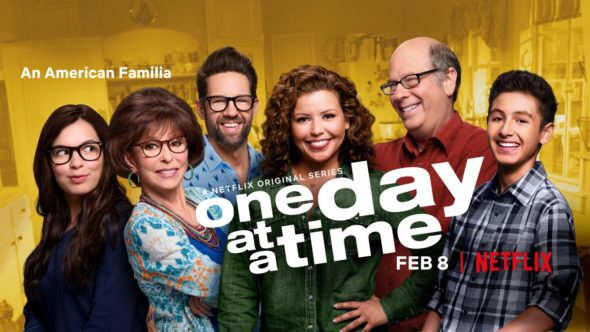
Source: Netflix
  • One Day at a Time on Netflix

It’s rare that reboots actually work. It’s even rarer when reboots based on decades-old properties actually work well. So, color me completely surprised at how quickly I fell for Netflix’s reboot of the ’70s sitcom, One Day at a Time.

Part of it may be due to my complete ignorance about the original show, of which I only knew the name and nothing about its content or context. In fact, I always thought it was one of the many daytime soap operas based on its name alone. That being said, I had nothing to compare Netflix’s reboot against. Comparing the premise of the new show to the original, however, (thank you Wikipedia) it seems pretty faithful, making changes to appeal more to modern audiences and their sensibilities.

The main reason I like it is because of the outstanding cast and the compelling writing. It does the interesting dance that shows like Scrubs really made popular by easily and believably bouncing between hilarious situations and highly dramatic and emotional scenes in, basically, every episode. The show often brings me to tears with both laughs and emotional resonance.

These jumps never feel cheap or forced, instead spinning organically from the wonderful characters and their relationships with each other.

The story is built around a single mother, Penelope Alvarez, an Army veteran and nurse with two teenage kids––Elena and Alex––and shares an apartment with her widowed mother, Lydia. They are proudly Cuban-American and the show focuses on aspects of being a working single mother as well as her Cuban heritage and the all the space in between.
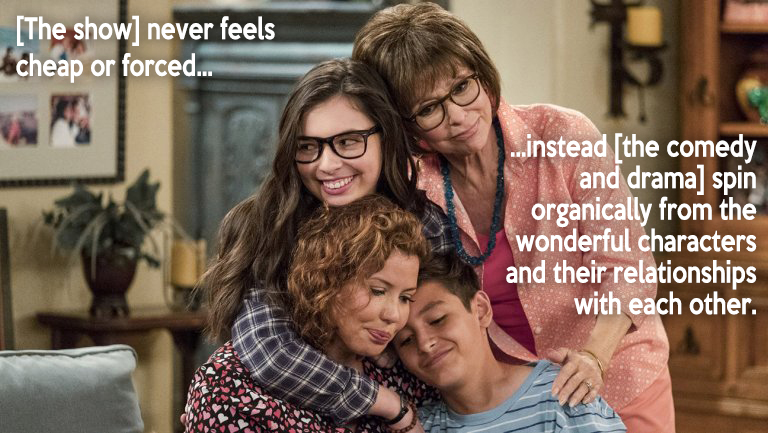
image source: Netflix

I actually first heard about the show through the wonderful world of webcomics. One of the developers of the reboot, Gloria Calderón Kellett, is married to one of the elder statesman of webcomics, Dave Kellett, whose works Sheldon and Drive are long-running fan favorites.

More importantly, Dave Kellett has become an ardent resource for aspiring webcomickers through co-authoring the book, How to Make Webcomics, and podcasts like Comic Lab on which he dispenses advice and conversation with fellow webcomicker, Brad Guigar.

Being married to a Hollywood screenwriter, he often talks about the conversations about storytelling, character, and genre that he has with Gloria and it was through his podcasts that I heard him mention One Day at a Time. I only wish, at this point now that three seasons are out and a fourth is on the way, that I had taken that initial awareness to heart and started watching back then; now that I know how good it is, I feel I’ve deprived myself of excellent television for the last few years.

PLAYING:
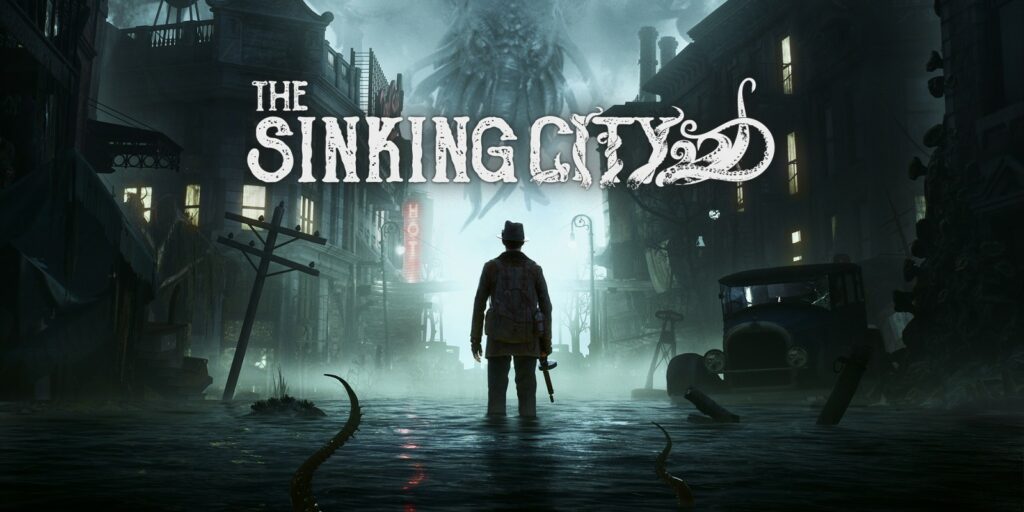
Source: Frogwares
  • The Sinking City by Frogwares

Being a fan of horror writer H. P. Lovecraft can be a complicated thing. His contribution to fiction––especially horror fiction––is undeniably important. However, there is also the undeniable fact that his personal views and beliefs on race and class were appalling (though he did soften a little bit as he got older).

Die hard fans have read the stories, but in terms of public interaction they tend to be split into three groups: one group openly critiques his abhorrent views, perhaps even arguing for his dismissal from canon; another loves the work and just ignores the problems of his biography. The latter group loves the monsters and the lore Lovecraft lightly applied to his stories. This group rabidly consumes the spinoff Lovecraft media like the video games and, most popularly, the The Call of Cthulhu tabletop role-playing game, among other things like Cthulhu plushies, “Lovecraftian” music, and general creepy imagery awash in cult symbology, body horror, and dripping tentacles.
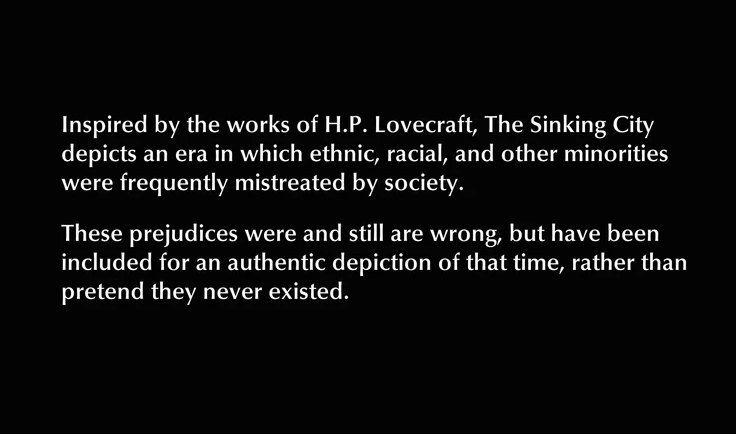
This disclaimer displays every time you boot up the game. Source: Frogwares

I would like to believe I am a member of a third group, one which openly loves his stories and that fully acknowledges his racism, sexism, and classism. More importantly, we acknowledge that his views fully inform his stories. Best described by writer China Miéville in the excellent introduction he wrote for a Modern Library edition of Lovecraft’s At the Mountains of Madness, he wrote that when we closely examine HPL’s monsters we can actually see that they aren’t just the product of a highly creative mind, but they are actually creative manifestations of his xenophobia and racism. To me, it’s more interesting to examine Lovecraft’s work on this level––and, further, to examine his focus on knowledge, sanity, and religion––than to either just talk about what a reprehensible person he was or to just read stories about detectives-heroes fighting gigantic eldritch monsters. All of these things are equal and connected parts of the conversation about H. P. Lovecraft.

What makes Lovecraft’s work stand out to me is that the horror is not about grossing you out or scaring you in the text itself. It’s a horror that comes with rumination––sitting back and thinking about the implications of the story after reading it. It’s a focus on terror rather than horror.

As I alluded to, a lot of what we call “Lovecraftian” fiction seems to just take his monsters out of his stories and have humans defeating them or getting defeated by them––a group of plucky investigators find a cult trying to end the world and it’s up to the heroes to put a stop to a ritual or something. However, that type of story really only exists in one of Lovecraft’s tales––”The Dunwich Horror“––the rest are just about humanity intersecting with information on a cosmic scale and the fallout from that intersection.
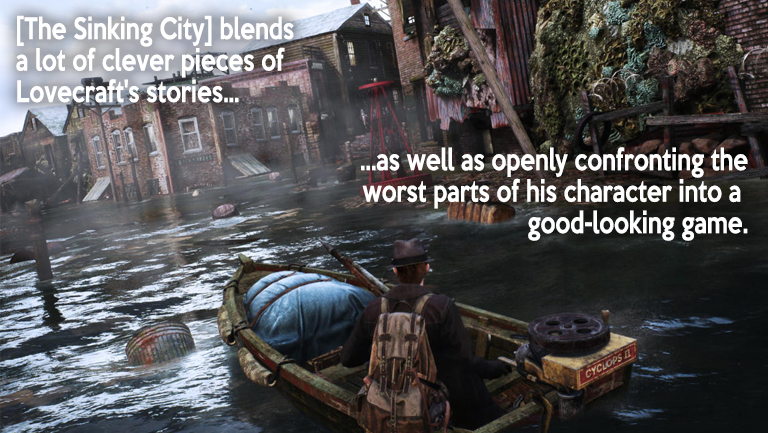
image source: Frogwares

All of that is to say that Frogware’s detective game, The Sinking City, is a piece of Lovecraftian fiction that really “gets” what I love about Lovecraft. It’s not an action power fantasy. It’s not jump-scare gorefest. It’s about learning and dealing with the threat of the information you find.

It’s not perfect, but it’s impressive and I’m enjoying the hell out of my time with it. The game plays out like it was made for the type of fan I am, blending a lot of clever pieces of Lovecraft’s stories as well as openly confronting the worst parts of his character into a good-looking game, capturing the existential dread and exhaustion that permeates the story it borrows from most, “The Shadow Over Innsmouth.”

Most impressive, though, is that it is doing something novel with not just Lovecraft’s stories but also his values, something that I’ve only really seen done well in fiction in the last five or so years with things like Victor LaValle’s The Ballad of Black Tom or Ruthanna Emrys’ Winter Tide. It’s exciting because it’s not revisionist––rejecting Lovecraft because he was a jerk––and it’s not power fantasy adventure storytelling––a direct opposition to the stories Lovecraft wrote. Instead, The Sinking City is something better than both––a Lovecraft story that embodies the things that defines what he did in his fiction and uses them to tell new stories that fit into his work like a puzzle piece and shine a brighter and better light on the body of work as a whole.

LONG JOHN CHAPTER 4 UPDATE:
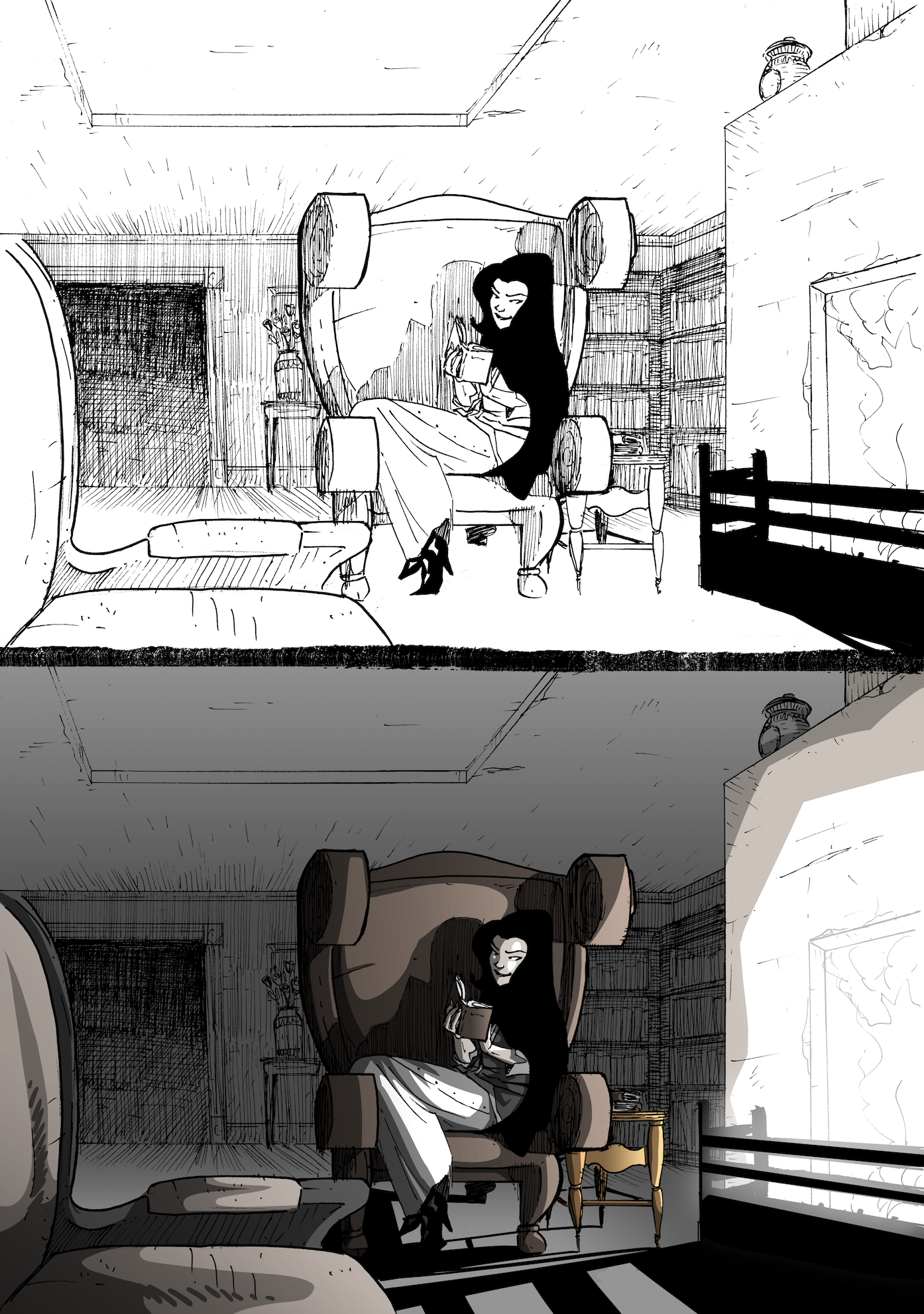
Color adds a lot to the panels in Long John.

I continue churning away at Chapter 4. I’m making good progress on the coloring of the book, so I plan to start getting the pages ready and setup for publishing to the website sooner rather than later.

As for the book, again, I’m waiting on a few factors to come together in terms of extra content. Volumes 2 & 3 were kind of light on extra content and with this volume starting the next piece of the story, I kind of want to make sure it’s packed with good and substantive stuff. So, not since Chapter 2 have we published first to the site and then made the book available, but I think that is the best way to go for this chapter and for the book, in the long run.

But still, coloring is slow.

–––––––––––

Another aspect of this that has slowed me down is that I had a mild existential dilemma (speaking of Lovecraft) with regard to lettering the book––placing the text on the pages themselves. I’ve basically lettered the book from scratch two and a quarter times.

When I say “lettered,” I don’t mean re-writing. The words are all the same, instead it’s about placement in panels and and on the page.

Because of a scene early in the book, I became hyper-aware of the rhetorical value of good lettering. Just as with everything in the art, the lettering, too, guides the reader through the story in more ways than one. Lettering, of course, indicates who is speaking. It can also indicate the tone of the line of dialogue. How you break up dialogue can speed up or slow down the reader. Backing away from the book, it becomes clear that dialogue placement also guides the reader’s eyes. You can use lettering to make sure the reader sees the things in the art you want them to see.

As with any interaction with theory, it can become easy to spiral out of control. Needless to say, I’ve learned a lot about the art––and it is decidedly an art––of lettering comic books with this volume. I’ve come to really respect the folks that do this type of art for a living (and may be something I hire out for in future volumes).

For those interested in lettering and the theory behind it, I can’t recommend Richard Starkings’ book, Comic Book Lettering: The Comicraft Way (despite the weird cover) and the aggregated lettering tutorials that letterer, Nate Piekos, has compiled on the Blambot website. It’s really interesting stuff.
 Comment 

Bodie In Winter

Jan10
by DBethel on 10 January 2020

As stated in the first “Long John Primer” that was posted even before the comic went live––the “Long John Primers” being four articles covering the four main inspirations for the development of the comic––one of the main inspirations for this comic is its setting, the Mono Basin in the Eastern Sierra Nevada mountain range that marks the boundary between California and Nevada.

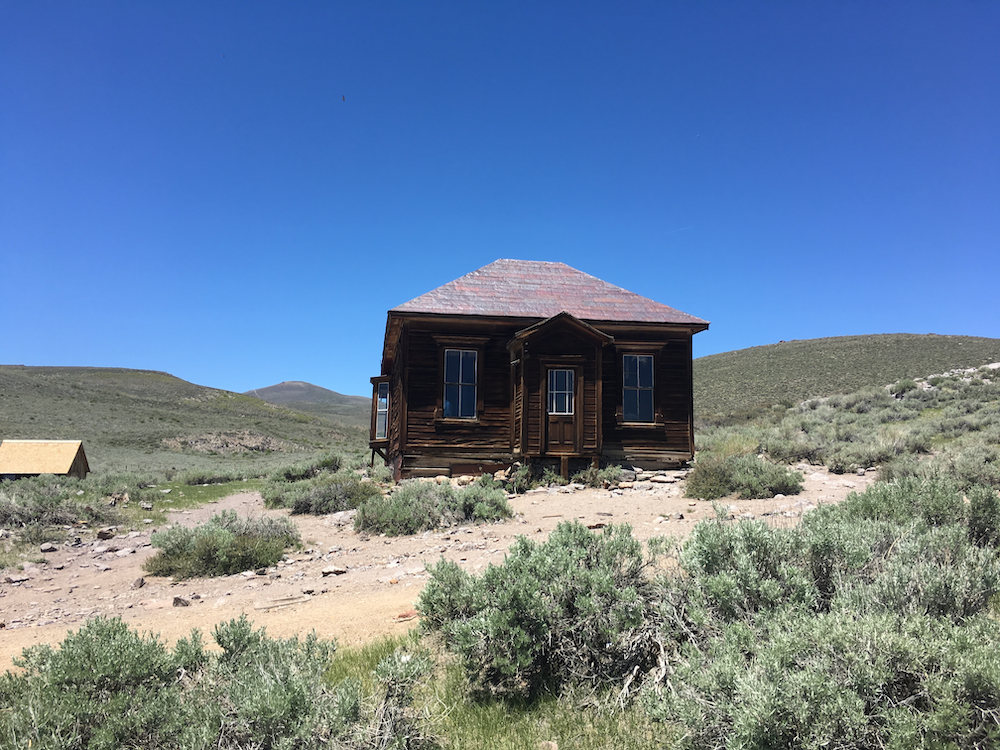
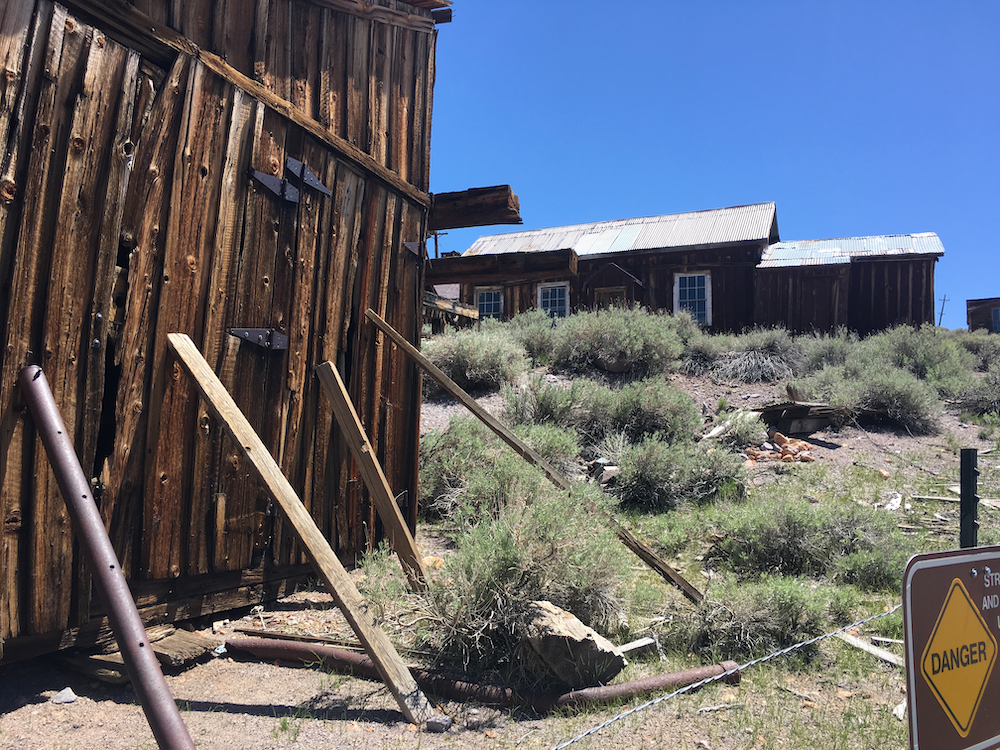
Only a few of the buildings in Bodie are standing wholly on their own accord. All photos taken during a 2018 visit.

Though it hasn’t yet been a major setting for a scene of the comic, the whole region, at the time, revolved around the big mining town of Bodie. The town has been brought up at least a few times in the comic, acting more as a specter hovering over the entire story. At the risk of spoiling things, Bodie will most definitely be a major feature in the latter half of the comic in a more physical sense as opposed to the more ethereal presence it has held up until now. Bodie is what actually brought me to the region, and it’s from that epicenter that I circled outward and fell in love with the entire basin.

Even though, it hasn’t featured in the comic yet, the research of and time spent in Bodie has completely informed every other aspect of the comic. If you haven’t been, it’s a wonderful and strange place. A ghost town, it is elevated above others because, first, it is a state park. Second, it is preserved in a state of “arrested decay,” meaning that it hasn’t been “restored” to how it looked during its heyday with people in costume walking around pretending to be old timey cowboys. Instead, any restoration and preservation is done to keep it in the state that it was in when it became a state park––half falling-over, rotted, and dusty.

Most buildings, however, need a bit of assistance.

Being a state park, it falls under the purview of the protection of the park rangers, who must monitor and protect it year-round. This is especially difficult during the winter when the region––especially Bodie––gets buried in snow. While it is hidden by climate and inaccessibility, it is still technically open to the public (tenacious skiers can still access the park), necessitating the consistent presence of a ranger.

To that end, being the assigned ranger for Bodie during the winter is surely a lonely and unappreciated job. So, when journalist Rick Paulas spent some time with ranger Taylor Jackson, chronicling his time at Bodie during winters, the resulting article provides a really interesting look at an incredible place like Bodie during a time of the year when it’s most forgotten.

 Comment 

The Year –– 2019 : Long John

Dec31
by DBethel on 31 December 2019
Photo: Crocker Art Museum

It’s only ever at the end of the year when I look back and see not only how much I accomplished, but I’ve consistently seen how much more I accomplish each year. While much of the Long John development has been behind the scenes, the growth and promise have been noticeable and much more public than before and promise good tidings for Long John fans in 2020.

CROCKER CON

This year’s Crocker Con was huge for me this year. I don’t simply mean that with regard to sales––this year the show itself was surrounded by a whirlwind of opportunity and exposure and community that really made me proud to not only be an independent comic creator, but specifically a Sacramento independent comic creator.

From getting to hang original Long John pages in a wing of the Crocker Art Museum to getting the chance to participate in the promotion of the show on Good Day Sacramento, I never have had my art on as full a display as I did in this concentrated period of time between July and September at the Crocker.

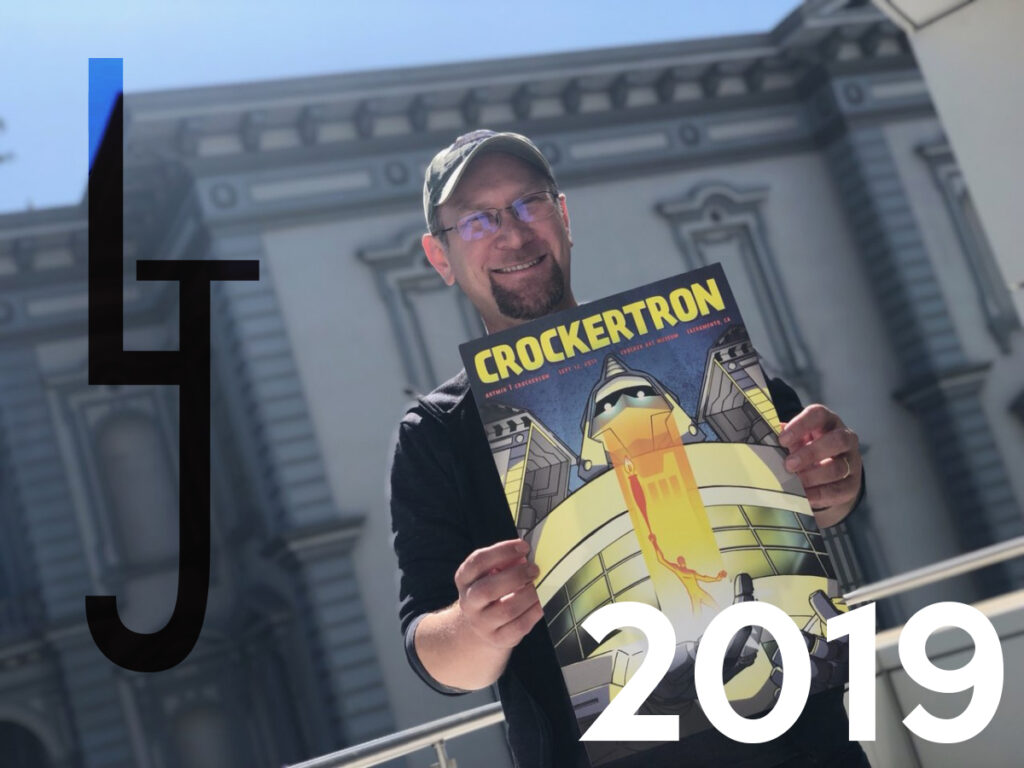
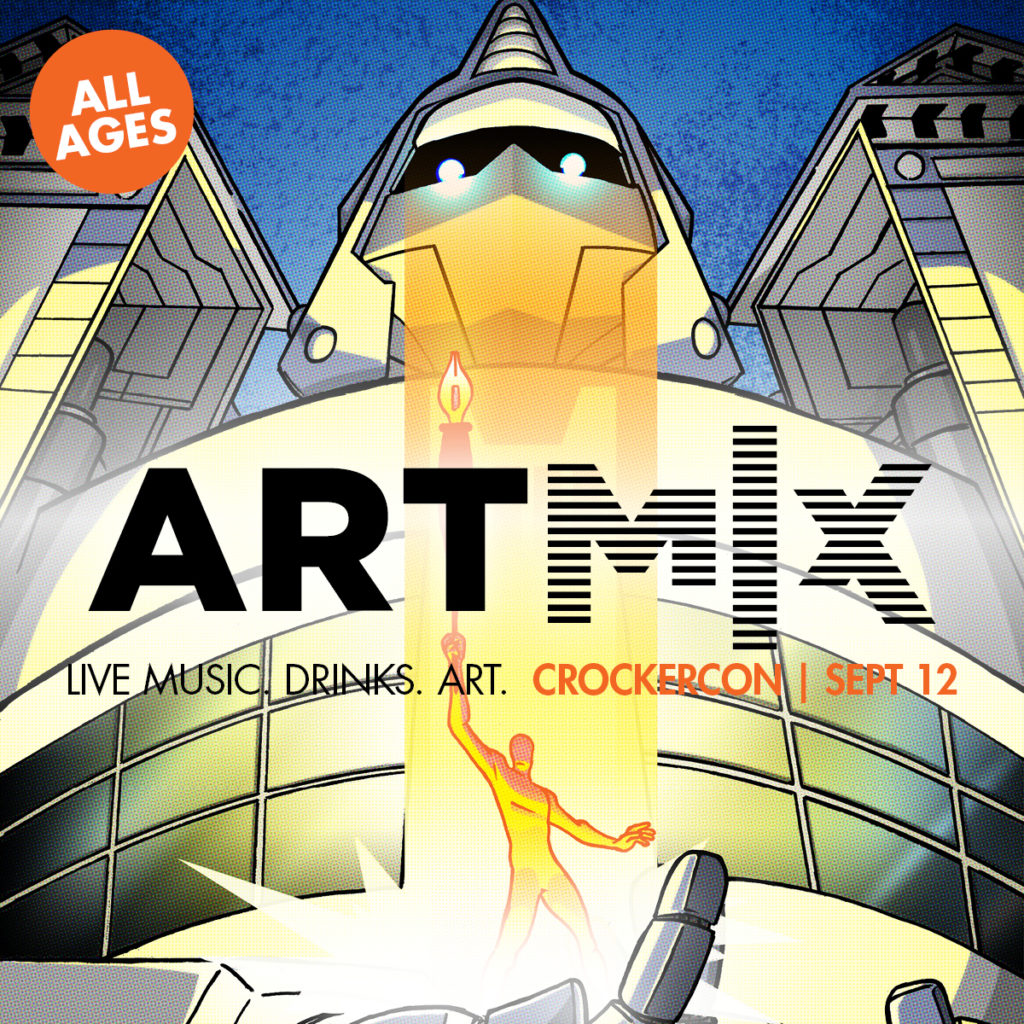
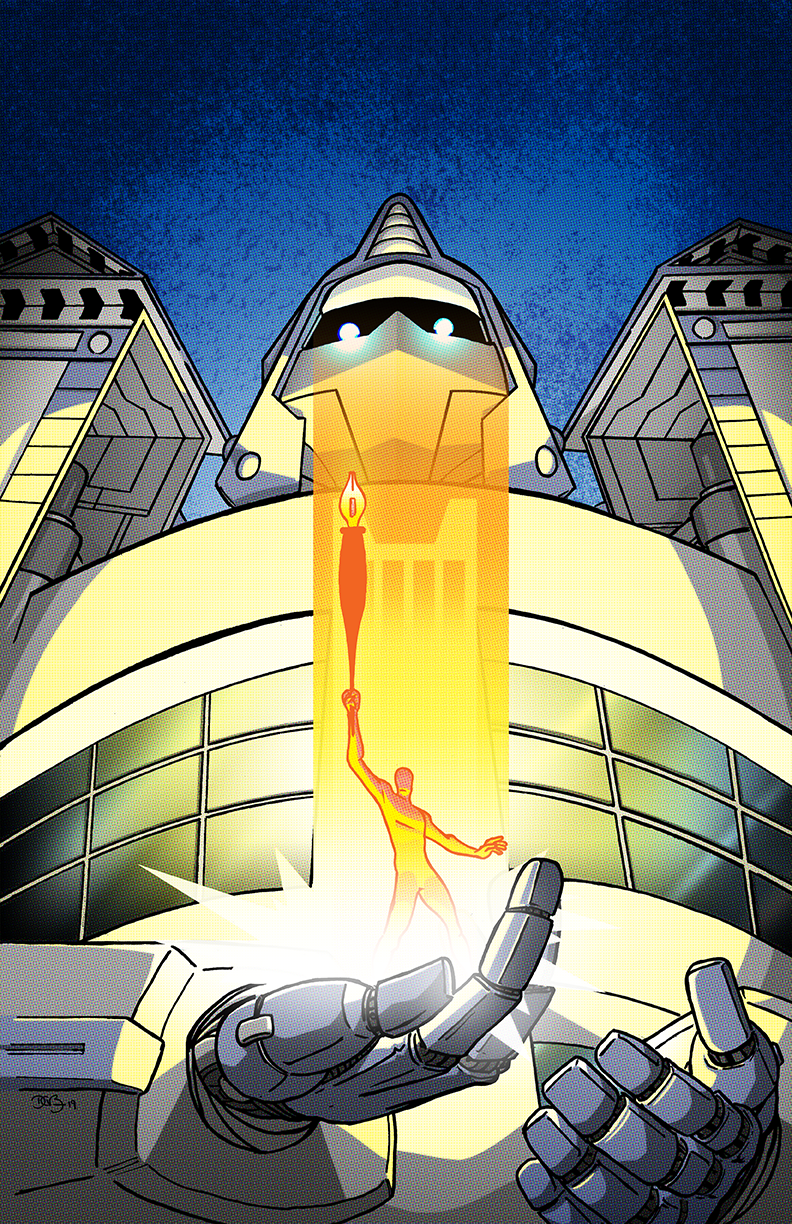
I don’t take commissions often, but I also couldn’t turn down the opportunity to draw the poster for the 2019 show (especially once I came upon an idea I liked) and I was actually quite pleased with the final result.

The poster for the 2019 Crocker Con.

This exposure brought with it the chance to sit and talk with the folks at the Crocker, who published a thorough and thoughtful interview, and those conversations really embodied the thing I love about Crocker Con––building the bridge between high and popular art and the chance to be an ideological docent at that meeting point.

As ever––but especially this year––this wonderful show (curated by good friend, Eben Burgoon) was one of the highlights of the year.

SHOWS

This year marked an earnest push on my part to widen the net of Long John‘s audience, if even only by a bit. That came with going to more shows than ever and, more importantly, going to new shows outside of the ring of protection and familiarity that Sacramento provides.

The farthest I had ventured before this was the dearly departed Alternative Press Expo in San Jose and, more regularly, StocktonCon (in Stockton, of course). This year, I put some new pins in the map and it paid off generously.

View this post on Instagram

All set up and ready to go at today’s Oro-Con! The doors open at 10am and admission is free! Can’t wait to see you there! :::::: ::::: :::: ::: :: #orocon #oroville #featherfallscasino #comics #art #convention #indiecomics #webcomics

A post shared by D. Bethel (@dbethelcomics) on Apr 27, 2019 at 9:40am PDT

First, I had an incredibly good time at this year’s OroCon in Oroville, CA. It was, without a doubt, one of the heaviest trafficked one-day shows I’ve ever been to and the people who attended were incredibly invested in local indie comics, which was heartening to see.

View this post on Instagram

All set up and ready for the first day of @renopopculturecon to begin! You can find me in Artist Valley at table C17! Doors open to the general public at 10am! :::::: #renopopculturecon #longjohncomic #webcomics #indiecomics #makecomics

A post shared by D. Bethel (@dbethelcomics) on Nov 8, 2019 at 9:24am PST

The end of the year brought a show I was quite excited about––the first annual Reno Pop Culture Con. The three-day show in Reno, Nevada proved to be as educational as it was fun (and exhausting). Being multiple days, the biggest surprise was to have the people who bought the books on one day come back the next telling me they already tore through all three of them and loved them. That kind of feedback is so rare, especially for a comicker who works primarily on the internet, that it hit me quite hard (and it made me really wish I had Chapter 4 with me to sell to them).

Luckily, both of these shows were bolstered by the stalwarts in my conventioning pocket––Stocktoncon Winter (where I had the honor of sharing a table with fellow comicker and Con Artists co-host, Kyrun Silva of Taurus Comics), Empire’s Comics Vault’s Free Comic Book Day Mini-Con (where I debuted new prints and the new Long John coasters!), and (as stated above) Crocker Con––and they proved to be as emboldening as ever.

Exhibiting at shows is as exhausting as it is rewarding, but the memories alone are worth going back for another run around the bases in 2020.

Long John––an Academic Text

A drawing of Hellrider Jackie in honor of the talk I gave to Dr. Fanetti’s class at CSU, Sacramento in April.

Perhaps the most personally rewarding aspect of this year was the honor of having Long John, Volume 1 included as part of the reading list for an upper-division graphic novels as literature course at California State University, Sacramento.

It’s weird to know that a class of about forty people read Long John. It’s weirder to know that a class talked about the book––its characters, themes, and plot––on a literary critical level for about 90 minutes. It’s weirdest to know that people probably wrote papers about Long John. And it’s most weird to know that I wasn’t any part of that.

As an under-the-radar independent comic book, the discourse and identity around Long John has been completely under my control up until this point. While that certainly brings a sense of calm (to a degree), as an academic I subscribe to the idea that works don’t become complete until they have an audience.

Of course, Long John, had an audience before now, but this is almost a concentrated experiment, testing a hypothesis to see if this story falls apart or holds together in the hands and minds of others. And it did. I’m not going to say that this made Long John “art”, but it certainly made it something more than just my own.

Where it all hit critical mass was when I was asked to come speak to the class, delivering a talk followed by a Q & A.

I view my life right now as a journey walking with each foot in a different lane: academics and comicking. I work hard to make sure I’m always moving forward, but I have to hope that they’re leading in the same direction. As stressful and exciting as this nexus between the two worlds was, the best part was that––for a split second––my two roads merged for a stretch.

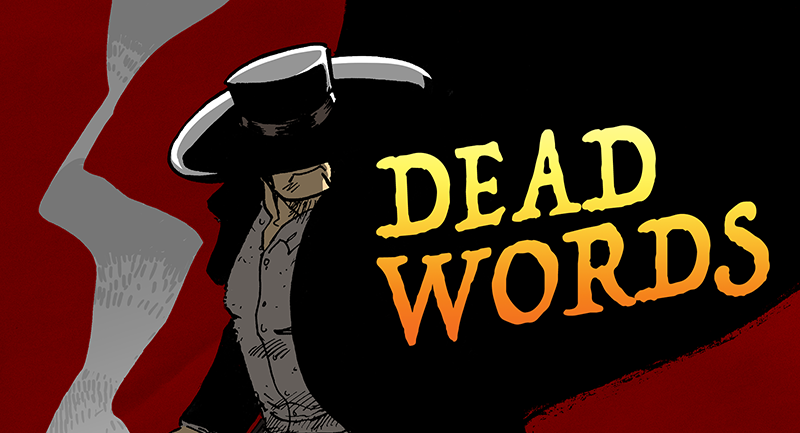
VOLUME 4: DEAD WORDS

Despite my promises for the book to be delivered in December, it did not come to pass, sadly. I’ve been plagued by life, grading, and even a nice dash of technical difficulties (I had to entirely recolor three pages recently). But coloring is moving forward––shading, specifically.

Even though the book didn’t drop this year, the milestone that this book hit that no previous Long John chapter had hit before was the speed at which it was created. For the first time, I drew, inked, and finalized an entire chapter over, basically, the summer––a rate at which I had never gone from page 1 to page done before. This speaks well of upcoming chapters and, if things go well, they will only get to the website and to you faster and sooner.

View this post on Instagram

Chapter 4 of Long John is completely drawn! Now it’s just about putting a few more inks down and then coloring and lettering (again, already in progress). It’s a strange feeling. I should feel more accomplished, but there’s still quite a bit of road to drive down before I can take a breath and actually accept the win. However, the end is in sight and getting ever closer! Let’s get back to it, then. ::::: :::: ::: :: #longjohncomic #comicbooks #indiecomics #artprocess #makecomics

A post shared by D. Bethel (@dbethelcomics) on Oct 18, 2019 at 5:27pm PDT

As it now stands, the pencils, inks, lettering, and flat colors are done for the book. All I’m doing now is shading/rendering and waiting for a few other special pieces to come together for this book to happen.

Since it’s the start of the next half of the story, I want this specific volume to be special, and that requires trying to coordinate a few spinning plates. As it is now, it looks to be not only loaded with a wonderful (if I do say so myself) new chapter, but it will also be chock full of interesting and very cool extra content. That––combined with the roadblocks mentioned earlier––are why the book is not out yet AND why the site has been quite quiet for the last month or so.

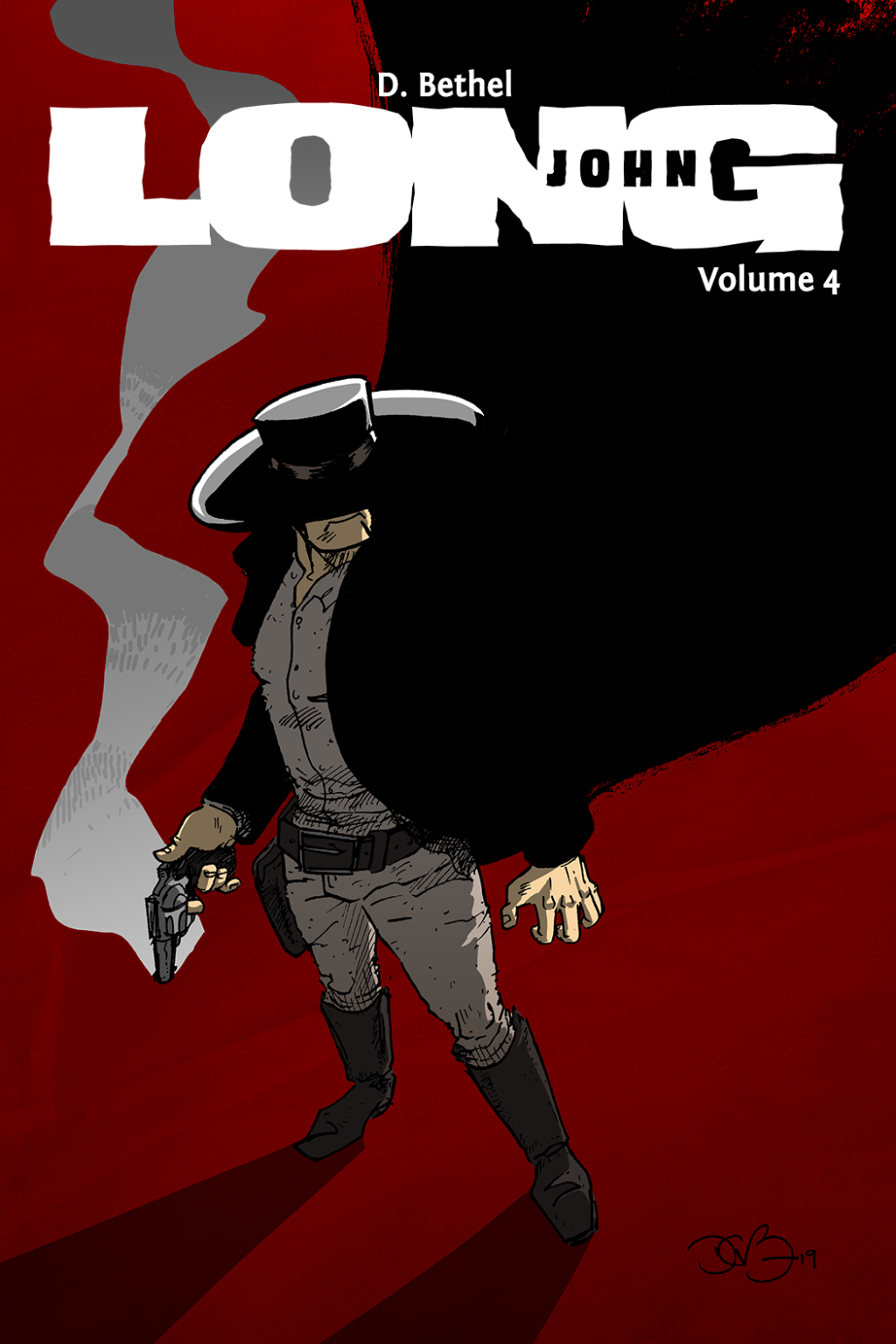
The cover to Chapter 4: Dead Words.

However, it has not been quiet behind the scenes, and you should look forward to Long John, Volume 4: Dead Words to be updating on the site sooner rather than later, with the print version available shortly thereafter.

It’s been a busy year with much more to come in 2020. I’m excited to share with you everything that I’ve been working on here in the coming year, so please keep checking in and a big thank you for all the support in 2019!

Happy new year,

-D. Bethel

1 Comment
  • Page 45 of 112
  • « First
  • «
  • 43
  • 44
  • 45
  • 46
  • 47
  • »
  • Last »
  • Instagram
  • Facebook
  • YouTube
Privacy & Cookies: This site uses cookies. By continuing to use this website, you agree to their use.

To find out more, including how to control cookies, see here: Cookie Policy
  • Newest Comic
  • About
  • Archive
  • Links
  • Shop
  • YouTube

©2014-2026 D. Bethel | Powered by WordPress with ComicPress | Subscribe: RSS | Back to Top ↑