• Newest Comic
  • About
    • Synopsis
    • Characters
    • Author
    • F.A.Q.
  • Archive
    • Comic Archive
    • Blog Archive
  • Links
    • Press
    • Connect
    • D. Bethel’s Work
    • Contact
    • Friends of Long John
  • Shop
    • Online Store
    • E-Books
  • YouTube

Long John

Losing Every Thing Changes Everything

Sketch Fridays #47 – A. J. Pero

Sep08
by DBethel on 8 September 2017

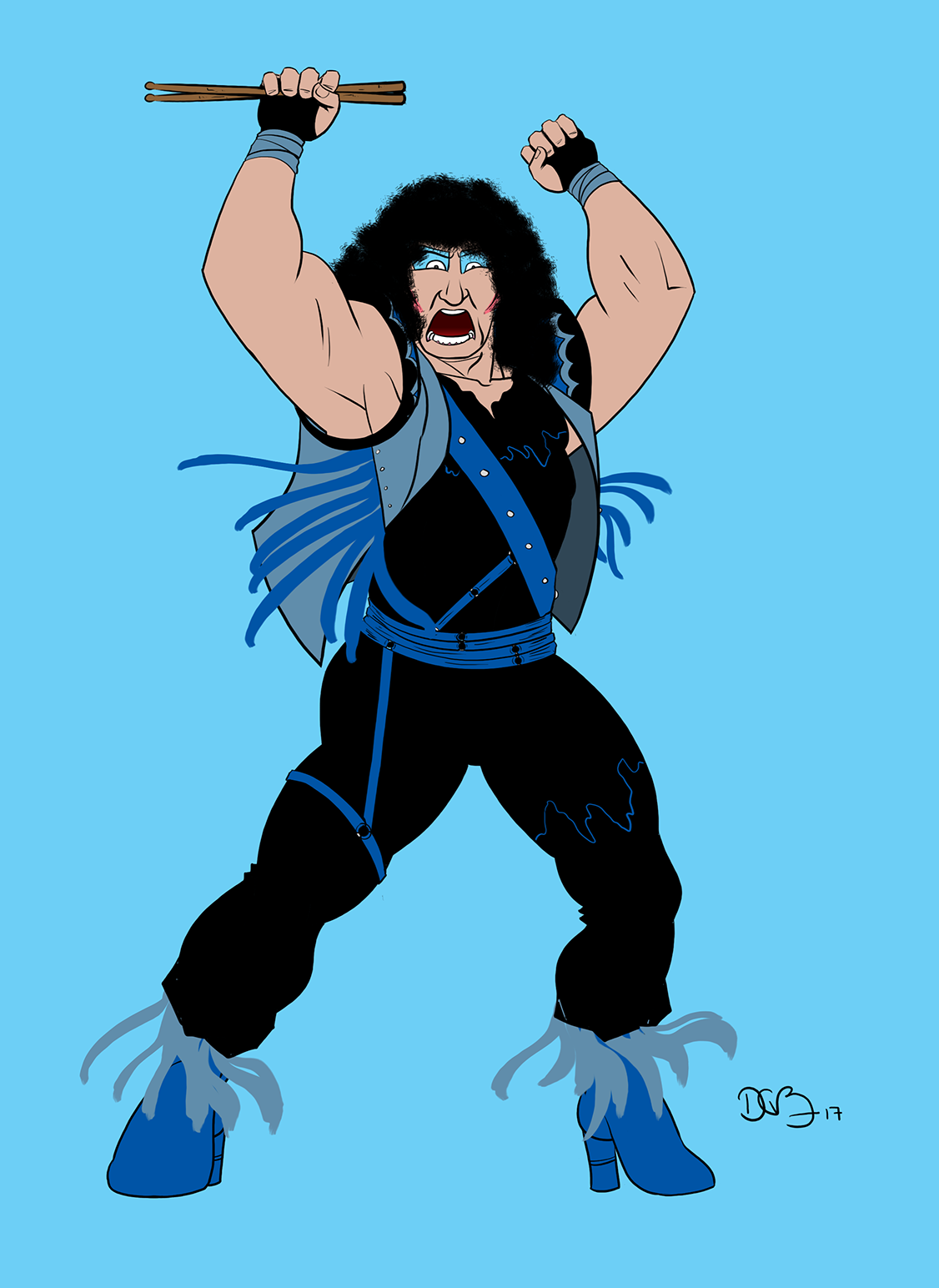
Sketch Fridays #47 – A. J. Pero (drums, heart of the band)

Ghost notes are a fascinating musical technique I’ve always known about, as a player, but was only recently made cognizant of when, earlier this summer, I somehow happened upon a video of funk drummer, Bernard Purdie, instructing the viewer about how he discovered ghost notes and how he incorporates them into his playing. Technically, they are unaccented notes; soft, fill-in notes played between the main, accented beats. On guitar, they can be scratched, palm-muted notes thrown in between notes or chords, but ghost notes are most associated with drumming. They are flavor that fill out a song and rhythm that make it sound more alive and vivid to the ears of a listener. While it would be easy for a listener to not really hear them, if they were outright removed from a song, their absence would be palpable and the music would feel much more lifeless and inert.

As much of a fan as I am of Twisted Sister, I readily admit that I left them behind at points in my life for various reasons. Months, perhaps even a year (at most) has gone by when their music didn’t grace my ears. Most likely, the longest gap was after I started playing guitar; I was a devotee of the blues and, later, classic/southern/blues-rock––genres that didn’t really overlap with Twisted Sister at all. I would come back to them when I was feeling down, dejected, lost, or nostalgic, and it always worked at bringing up my spirits.

To be blunt and obvious, this band’s music and its members are the ghost notes in the rhythm of my life––always there even if unheard or unnoticed. No matter how hard I ran into the weeds of the delta blues or into the open arms of ’70s folk rock or ’80s Clapton, the simple songs of Twisted Sister was always playing, unaccented, underneath all of it. Whenever––and I mean every time––I came back to Twisted Sister’s music, it acted as a balm. Their songs always made me feel better and scolded myself for not coming back to the music earlier. They were always the home I could return to, even when the actual home I grew up in felt distant and foreign after awhile. Eventually, though, the effect would wear off and their thunderous stomp would dwindle behind whatever beat guided my aim, moving me on to something else, hearing them underneath but not recognizing it or simply just tuning them out.
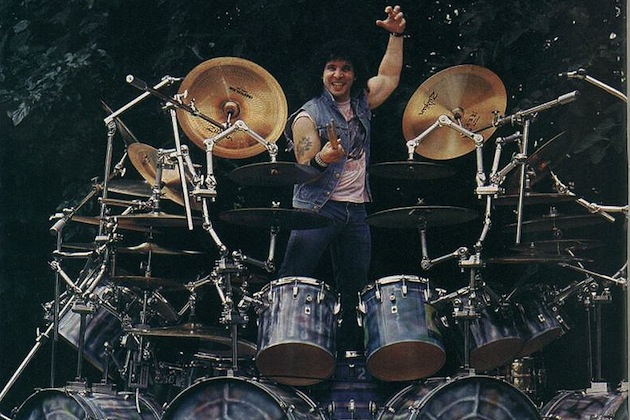
A.J. Pero is pretty rad. From the Come Out and Play Tour, circa 1986.

A.J. Pero was the last addition to the “classic” lineup of Twisted Sister. He became the youngest member of the band and, according to the documentary, We Are Twisted Fucking Sister, he was the fit the band had been looking for as they cycled through a long list of drummers previous to his arrival. A tiny but burly man, he hit the drums with the power and steadiness that Dee’s songs needed, and it is arguable that it was his drums that made “We’re Not Gonna Take It” as memorable as it was even when put against the lyrics/melody, and chord progression. If anything, that song is a testament to Pero’s intelligence as a drummer: he hit the drums solidly with enough flare to be interesting but not enough to overwhelm the song. His talent percolated underneath the primal stomp of every song they recorded.
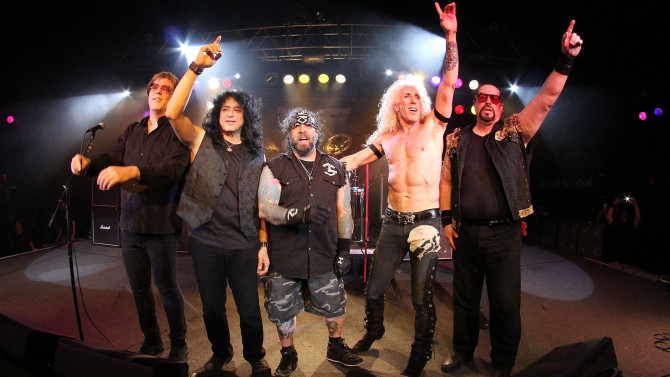
The biggest sound in the band came from the smallest guy in it. Photo by Mark Weiss.

But he was, apparently, more than just the drummer. The rest of the band regularly refers to him as “the nice one,” best exemplified by his behavior during the band’s wilderness years after their breakup. He was the one member to keep in touch with all of the others (despite the fact that he left the band a year before they officially called it quits), just checking in and relaying the health and happiness of each to whomever he was catching up with. This generosity of personality is clear in the videos the band made, as well. Already wacky beyond belief, he was the one band member that actually seemed at home in the live-action cartoons Dee Snider created for the band, culminating in the video for the ballad, “The Price.” In it, the band rehearses for a big arena show. They’re all in street clothes (albeit still ridiculous) and are being very serious as they sing this very serious song (note: a ballad not about love, girls, sex, cars, or drinking––who knew). And then… A.J. shows up wielding two oversized drumsticks and gives them a go on his kit.

A.J. Pero died suddenly in 2015, and it was the first real loss I experienced of a celebrity I truly cared about, and it hit me pretty hard. (The death of Ronnie James Dio in 2010 hit me hard, but I had only recently become a fan.)

I ashamedly didn’t realize how important he was to me and the music that underpins everything I’ve ever done since 1994 until very recently. To honor their fallen bandmate, Twisted Sister played a tribute show in Las Vegas with Mike Portnoy on the drums (apparently hand-picked by A.J. to replace him in case anything should happen) and it was recorded for posterity as Metal Meltdown. Still saddened by his loss, I didn’t pick up the DVD/CD set until recently and didn’t listen to it until even more recently. One morning, I was heading out on a long walk with my dog and thought it would be the perfect opportunity to listen to this live album. I am pretty ignorant when it comes to drums and drumming, and I was academically interested in how the band would sound with a different drummer.

And then I hit play.

The first song started and it sounded different. I wrote it off as the band being older. Or something. But every song sounded different. Not worse, but lighter, a little more refined, a little less powerful. It wasn’t age and it wasn’t skill, it was that A.J. wasn’t drumming. It was completely noticeable and completely heartbreaking. My eyes buckled with tears for the entire walk, and I even had to stop a few times to pull myself together. It really, really wasn’t until then when I realized the importance of a drummer to his or her band, how much we don’t hear when listening to music and how these talented people are ghost notes to the products they release to their fans, and they carefully and passionately plug away in spite of it.
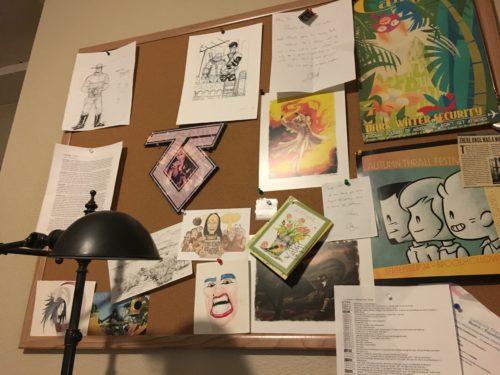
My giant cork board with notes, inspiration, and, of course, Twisted Sister.

At this point, I may just be in another Twisted Sister groove. It has been going on awhile, however; longer than this phase usually lasts. Perhaps the recent and full revelation of their importance to me may keep them at the forefront of my playlist, or, perhaps, they may fade into the background again. Either way, they’ll always be there, waiting for me to turn the volume back up on the endless, looping set they’re always playing in the back of my mind, underneath and unaccented, enhancing the the rhythm that guides my steps forward until I die.
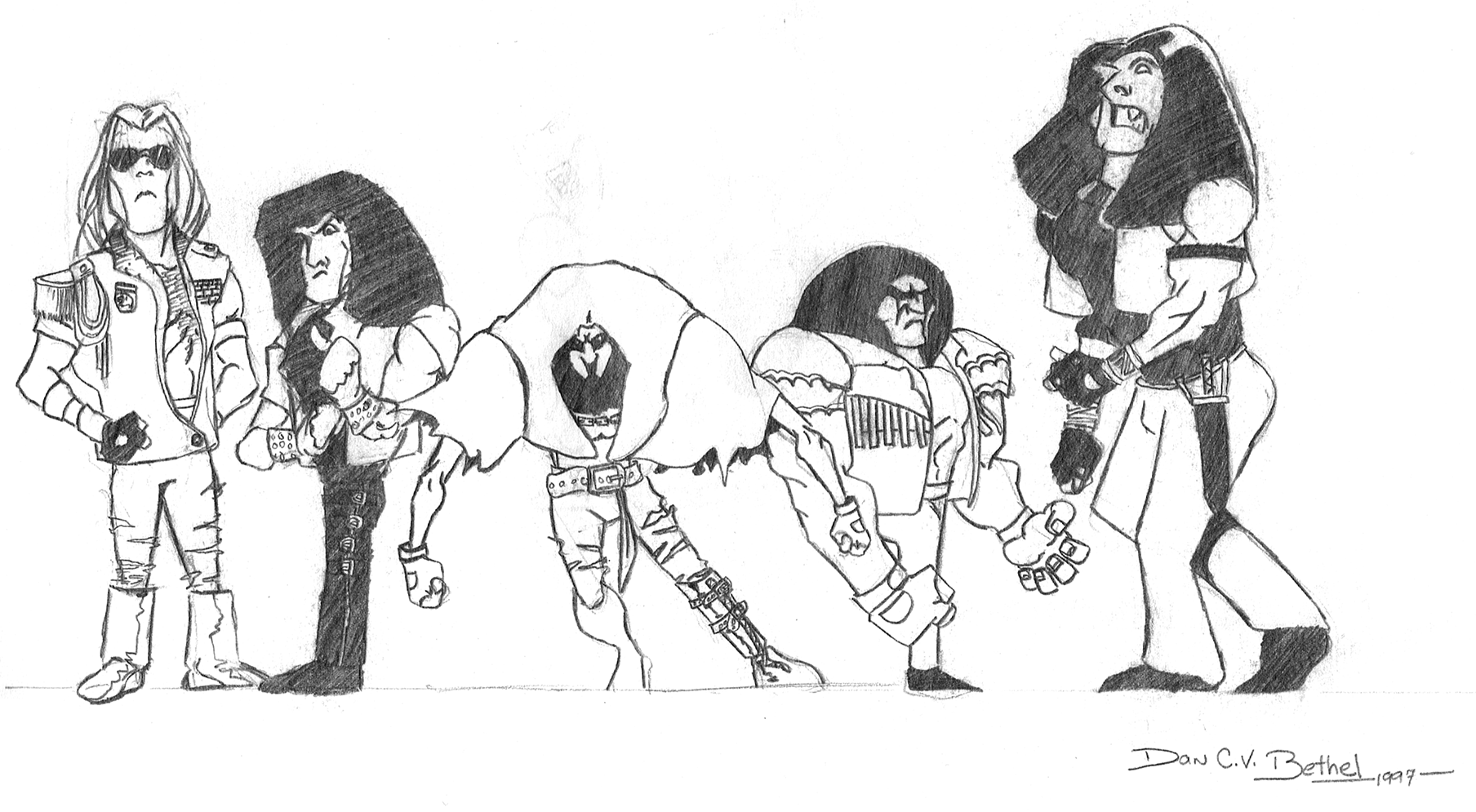
A cartoony drawing I did of Twisted Sister in 1997.
2 Comments

A Decade of D. Bethel

Sep07
by DBethel on 7 September 2017

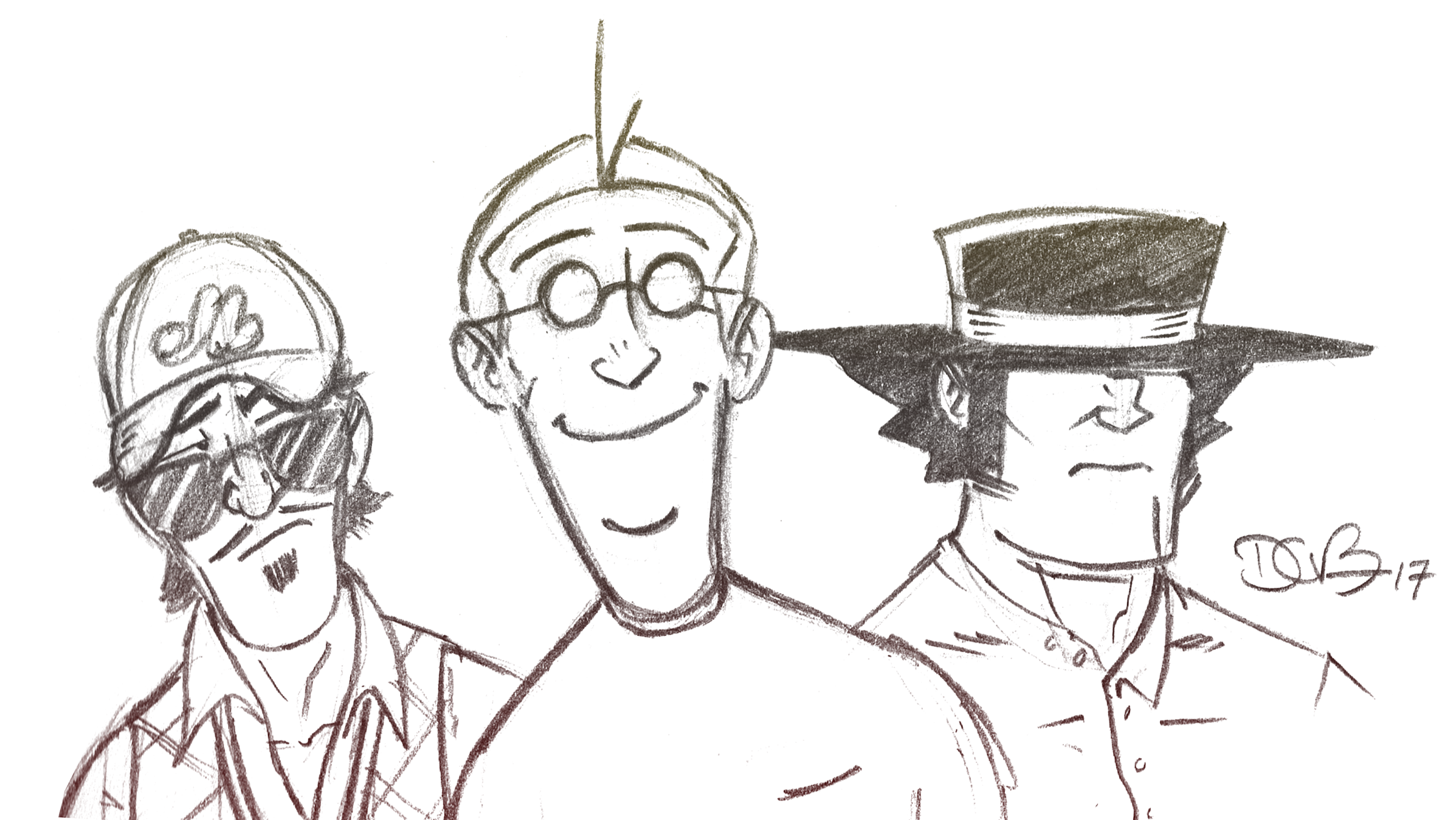
Sullivan “Sully” Caliber (from Eben Burgoon‘s B-Squad, left), Eben07, Long John.

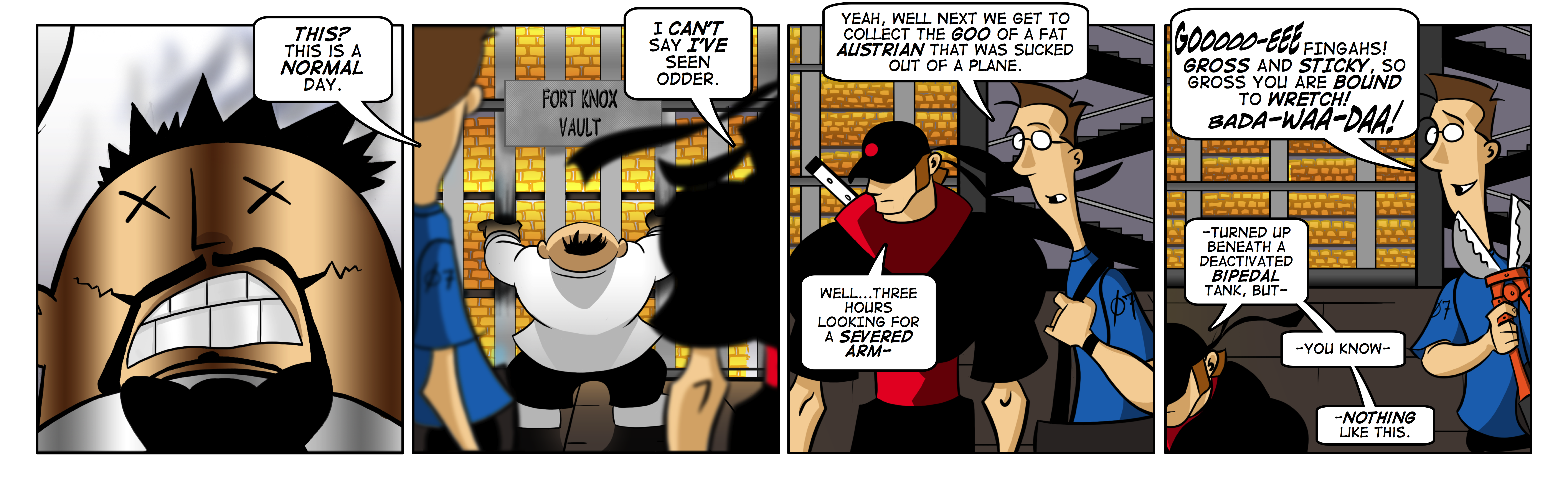
Today marks the day I started making comics for the world to see. It was 2007 and fellow creative, Eben Burgoon, and I took characters we created in high school and developed a rather thoughtful, if absurd, world around them, turned them into secret agent janitors, and started posting comics of their exploits as Eben07 to the internet.

My first ever comic, published ten years ago today, with Eben Burgoon.

Ten years later, Eben and I have gone our separate ways, but we’re both making comics still and using the footing we found as co-creators of a silly action comic to forge our own paths; he with B-Squad, I with Long John, of course.

I wish I could say that I feel like a seasoned professional, but I am decidedly not. I continue to brace against the centrifugal force of the learning curve I’m still riding, assuming that it will level out at some point in the future. Perhaps it doesn’t, maybe it’s not a straight line to this thing called “expertise.” Maybe it’s a tight spiral all the way forward and we’re always fighting against the gravity of ourselves, as creatives, and the audience, as consumers.

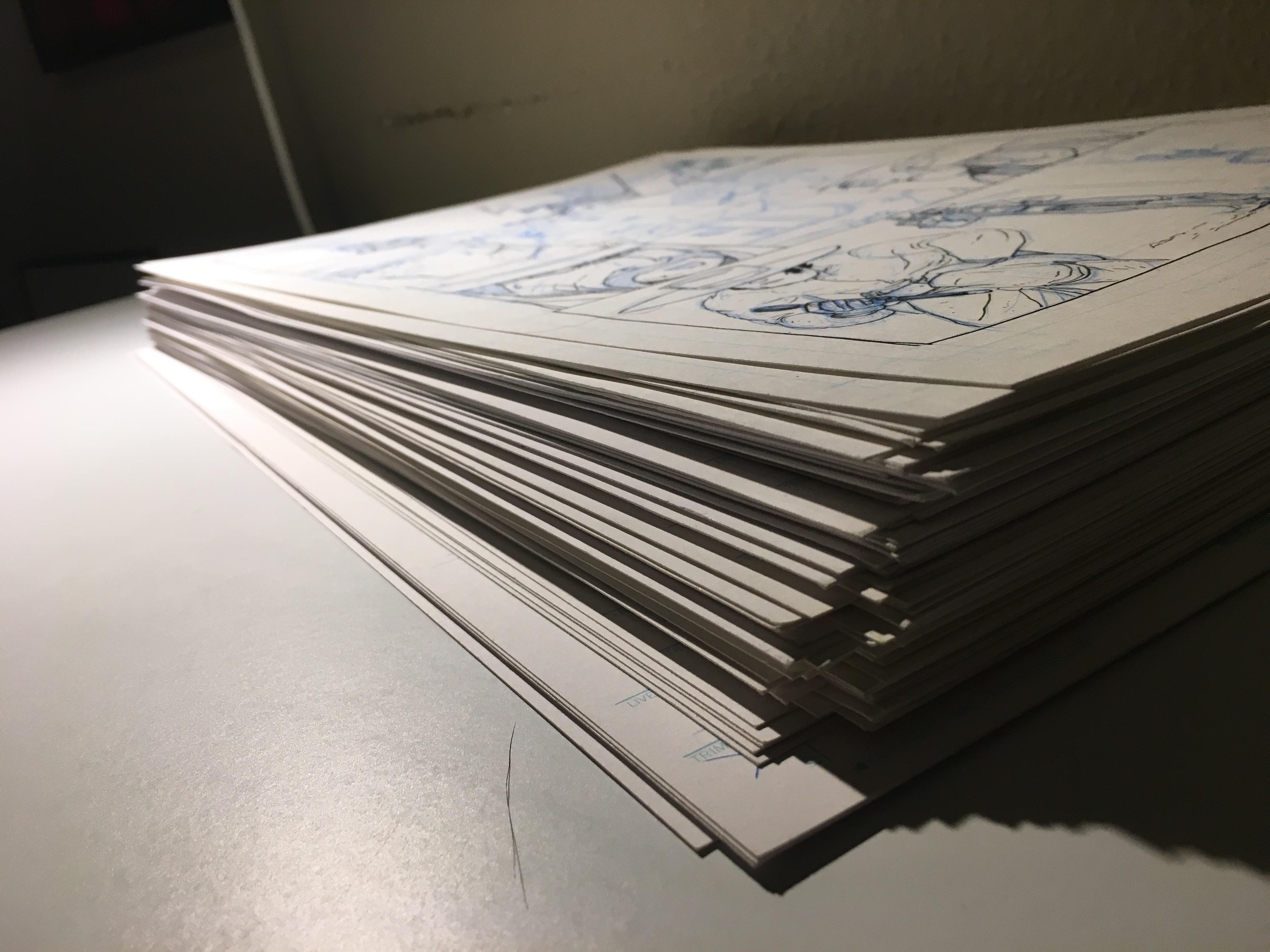
All of Long John so far, including unfinished pages for Chapter 3. Cat hair for scale.

It’s a fun ride, though, and I plan to keep doing it for as long as there is a road, no matter if it’s curved or straight.

 Comment 

Sketch Fridays #46 – Mark “The Animal” Mendoza

Sep01
by DBethel on 1 September 2017

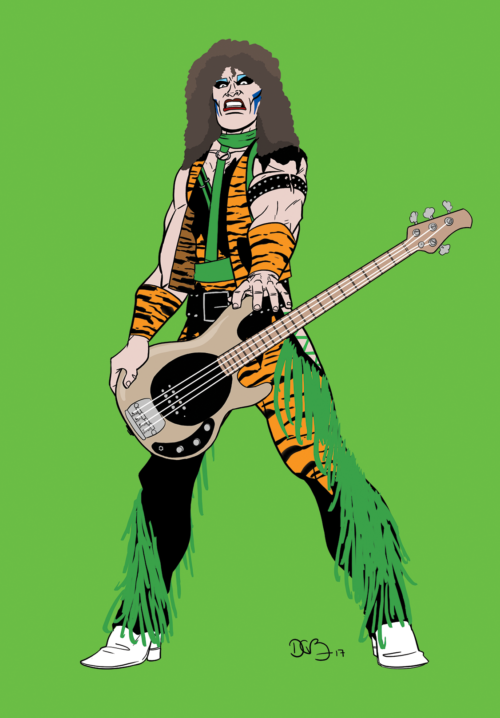
Sketch Fridays #46 – Mark “The Animal” Mendoza (bass guitar/backing growls/producer)

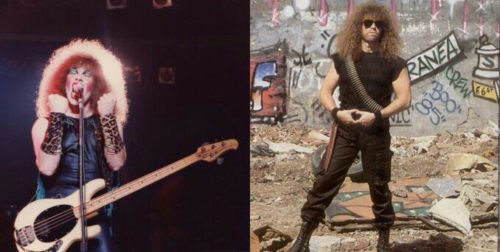
Mark “The Animal” Mendoza, along with drummer AJ Pero, make up the rhythm section of Twisted Sister and despite the fact that the word “powerful” could be used to describe both of them, what it represents for each couldn’t be more different. To fully understand what The Animal adds to the band, you’d have to watch a video of the band performing, because it’s clear ten seconds into any song that Mendoza is raw power. Ferocious power. When big open bass notes need to sound, he literally punches his bass (not in a slap bass kind of way, like in a bar fight kind of way). At other times, he grabs the mic stand in front of him and slams it into the neck of his bass. Even when dramatic flair isn’t needed, and he’s just idling on the root notes of the chord progressions, his right hand never sits still, instead drawing back like a baseball swing before hitting each note again. He does all of this while standing gigantic to the right of the stage, his mouth hanging open in a growl, as if it were just another part of the music, you just can’t hear it over the din of the band.

The Animal is ferocious in makeup and out of it.

The band is always pretty self-effacing about their musicality. They’ve used words like “simple” or “primal” or, occasionally, “dumb” to describe the music that they make. While their songs aren’t complex, it’s also pretty public that they never wanted their music to be that progressive. Despite their urgent pursuit of success (carefully outlined in a fantastic documentary titled We Are Twisted F***ing Sister) and their eventual attainment of it, their time as a bar band clearly and fully shaped how they play live and how they write songs. The band wants songs that get the audience to jump in time, to pump their fists in the air to every downbeat. The last thing they want any member of an audience to do is ponder during a set.

With templates established by the likes of Alice Cooper, AC/DC, and Slade, Twisted Sister found their mode and fully owned it.

With that in mind, this band was likely the first time I ever really heard the bass in the mix of the song. Since they often let power chords ring out, the drums and the bass have to work hard to keep the songs stomping forward, and there are a few songs where the bass is given prominent placement or chances to do quick, standout fills that really add a unique quality to what could be otherwise standard––but effective––rock songs.

It’s a testament to a guiding ethic. Sure, as a band they probably could have taken an album to do a musically complex and divergent concept piece, but they, as a group, made a decision about what this thing called “Twisted Sister” should be and they stuck to it. It’s inspiring because when working with an ethos it, I would argue, actually promotes creativity and stability rather than stifling it. A creative space without parameters, I find, is actually limiting because full freedom is overwhelming for the mind to handle. It’s easier to make something when you know what tools are available rather than having every tool available for any project. Though very different music, this is what The White Stripes did––giving themselves severe restrictions technologically (in their case), among other requirements, with which Jack and Meg White had to create new album.

In a sense, it’s also a bit of how I approach Long John. There are a few rules I have set for myself that I plan to never break, or, if I do, they will be for an important and rare narrative purpose. First is the technology; All of the interior, narrative pages of Long John will be drawn by hand. No digital should be present aside from the coloring and lettering. For the first chapter, I followed an aesthetic rule to try and always have Long John framed between two strong parallel lines to emphasize the fact that he’s trapped by his old mentality and he needs to break free from it in order to grow. You will never see Long John in his old clothes. These rules, though arbitrary, actually enhance the process for me. If they aren’t strictly improving the art, they are helping to keep my attention and to avoid falling into a nigh muscle memory pattern of creation that allows me to draw just fine but not think too hard about it. I wanted to stay focused and creative while drawing every frame of Long John, and it’s these rules that not only do so, but, because of that, results in a better product, I would argue.

I can’t say I got the idea to impose such rules on myself from Twisted Sister, but their example was there and known to me, and what impressed me is that it is clear, in hindsight at least, that this work ethic is something the entire band values and respects. The best evidence of this is when the band reunited after fifteen years apart. Sure, they looked different and even sounded a little different, but when the stage lights turned on it was clear they knew exactly what to do even all these years later. Watch a live show from 1984, 2004, or 2014; all of them are imposing displays of power, never compromising and never not Twisted Sister.

The Animal still has teeth.

2 Comments
  • Page 76 of 114
  • « First
  • «
  • 74
  • 75
  • 76
  • 77
  • 78
  • »
  • Last »
  • Instagram
  • Facebook
  • YouTube
Privacy & Cookies: This site uses cookies. By continuing to use this website, you agree to their use.

To find out more, including how to control cookies, see here: Cookie Policy
  • Newest Comic
  • About
  • Archive
  • Links
  • Shop
  • YouTube

©2014-2026 D. Bethel | Powered by WordPress with ComicPress | Subscribe: RSS | Back to Top ↑