• Newest Comic
  • About
    • Synopsis
    • Characters
    • Author
    • F.A.Q.
  • Archive
    • Comic Archive
    • Blog Archive
  • Links
    • Press
    • Connect
    • D. Bethel’s Work
    • Contact
    • Friends of Long John
  • Shop
    • Online Store
    • E-Books
  • YouTube

Long John

Losing Every Thing Changes Everything

Sketch Fridays #69 – Grifter

Feb21
by DBethel on 21 February 2020
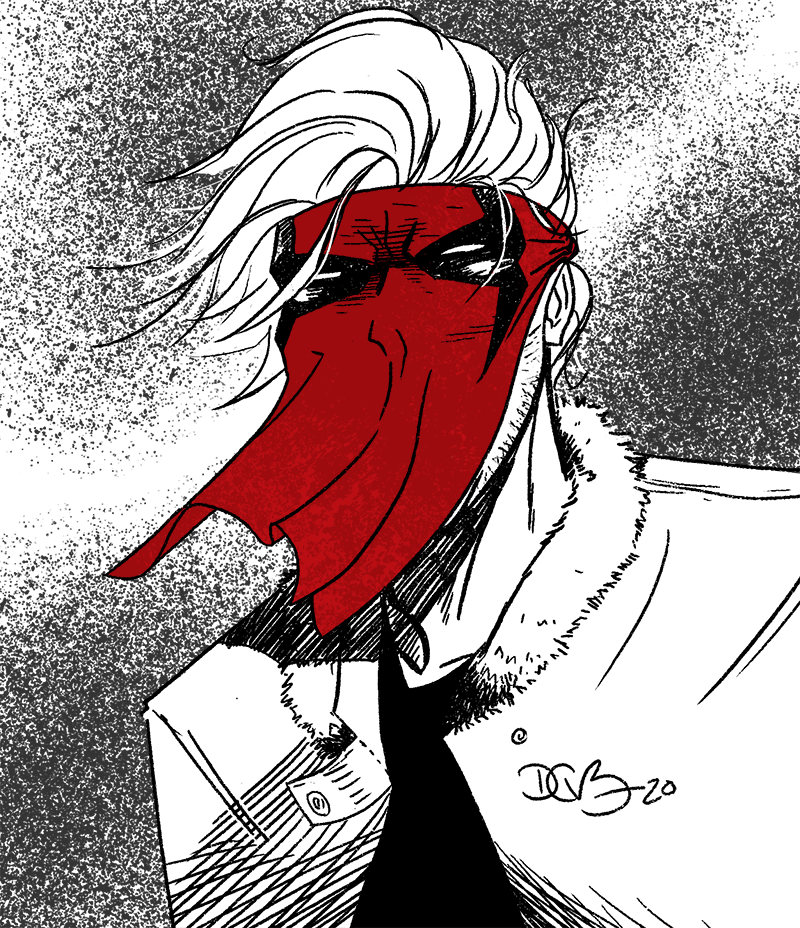
Sketch Friday #69 – Grifter. Character copyright DC Comics

I was simultaneously lucky and unlucky to be a young comic book reader in the early 1990s. It was the era of ravenous gluttony on the part of the industry as patient and opportunistic collectors inflated sales and encouraged cheap attempts at getting more money from fans. This lead to comics being released with variant covers (a practice that persists through to today), gimmick covers (foil embossed, embedded holograms, reflective, cutouts, etc.), and crossover events––all things done to boost sales. The promise of collectible comics drove the entire industry right off the cliff as it saturated the market with literally too many comics.

On the other side, those years were great because the superstar artists like Jim Lee, Marc Silvestri, Todd McFarlane, Rob Liefeld, and others, were drawing striking, dynamic, and powerful comics, pushing the limits of the medium at the time and doing things no one had seen before.
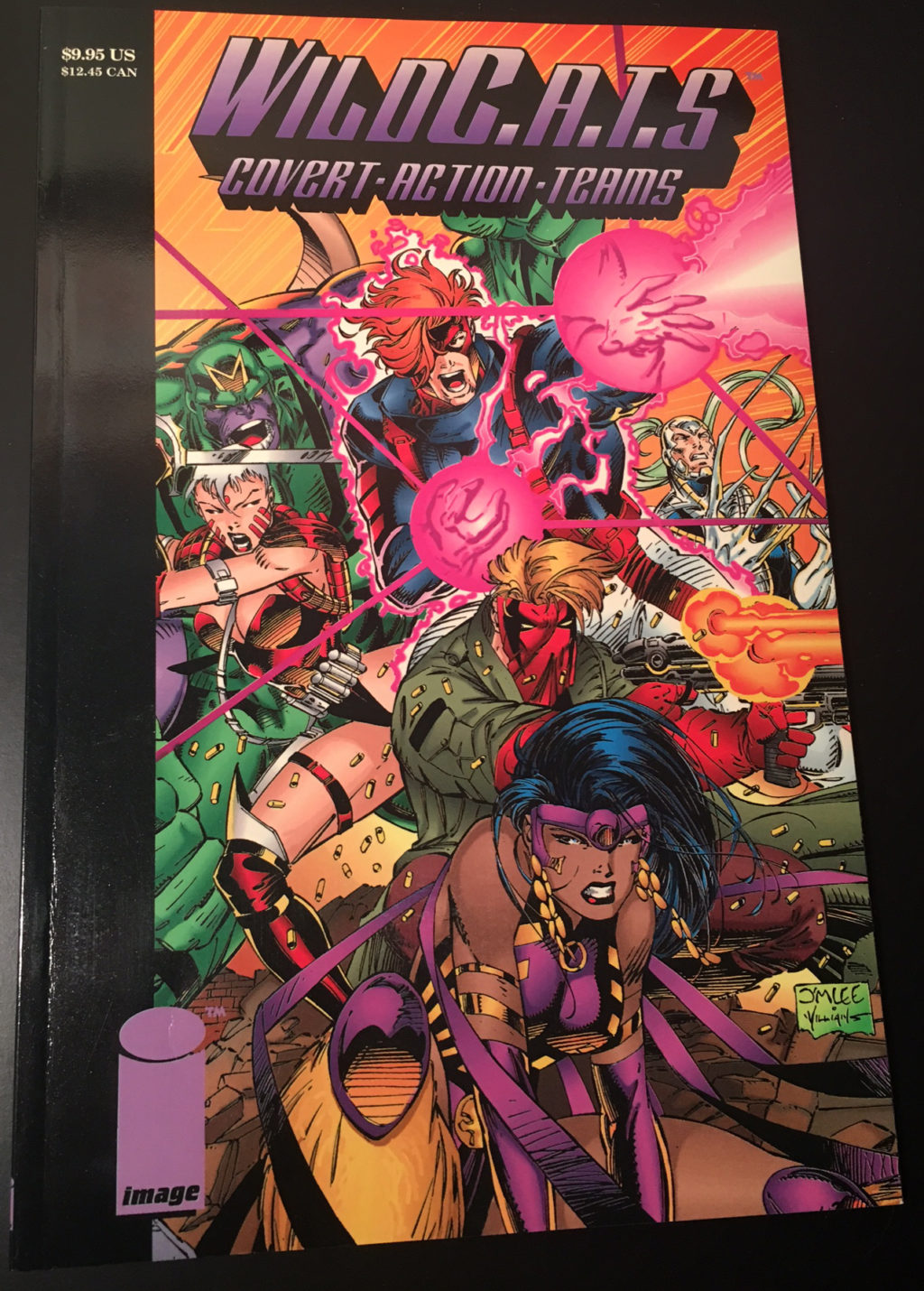
Most likely my first trade: the 1993 collection of Jim Lee’s WildC.A.T.s mini-series.

Those artists specifically––along with Jim Valentino, Erik Larsen, and Whilce Portacio––were all the top tier artists at Marvel Comics, all drawing books from the two most popular franchises in comics at the time: X-Men (Lee, Liefeld, Silvestri, Portacio) and Spider-Man (McFarlane, Larsen). With their rising status, however, they still found their rights stifled under the traditional work-for-hire contracts both Marvel and DC operated under––these artists were creating so many new characters and stories but never owned any of it. The best they could get was a promise to put their names as the creators on future books (this has worked swimmingly for Rob Liefeld, and his creations Deadpool, Cable, and Domino paying in dividends in terms of visibility and merchandise).

Frustrated, these seven creators did something no one had really done before––they left Marvel. They then walked over to DC and said, simply, “We’re leaving Marvel and we’re not coming to work for you, either.”

That was the creation of Image Comics, which has become the third tier of the comics publishing industry, though the Image Comics of today is a very different thing than the Image Comics of 1992. That is, except for their philosophy: Image Comics owns nothing except the Image Comics logo/emblem. The creators own all of their comics and get all the revenue (except a small payback to Image who fronts the cost for printing). That was the premise the company was founded upon and it persists to this day.

Each of the big creators started their own comics, and my teenage artistic hero, Jim Le, created WildC.A.T.s, the closest thing you can get to the X-Men without being the X-Men.
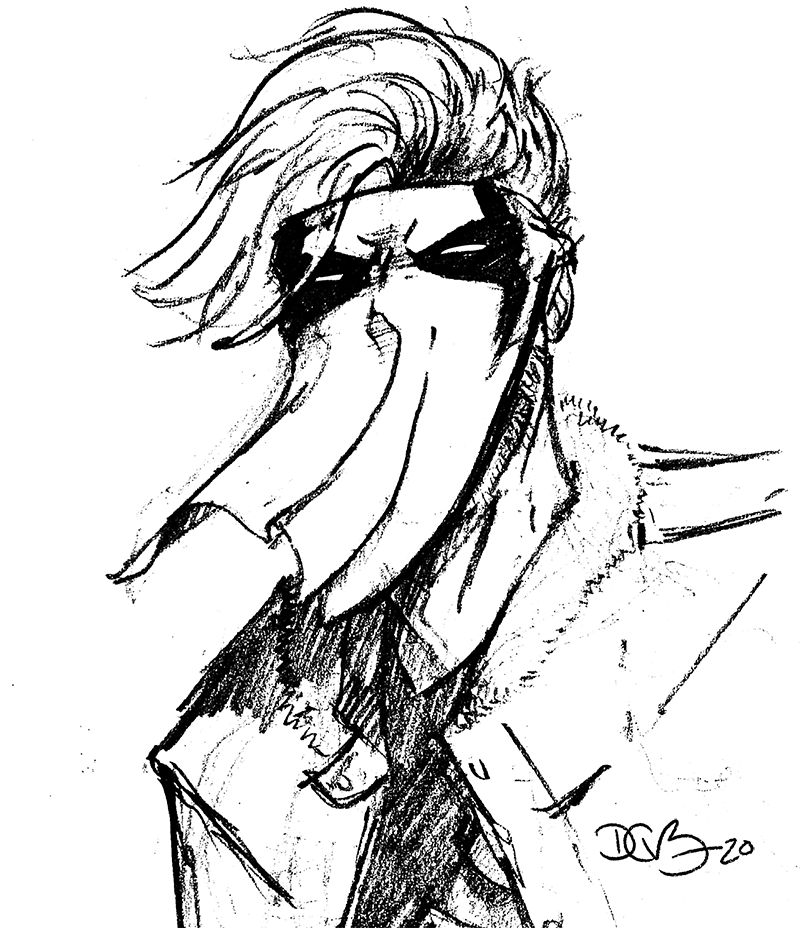
A scan of the original sketch.

Under Jim Lee’s imprint called WildStorm, what started with WildC.A.T.s grew into its own universe of titles and characters and I was on board with most of them for awhile.

Then the glut got to me and I bounced off of monthly comics by the late ’90s. It wasn’t until years later when I learned that Jim Lee sold his WildStorm imprint to DC Comics, causing him to leave the Image pantheon. It wasn’t until I read Joseph Hedges’ wonderful book––Wild Times: An Oral History of WildStorm Studios––that I learned the details: WildStorm was barely staying afloat, especially as the collector’s market collapsed the industry. But it maintained a certain level of prestige with its art and print quality and, apparently, most notably with its digital coloring. DC wanted WildStorm’s coloring and bought the studio and all of its intellectual property to get it.

A fantastic documentary about Image Comics––The Image Revolution––is available for streaming on Amazon Prime.

When I first learned the studio was sold to DC it actually affected me. When I learned the details I surely felt empathy and agree it was likely the best move, but I didn’t shake that doing that betrayed spirit that created those characters, which is something that motivates me today: creative autonomy. These creators were heroes to us young readers who were now creating heroes free from the shackles of Big Editing or Corporate Mandate (the two most evil villains) only––in WildStorm’s case––to go right back into that cave.

Though DC owns the characters and Jim Lee is co-publisher of DC Comics, the WildC.A.T.s are nowhere to be found outside of a few earnest attempts over the last decade. Once the paragons of independent comics they are now third-tier characters rotting in a creative basement. It’s a sad end, and even though I don’t really remember a single storyline from the entire run (except the time when they crossed over with the X-Men), I still feel a small, twinging pang when I see a WildC.A.T.s trade collection or back issue with the DC Comics emblem instead of the Image “I”.

They still remain free to me.
 Comment 

“Dead Words” Begins Monday, March 2

Feb14
by DBethel on 14 February 2020

Spring is a time of awakening and rebirth, a time to become who you were meant to be and shed who you once were. Even thought spring doesn’t officially start until the middle of the month, it’s the entire month of March that begins ringing the bell for the new season.

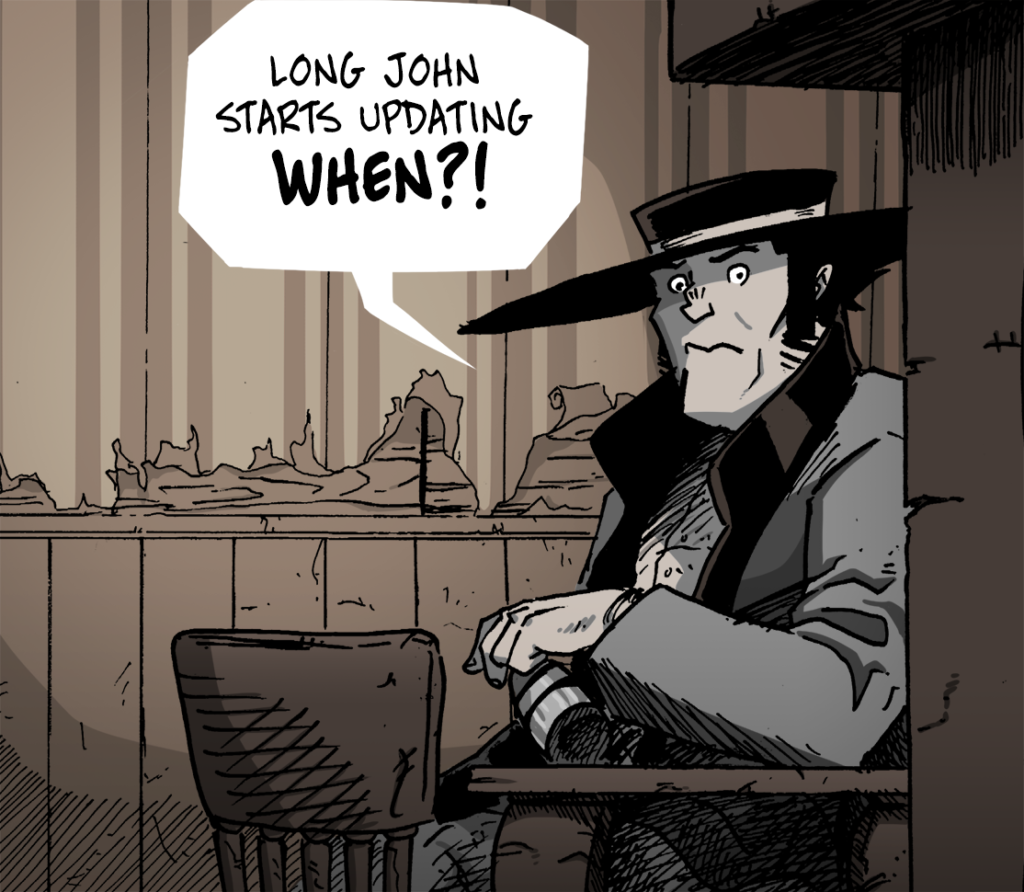
In celebration of that, chapter 4 of Long John––”Dead Words”––steps out of the dark and into the light…and then into the dark again because, let’s be honest, “Dead Words” is a dark chapter. You may be surprised, though, at the ways it actually does meet those descriptions of spring in many ways.

Starting Monday, March 2nd, you’ll bet getting two pages of “Dead Words” every week (Mondays and Wednesdays) for fourteen weeks.

One thing I’m excited about is looking at new ways to share the comic with readers, especially those using mobile platforms to read. Not everybody wants to go to the website to read the comic, so I’ll be updating each page on the official Facebook page, D. Bethel’s Instagram, in addition to other publishing ideas (which still need further research).

What To Do Until Then

  • Read Chapters 1-3 again!

This would be a great time to go through the archives again! Get caught up on the story so you can have all the context you need to jump right into chapter 4. So, how can you get caught up?

  1. Read through the archives on the website.
  2. Buy the books for a mere $20 on the store. Get a free Long John sketch with your purchase!
  • Get others hyped for Long John.

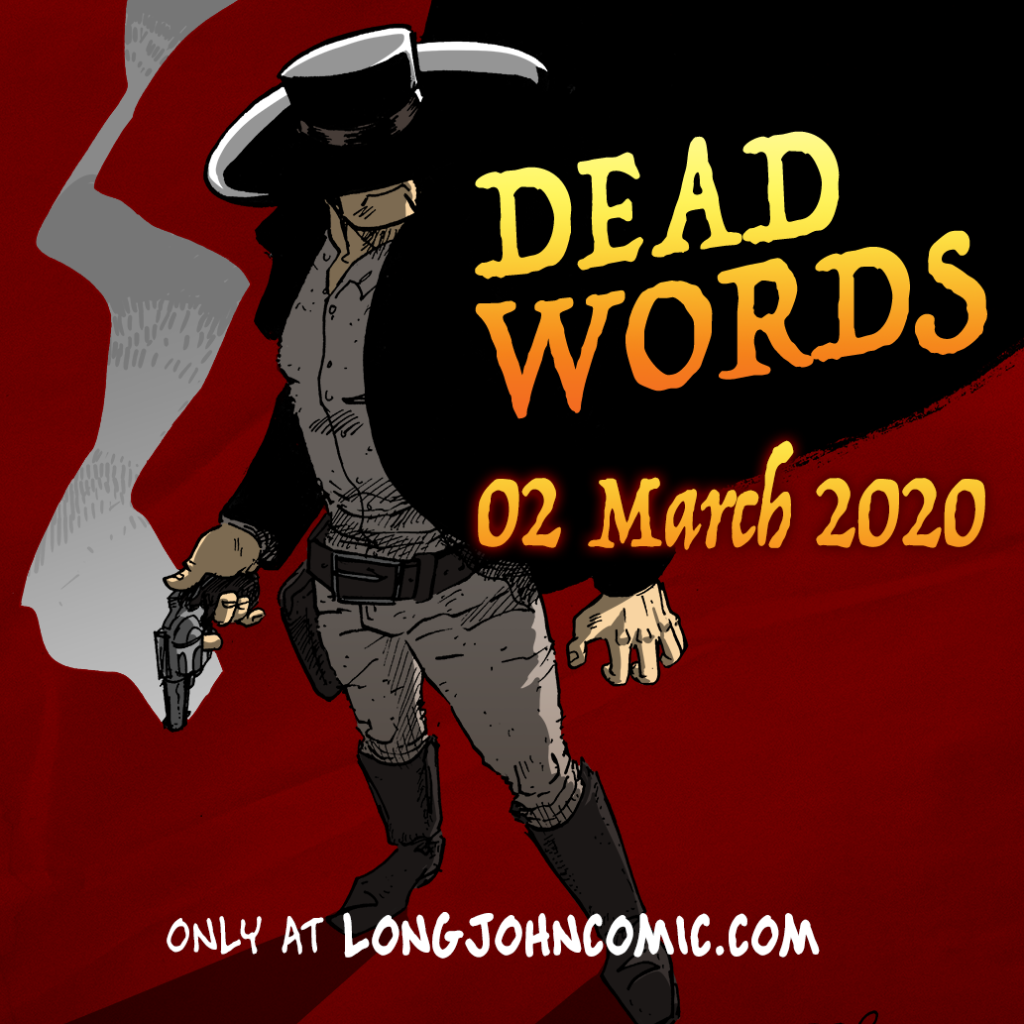
Do you have a favorite image, page, or scene from the comic so far? Share them! Get the word out by flexing your social media muscle to get your friends and family to finally check out the comic. I’ll be uploading the pages from the first three chapters to the Facebook page soon, so feel free to share from there. Also, feel free to copy and paste this little banner to your various platforms:

If you do share, please tag me (Twitter: @DBethel, Instagram: @dbethelcomics) in your post so I can share what you share. It’s like the digital circle of life!

  • Review Long John!

Do you have your own website, blog, YouTube channel, and/or podcast? I would love to hear what you think about the story so far! If you do, let me know so I can spread the word, too (even if you criticize! That’s part of what keeps art healthy and growing!).

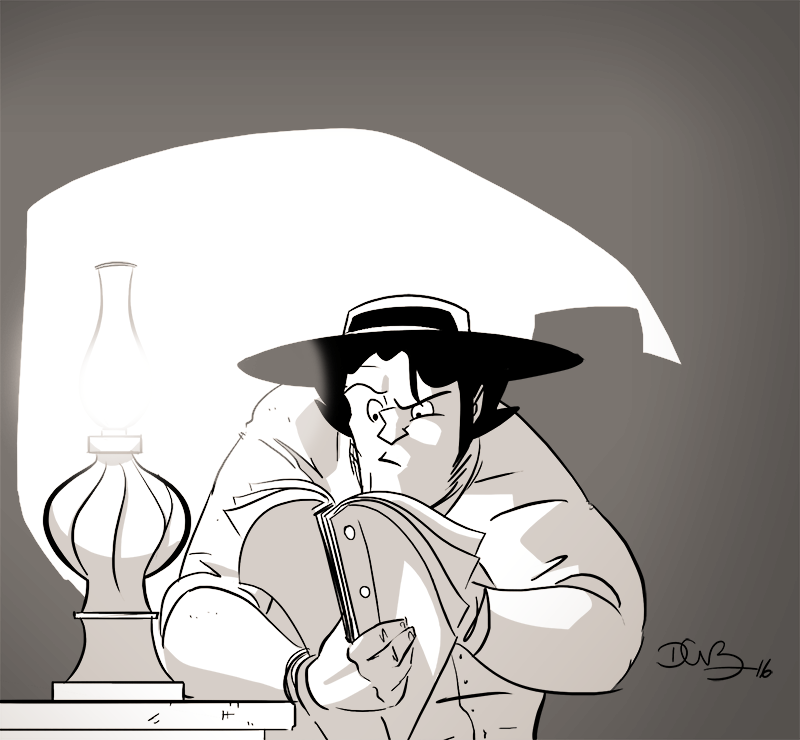
Long John excitedly reading your reviews of his story.

Or, feel free to get ahold of me (through DMs on social media or e-mailing the site at longjohncomic(at)gmail(dot)com; I’d love to talk about Long John, making comics, comics in general, storytelling, or any variety of other topics!

  • What about the book?

The goal right now is to have it ready by May for Free Comic Book Day 2020 with, perhaps, a soft launch at the new and improved Crocker-Con in April (depending on how the book comes together). I’m going all out on this book by trying to pack it full of stuff so that it’ll really be full of value (and exclusive content!).

Stay tuned for updates on the book––and for posts as we lead up to the launch on March 2nd––and a bunch of other stuff planned for down the road.

 Comment 

Sketch Fridays #68 – John Marston

Jan31
by DBethel on 31 January 2020
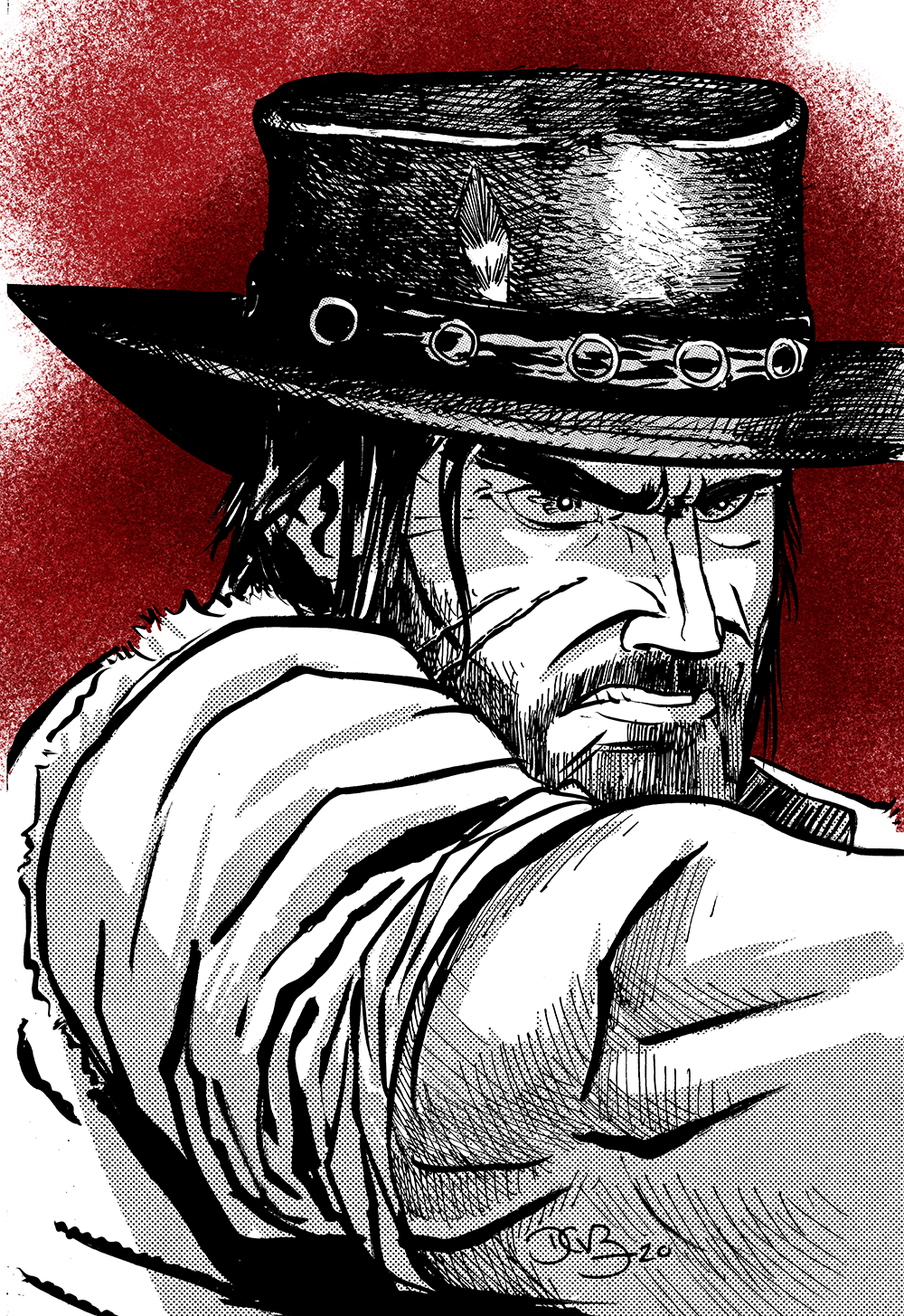
Sketch Friday #68 – John Marston from the video game Red Dead Redemption by Rockstar Games. Drawn in brush, micron technical pens, and colored/toned in Photoshop.

Alongside films like Django Unchained, it’s not unfair to say that Rockstar Game’s 2010 open-world adventure game, Red Dead Redemption, actually made the western genre viable for modern––i.e., young––audiences.

A major part of that was due to the strength of the performance and writing of the main character, John Marston. Marston is a former outlaw who kind of did what a lot of anti-heroes do before things go awry––he had one last score and then quit his gang to go live a life of legitimate means. He bought a ranch, married a partner that challenged and loved him, and even had a kid. For all intents and purposes, despite dealing with the frustrations a life living by the law brings a former outlaw, it was working, too.

His past caught up with him, however, as some Pinkerton agents drafted him to hunt down a member of his former gang, thus kicking off the events of the game.

John Marston was unlike most other characters in video games; he was empathetic, earnest in his desire to live a clean life, and showed the frustration and complexity of being on the other side of the law when dealing with this former colleagues. What’s more is that the game supported that narrative as well. It didn’t carry––well, not very much––the ludonarrative dissonance (the difference in a game between the story being to told through gameplay versus the story being told through cutscenes or cinematic sequences) that burden many other games. RDR decidedly set itself up against being a mere power fantasy. Throughout the entire game you were limited by the agility and ability of the character, or the horse he rode, or the environment you were in (which they doubled down on in the sequel). It made for an incredibly immersive and engaging experience.

Even though the sequel (actually a prequel) has come and gone and, in some cases, it wholly surpassed its predecessor in monumental ways (including the main character, in my opinion), John Marston holds a very special place in the minds of a certain generation of gamers, and deservedly so.

Marston was, for many, the first real tragic hero they had encountered in a medium that actually spoke to them (unlike dragging a teenager to a Shakespeare play, for example); Marston became an example to show that video games were more than bloody bursts of mortal combat––they also could be places for nuanced characters, beautiful environments, and deliberately paced and powerful narratives.

Just like in the story itself, Marston carries more on his shoulders than he wants or even deserves, but he forever seems up to the task.

 Comment 
  • Page 44 of 112
  • « First
  • «
  • 42
  • 43
  • 44
  • 45
  • 46
  • »
  • Last »
  • Instagram
  • Facebook
  • YouTube
Privacy & Cookies: This site uses cookies. By continuing to use this website, you agree to their use.

To find out more, including how to control cookies, see here: Cookie Policy
  • Newest Comic
  • About
  • Archive
  • Links
  • Shop
  • YouTube

©2014-2026 D. Bethel | Powered by WordPress with ComicPress | Subscribe: RSS | Back to Top ↑