• Newest Comic
  • About
    • Synopsis
    • Characters
    • Author
    • F.A.Q.
  • Archive
    • Comic Archive
    • Blog Archive
  • Links
    • Press
    • Connect
    • D. Bethel’s Work
    • Contact
    • Friends of Long John
  • Shop
    • Online Store
    • E-Books
  • YouTube

Long John

Losing Every Thing Changes Everything

The Long John Primer, Part 5

Feb25
by DBethel on 25 February 2020

Chapter 4 marks a strange new beginning in some ways. It acts as an interlude, one about Long John dealing with what occurred in the previous three chapters and preparing––unknowingly as it may be––for the chapters to come. However, like the very first chapter, “Dead Words” is a standalone work, one that takes the temperature of not only where Long John is at this moment but also of the entire region at this point in the story.

To set the tone, there will be two posts this week that will help readers get into the mindset of where Chapter 4––and the subsequent installments––comes from, though it may not always be comfortable. So, reaching back to before the release of the first chapter, we add to the previous four entries of “The Long John Primer”––the things that help to make Long John what it is, has been, and will be.

5. The Heavy Metal Factor

This is probably one of the most dissonant areas of conversation that comes up during conversation. People can accept the noir or Kurosawa influence in the comic as those two influences line up historically and aesthetically with traditional westerns as well as with whatever kind of western I’m making with Long John.

But to hear that heavy metal is one of the main types of music I listen to––and that the themes and timbre of this music inspire me more than any other––is when I watch people run face-first into a brick wall.

For me, however, there is more of a direct lineage if you consider the specific heavy metal that I enjoy and the more interesting and progressive scores of the genre cinematically.

I think one of the first movies whose score I actively remember is Ry Cooder’s music for the Kurosawa-inspired depression-era gangster film, Last Man Standing. Cooder’s recognizable slide guitar stylings, as told through heavily distorted amplification, became a white whale for me in terms of trying to find physical copies of the soundtrack as well as the kind of music I wanted to be listening to regularly. Cooder’s score was crunchy, his notes heaving through punctured and dusty speaker cones. Aside from latter day Neil Young (and his gorgeous score for Jim Jarmusch’s Dead Man), the only comparable sound I ever found was through heavy metal, specifically a genre called “doom” metal, but the designation is meaningless.

What I find in this music is an unending plateau of wide open (albeit distorted) guitars, with heavily reverberated but confident melody circling thoughtful, literary lyrics (as sad as they can sometimes be) as sung by sad, soulful, and lonely voices. I love the earnest melodrama of it, and it hits a very specific chord at my core.

But it’s that sound to which I stomp ever closer, especially as we head into a particularly dark section of Long John. The music of Dawnbringer––whom I have written about before back in Chapter 1––definitively spoke to this, and from that foundation I found musicians that continue to answer that call.

In the relentless pursuit of that sound, bands like Pallbearer and Khemmis have provided hours of inspiration and, for lack of a better word, personal calm. That tone––the droning yet melodic fuzz that wraps around your head like a towel straight from the dryer––has a profound effect on me, where even the despondent lyrics don’t deter from the philosophical calm that the noise brings me. It’s a din through which melody can still permeate, a desolation where beauty can still find a path, and actually leaves me with a sense of empowerment and optimism despite some of pessimistic themes these songs can hold.

It’s the sequential art version of that tone that I pursue here, a brass ring I desperately reach for with Chapter 4. I hope that same feeling hugs the reader by the end of the chapter––hell, of the entire book. It’s a feeling that, despite the darkness, cacophony, and confusion, light still comes through, pointing to a morning full of opportunity built on the back of what came before. But it’s okay to wait until the smoke clears first.

This music is a much more personal inspiration than any of the previous primers––one that may even push people away––but it’s probably one of the driving factors to getting each page, scene, and chapter drawn through to completion. If it’s music not to your taste, I get it; however, know that it is the driving beat and sound that pushes my pen forward as I tell Long John’s story.

So, that’s the Long John primer. Also, read about The Eastern Sierra Nevada Factor, The Kurosawa Factor, The Hamett Factor, The Western Factor, and The Indie Comics Factor.
4 Comments

Chapter 1 on Facebook

Feb24
by DBethel on 24 February 2020
Read Chapter 1 – Sunza right now on Facebook!

To kick off this last week before Chapter 4 – Dead Words begins updating, we’re going to embrace social media a bit more by making the comic available on the official Long John Facebook page.

Today, we posted the entirety of Chapter 1 – Sunza, on Wednesday we’ll post Chapter 2 – Bird’s Eye, and we’ll round out the week by posting Chapter 3 – Making Smoke on Friday.

While still not a perfect way to read the comic (you’ll have to do some pinching and zooming), you’ll at least be able to read it from the comfort of your Facebook app on your mobile device. What’s more, is that posting the comics on Facebook makes it infinitely easier to share the comic with people you know who you think may enjoy the comic.

That being said, each page links back to the page on the site, which will be the only place to find the accompanying blog posts with a look at the process, inspiration, and commentary for that specific page. (Also, the website is still the only place you’ll be able to get hover text––the secret text you see when you hover your cursor over the page.)

So, what would help the comic the most would be to, obviously, follow D. Bethel and Long John’s presence on social media: Facebook, Twitter, and Instagram. Then, when you see comics, albums, and events get posted, feel free to share them so that all of your friends can see them and finally see what’s so great about this western webcomic you keep talking about all the time!

Keep your eyes on the site (or on Facebook and Twitter) to see all the posts that will be going up this week!

 Comment 

Sketch Fridays #69 – Grifter

Feb21
by DBethel on 21 February 2020
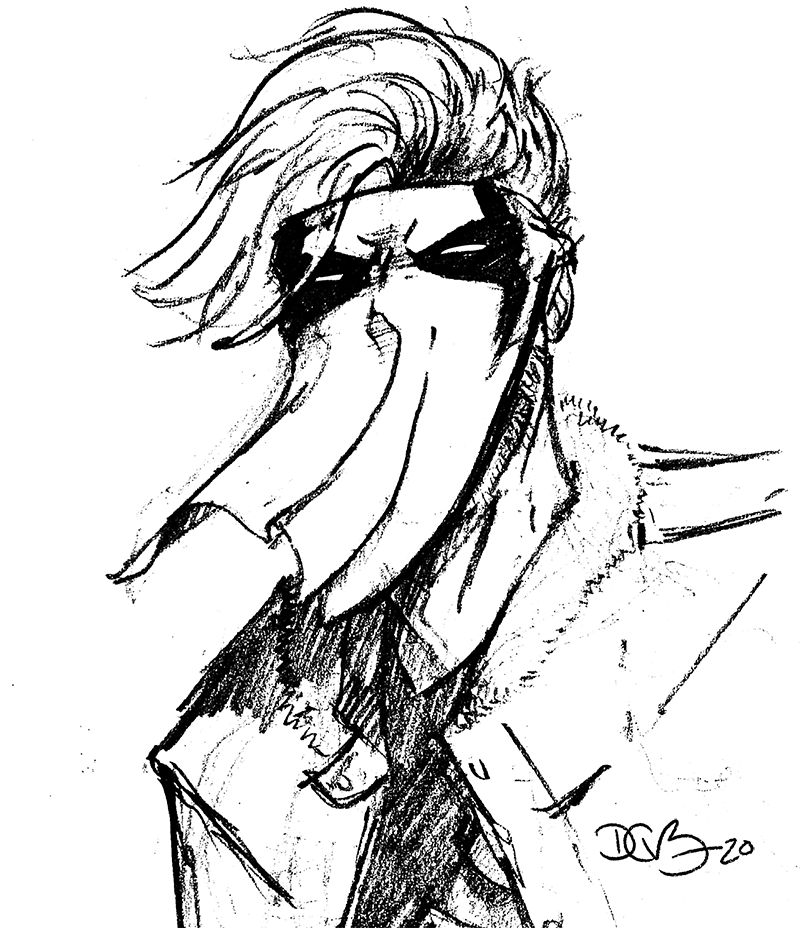
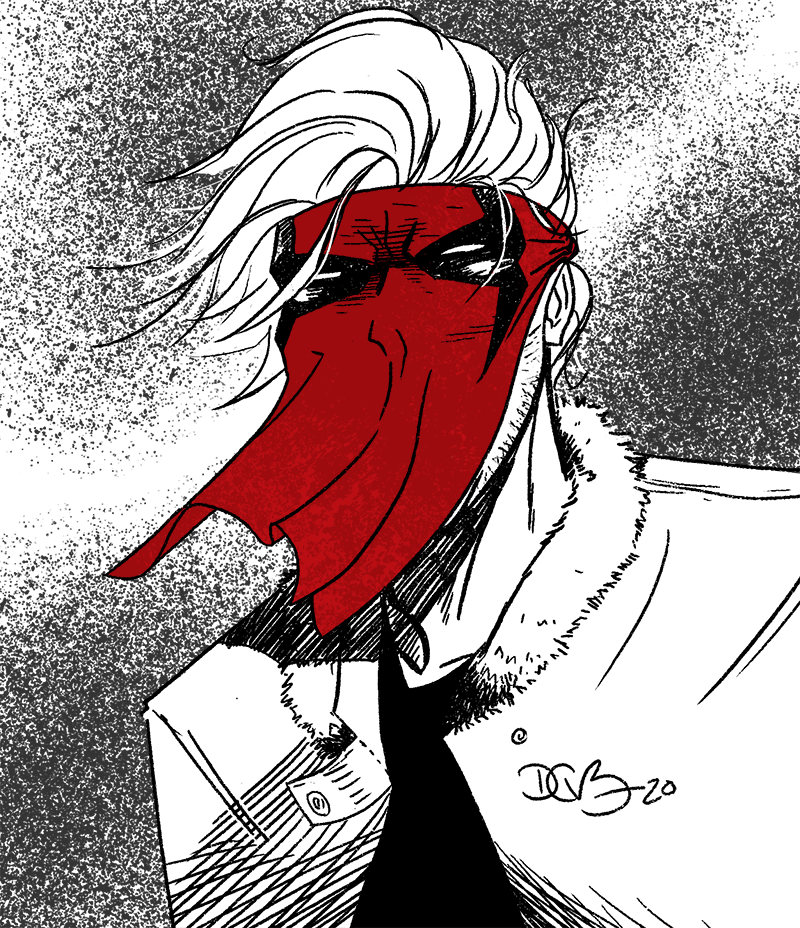
Sketch Friday #69 – Grifter. Character copyright DC Comics

I was simultaneously lucky and unlucky to be a young comic book reader in the early 1990s. It was the era of ravenous gluttony on the part of the industry as patient and opportunistic collectors inflated sales and encouraged cheap attempts at getting more money from fans. This lead to comics being released with variant covers (a practice that persists through to today), gimmick covers (foil embossed, embedded holograms, reflective, cutouts, etc.), and crossover events––all things done to boost sales. The promise of collectible comics drove the entire industry right off the cliff as it saturated the market with literally too many comics.

On the other side, those years were great because the superstar artists like Jim Lee, Marc Silvestri, Todd McFarlane, Rob Liefeld, and others, were drawing striking, dynamic, and powerful comics, pushing the limits of the medium at the time and doing things no one had seen before.

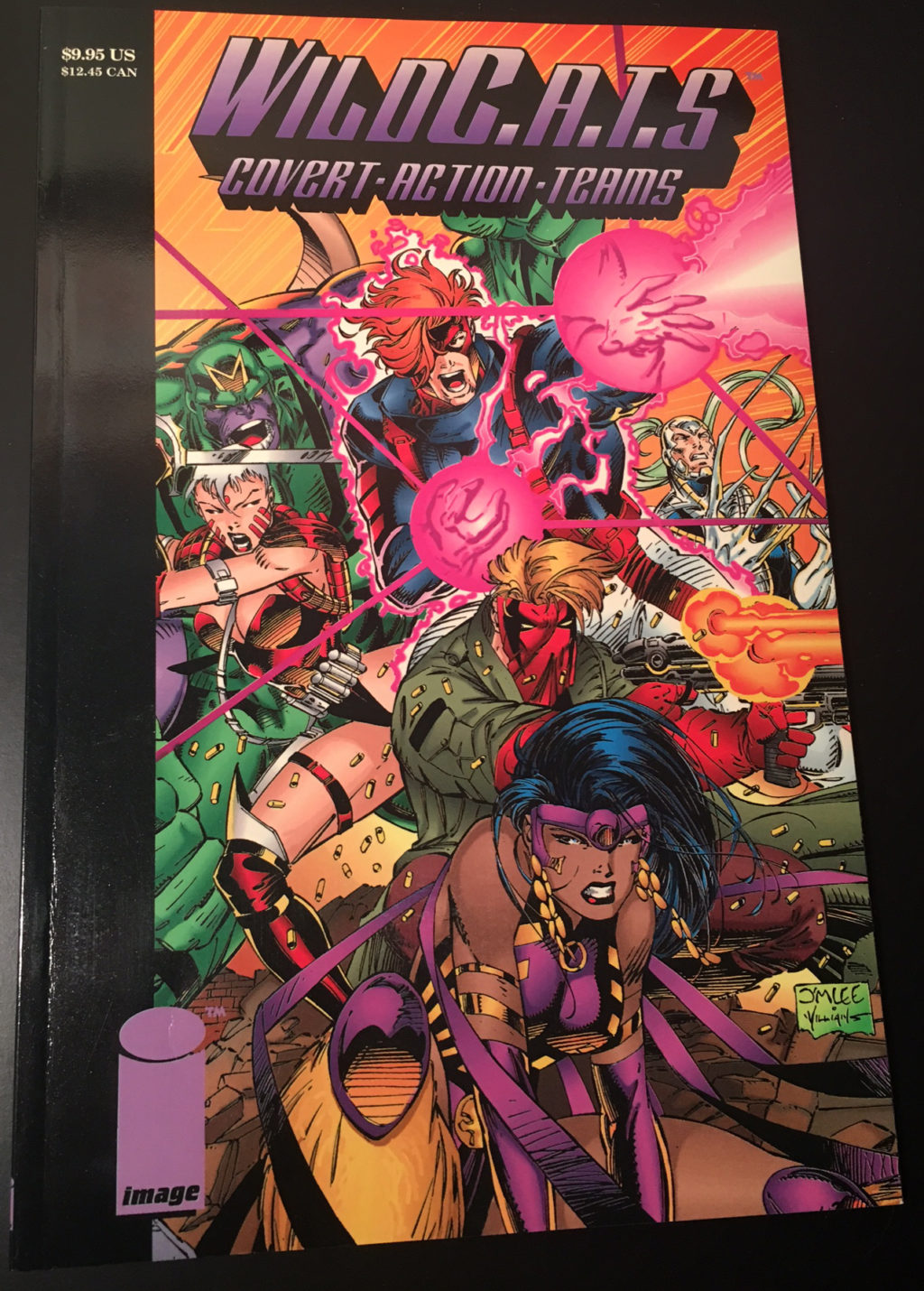
Most likely my first trade: the 1993 collection of Jim Lee’s WildC.A.T.s mini-series.

Those artists specifically––along with Jim Valentino, Erik Larsen, and Whilce Portacio––were all the top tier artists at Marvel Comics, all drawing books from the two most popular franchises in comics at the time: X-Men (Lee, Liefeld, Silvestri, Portacio) and Spider-Man (McFarlane, Larsen). With their rising status, however, they still found their rights stifled under the traditional work-for-hire contracts both Marvel and DC operated under––these artists were creating so many new characters and stories but never owned any of it. The best they could get was a promise to put their names as the creators on future books (this has worked swimmingly for Rob Liefeld, and his creations Deadpool, Cable, and Domino paying in dividends in terms of visibility and merchandise).

Frustrated, these seven creators did something no one had really done before––they left Marvel. They then walked over to DC and said, simply, “We’re leaving Marvel and we’re not coming to work for you, either.”

That was the creation of Image Comics, which has become the third tier of the comics publishing industry, though the Image Comics of today is a very different thing than the Image Comics of 1992. That is, except for their philosophy: Image Comics owns nothing except the Image Comics logo/emblem. The creators own all of their comics and get all the revenue (except a small payback to Image who fronts the cost for printing). That was the premise the company was founded upon and it persists to this day.

Each of the big creators started their own comics, and my teenage artistic hero, Jim Le, created WildC.A.T.s, the closest thing you can get to the X-Men without being the X-Men.

A scan of the original sketch.

Under Jim Lee’s imprint called WildStorm, what started with WildC.A.T.s grew into its own universe of titles and characters and I was on board with most of them for awhile.

Then the glut got to me and I bounced off of monthly comics by the late ’90s. It wasn’t until years later when I learned that Jim Lee sold his WildStorm imprint to DC Comics, causing him to leave the Image pantheon. It wasn’t until I read Joseph Hedges’ wonderful book––Wild Times: An Oral History of WildStorm Studios––that I learned the details: WildStorm was barely staying afloat, especially as the collector’s market collapsed the industry. But it maintained a certain level of prestige with its art and print quality and, apparently, most notably with its digital coloring. DC wanted WildStorm’s coloring and bought the studio and all of its intellectual property to get it.

A fantastic documentary about Image Comics––The Image Revolution––is available for streaming on Amazon Prime.

When I first learned the studio was sold to DC it actually affected me. When I learned the details I surely felt empathy and agree it was likely the best move, but I didn’t shake that doing that betrayed spirit that created those characters, which is something that motivates me today: creative autonomy. These creators were heroes to us young readers who were now creating heroes free from the shackles of Big Editing or Corporate Mandate (the two most evil villains) only––in WildStorm’s case––to go right back into that cave.

Though DC owns the characters and Jim Lee is co-publisher of DC Comics, the WildC.A.T.s are nowhere to be found outside of a few earnest attempts over the last decade. Once the paragons of independent comics they are now third-tier characters rotting in a creative basement. It’s a sad end, and even though I don’t really remember a single storyline from the entire run (except the time when they crossed over with the X-Men), I still feel a small, twinging pang when I see a WildC.A.T.s trade collection or back issue with the DC Comics emblem instead of the Image “I”.

They still remain free to me.

 Comment 
  • Page 45 of 114
  • « First
  • «
  • 43
  • 44
  • 45
  • 46
  • 47
  • »
  • Last »
  • Instagram
  • Facebook
  • YouTube
Privacy & Cookies: This site uses cookies. By continuing to use this website, you agree to their use.

To find out more, including how to control cookies, see here: Cookie Policy
  • Newest Comic
  • About
  • Archive
  • Links
  • Shop
  • YouTube

©2014-2026 D. Bethel | Powered by WordPress with ComicPress | Subscribe: RSS | Back to Top ↑