• Newest Comic
  • About
    • Synopsis
    • Characters
    • Author
    • F.A.Q.
  • Archive
    • Comic Archive
    • Blog Archive
  • Links
    • Press
    • Connect
    • D. Bethel’s Work
    • Contact
    • Friends of Long John
  • Shop
    • Online Store
    • E-Books
  • YouTube

Long John

Losing Every Thing Changes Everything

The Year – 2018 : Games

Dec29
by DBethel on 29 December 2018

In a twist on The Week, to celebrate the end of the year I’m going to be making individual posts about the things that really stuck with me this year. These will be the things that I kept coming back to and kept thinking about and, if possible, kept diving into the hole it created in my wallet.

Of all the hobbies I’ve had through my life, the one constant––the only solid line from youth to adulthood––has been video games. I stopped reading comics for about fifteen years. I didn’t start playing guitar until adulthood. I didn’t start regularly reading for fun until I was 21. I even stopped drawing for about seven years. However, in every home, I have always had a video game console connected to my television––from the Nintendo Entertainment System through to my Playstation 4 today.

To that end, though, I was even a nerd among video game players. I liked the games that had stories and characters that changed by the end of the game. Instead of playing every Madden game I eagerly awaited any news on the new slowly-paced, menu-driven Final Fantasy game, having been a fan of the series since its day of release in 1990. Where some friends of mine wanted to play head-to-head matches of Street Fighter II or a shooter like Halo, I steered toward games where it was just me, a controller, and the tv.

And although my tastes have changed over time, I am always drawn to story and characters more than action or competition, and the games that really stuck with me this year evoke that fundamental draw.

–––––––––––––––––––––
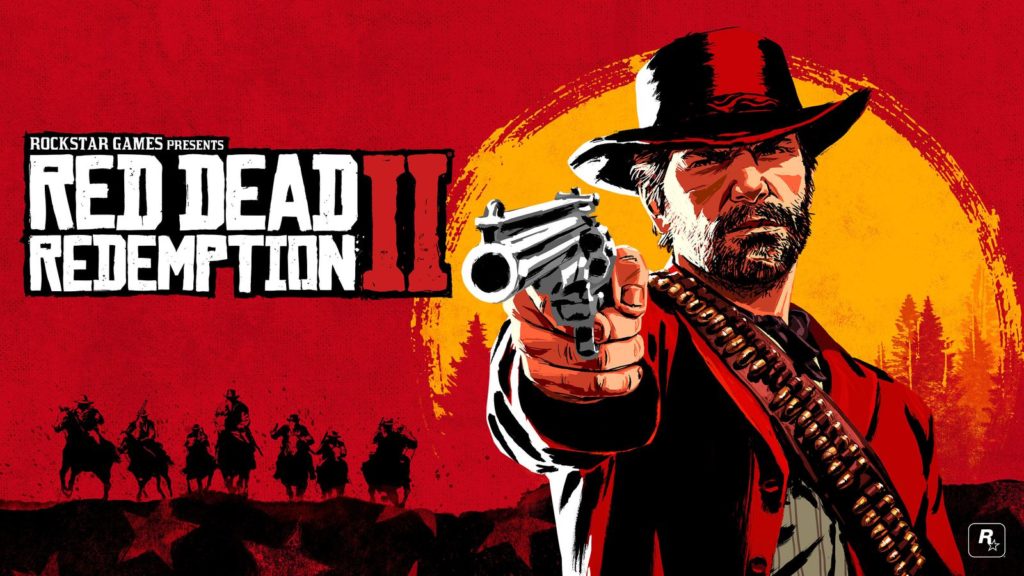
source: Rockstar Games

Red Dead Redemption 2

by Rockstar Games, played on Playstation 4

Red Dead Redemption 2 is a game I can’t recommend. Well, not to most people. It’s not the game most fans of Red Dead Redemption, Grand Theft Auto, or Rockstar Games wanted.

The joke about 2010’s Red Dead Redemption was that was basically just Grand Theft Equine, and though the story and characters were more optimistic, less cynical, and more thoughtful than anything in the GTA series, mechanically it wasn’t wrong. And as the most recent GTA is an iteration on what GTA has always done, it made sense that RDR2 would continue such evolution. What we didn’t expect was for one of the most profitable video game companies to spend millions of dollars (allegedly, RDR2 is the most expensive game ever made, and it shows) to make a weird art-house game about cowboys.

While continuing the tradition from its predecessor by being Rockstar’s strongest narrative, with the best characterizations and acting I’ve seen in any game, the humorously reductive name best applied in this case would be Cowboy Simulator. You actually have to ride your horse from place to place in real time. And you can’t just sprint the whole way because you could aggravate the horse or even harm it. You can’t just shoot everyone you see and steal their stuff because you’ll be reported to the law, making your time in town very difficult (but, I guess, doable). It’s a game that asks you to be your best cowboy, getting around to the story the developers want to tell whenever you can.
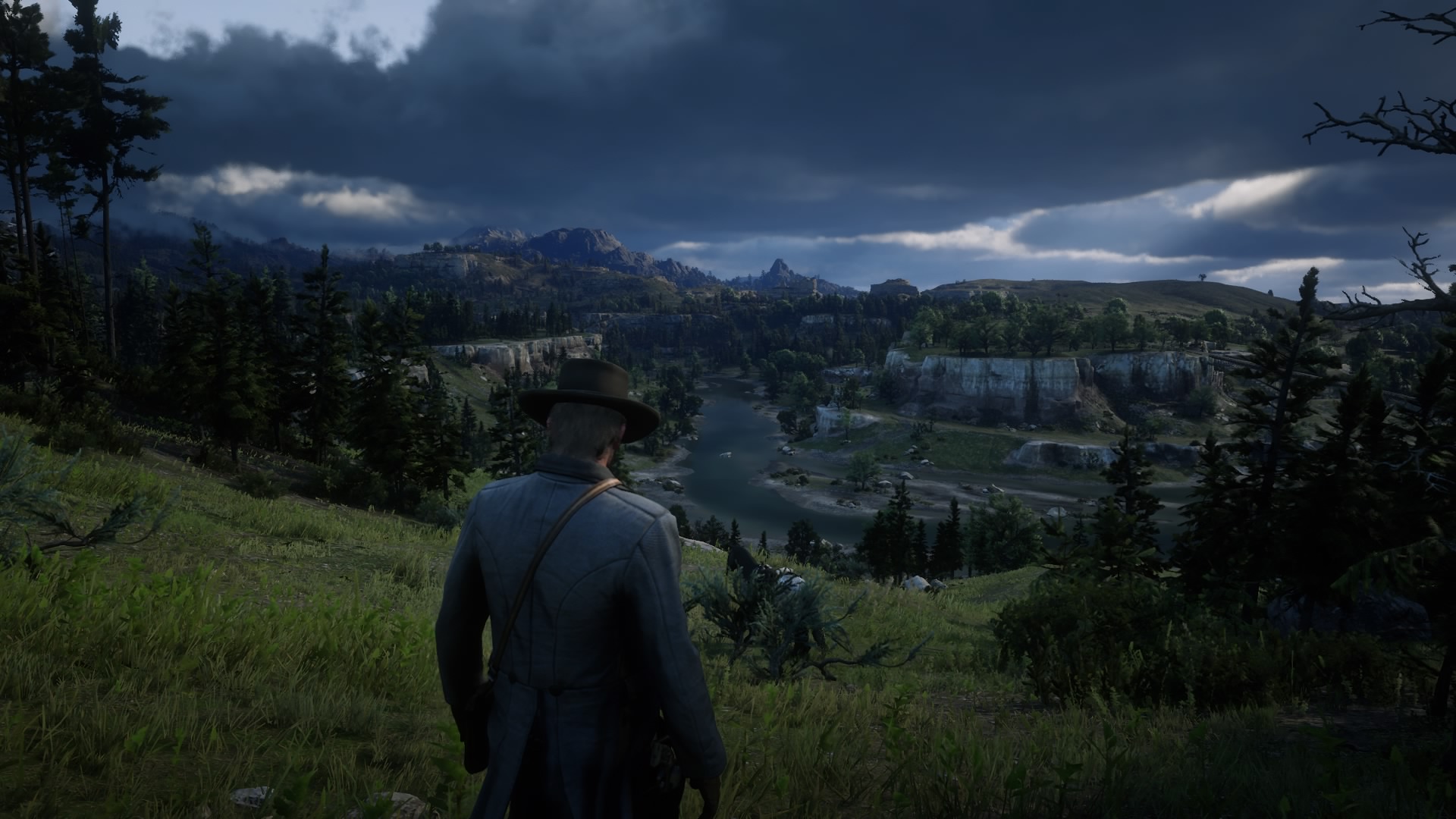
This game presents a believable world unlike any I’ve seen before. Screenshot of Red Dead Redemption 2 taken by the author.

Rockstar Games is most well-known for its amoral Grand Theft Auto series, games I never played nor appreciated. However, I was a fan of an early Rockstar release on the Playstation 2 called Red Dead Revolver, an earnest western action game that traded on clichés but surprisingly held more heart than it needed to in its story and characters. So, when Red Dead Redemption was announced, it was like a game was being made for me, and the game itself certainly did not disappoint.

I expected Red Dead Redemption 2 to be what its predecessor was, but bigger. However, with its plethora of unconnected systems and severe repercussions to the choices you make, RDR 2 clearly wanted to smash the expectations it created with Red Dead Redemption as well as any of its ties to the GTA series.

While the story is gripping––the most sober and thoughtful Rockstar has ever done––it is interminable, especially toward the end as it tries a bit too hard to tie itself to the first RDR (of which it is actually a prequel), but I loved every minute in that world where I’m just doing my best to help the gang, using my skills slinging guns and riding the plains to the best of my ability.
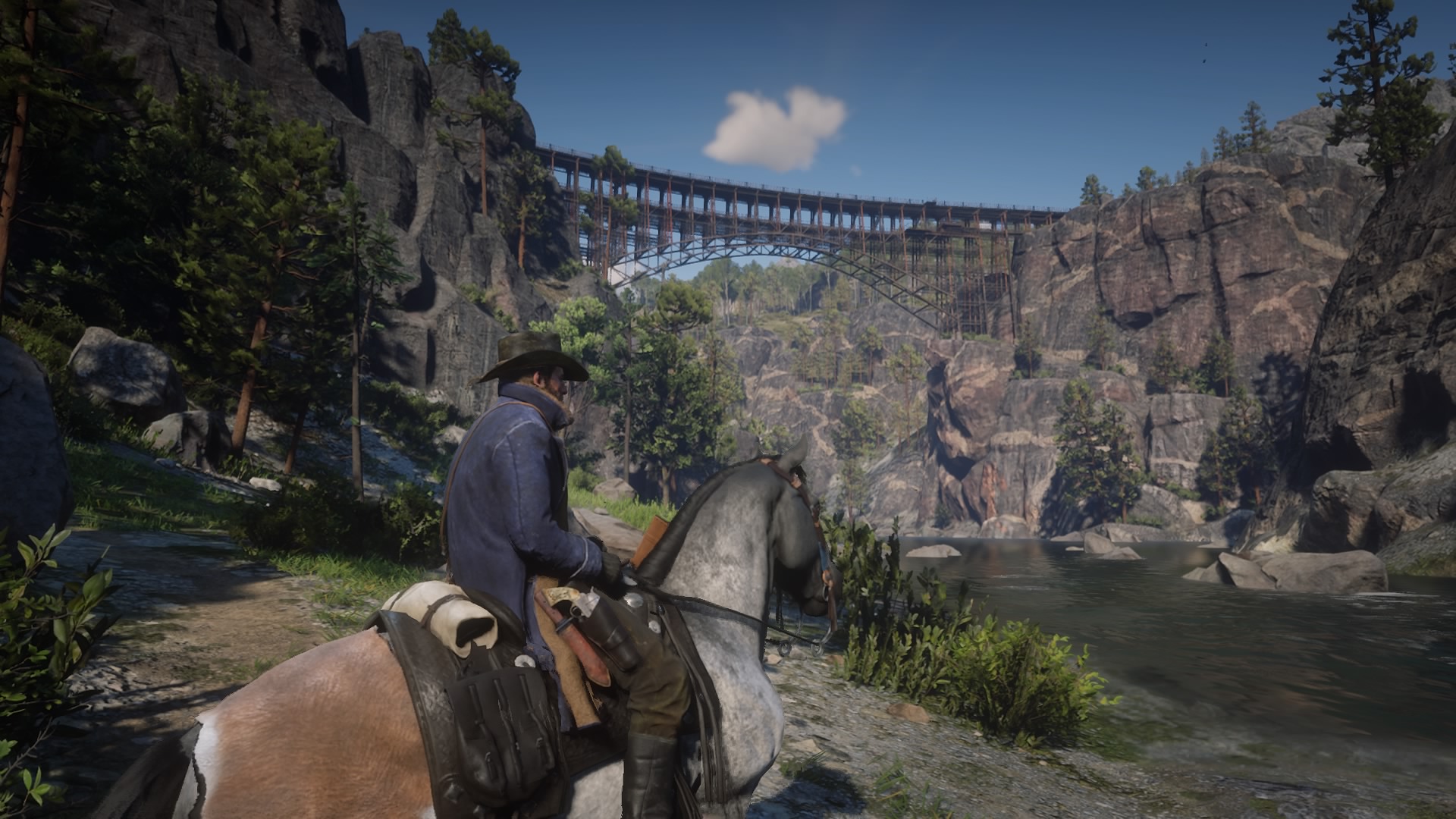
Not just a background: I ran across that bridge at one point. I also blew it up at one point. Screenshot taken by the author.

That, combined with playing as Arthur Morgan––the singularly most complex and believable main character I’ve ever seen in a video game––made me completely buy into this simulation despite the steep learning curve and deliberate pacing. I wanted to do my best not only in shootouts but also in surviving and maintaining the health of myself and my horse, to clean my guns every few (in-game) days, to stop and set up camp when lightning storms rolled in from the mountains, to put on warm clothes when heading into the snow, to find a nice cliff that overlooks the valley and just…look.

Quite simply, the experience wasn’t what I expected, but the experience it yielded––once I yielded to it––was absolutely sublime.

–––––––––––––––––––––
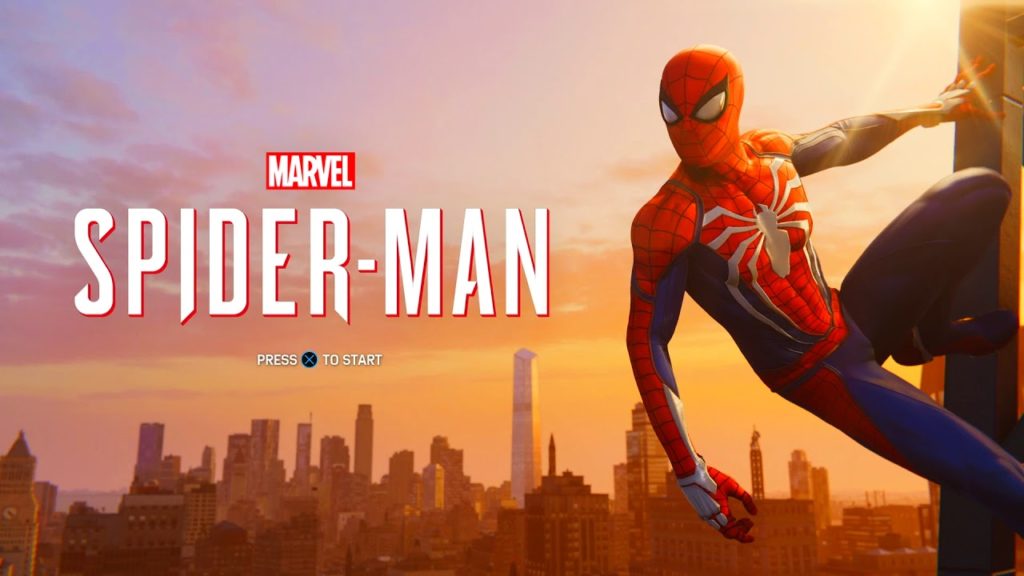
Source: Insomniac Games. Screenshot taken by the author.

Marvel’s Spider-Man

by Insomniac Games, played on Playstation 4.

Something I came to grips with in 2018 was the fact that I have insomnia. While it sounds like I’m setting up a joke with the developer of this game, it actually has much more to do with why I played the heck out of Marvel’s Spider-Man (it’s official title). I didn’t think I had insomnia because I have no problem falling asleep––it’s staying asleep that is the issue. But when it became a more severe health problem this summer, it was the decision of medical professionals that insomnia was indeed my problem.

Apparently linked to my propensity toward anxiety, I can wake at any point and be unable to fall back asleep. Though I’m awake, I’m barely functional or productive since I usually awaken in some sort of panic with all my synapses firing in self-preservation.

During graduate school––when it all started––I would go downstairs and listen to podcasts and play games silently. The Rocksteady Arkham games became a port of solace for me because it let me be Batman and I fought crime during those midnight sessions. Though the last game in that series was released three years ago––and I had played through it in its entirety three times––I still went back to it as a panacea for my inability to sleep.

Until Marvel’s Spider-Man.
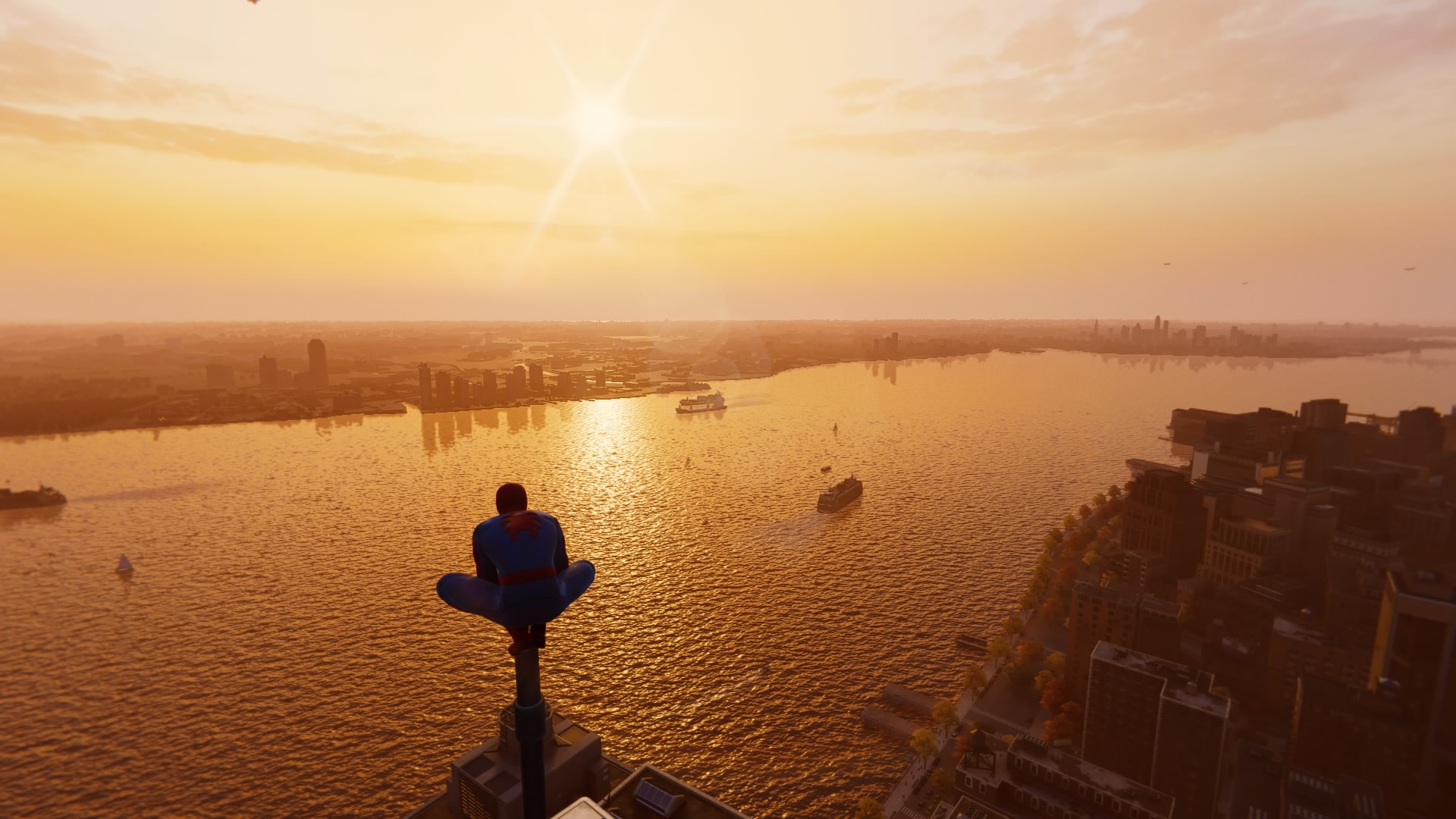
The moodiest Spider-Man may be allowed to get. Screenshot taken by the author.

I have no affinity toward Spider-Man. His movies were always fun but I’ve never read an issue of his comic. However, this game is all about traversal––slinging webs through this recreation of New York City with ease and grace––and, big surprise, fighting crime. These descriptors equally apply to the Arkham games, but with cape-gliding instead of web-shooters.

This game pulls a lot more than just ethos from the Arkham series––much about the gameplay and design are straight from Rocksteady’s series––but where the Arkham games traded on grimdark stories, grotesque design, and the cover of night, Spider-Man is the complete inverse of the Arkham aesthetic. It is bright, it is relatable, it is optimistic.

I remember enjoying the story quite a bit––it is incredibly well-acted and the best Spider-Man story I’ve seen so far––but most of my time has been post-narrative, completing side-quests or just swinging around until I hear a dispatch from the NYPD about a carjacking or a standoff with local criminals or a drug deal going down in some back alley.
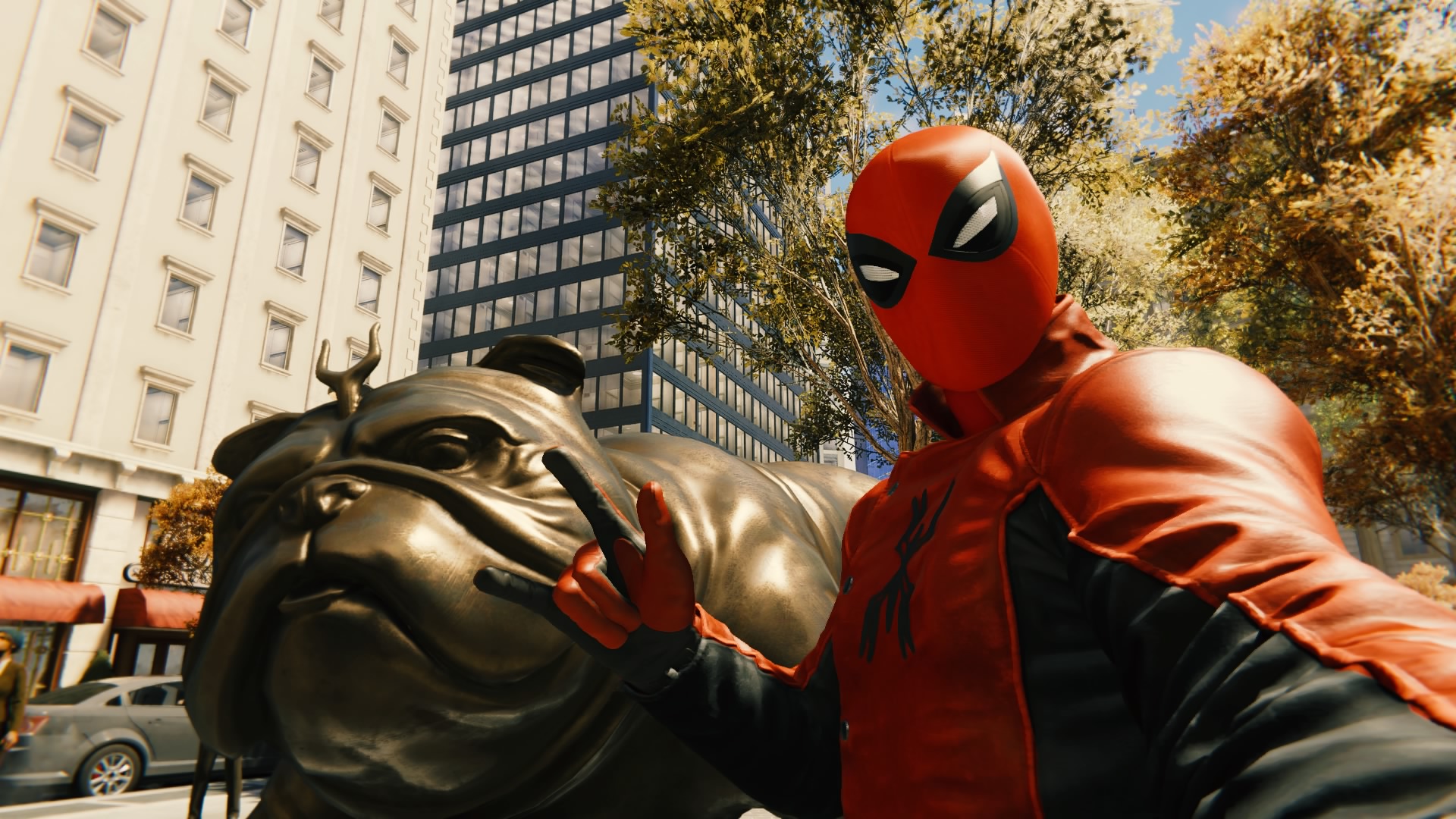
Yes, there is a selfie-mode Screenshot taken by the author.

Those bursts of activity, accomplished with the expected light-hearted candor of this older but still idealistic webheadded hero, created a song-like pattern of verses (swinging through a major metropolitan city at my leisure) and choruses (responding to criminal activity) that continues to push me through the darkness of panic-soaked midnights and into the soft dawn of the early morning where I can actually do my best to contribute to society.

–––––––––––––––––––––
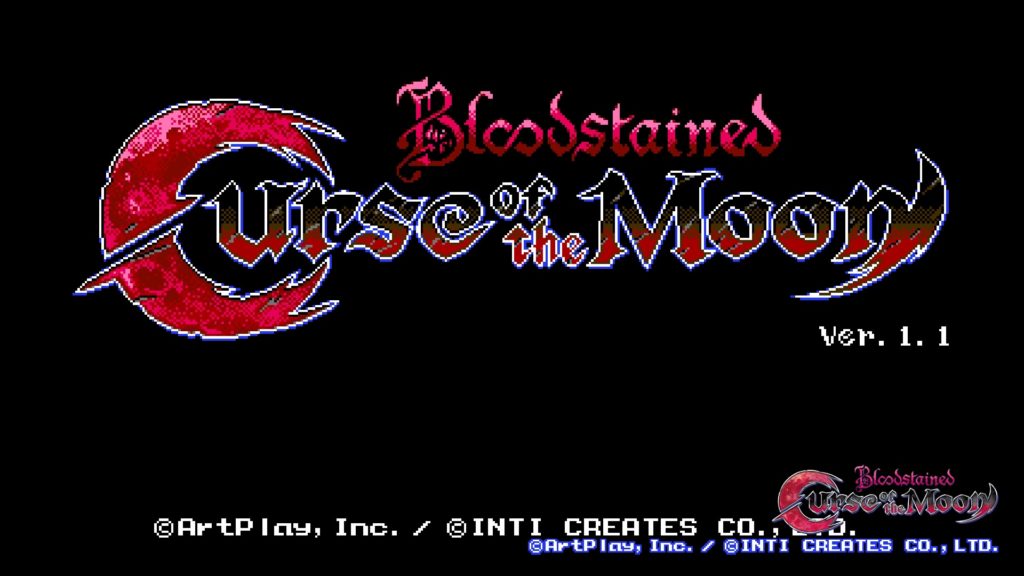
Bloodstained: Curse of the Moon

by Inti Creates, played on Playstation 4.

As mentioned earlier, I have been playing video games for a long time and, like many people in my age group, I have a nostalgia for the days of the Nintendo Entertainment System (NES) and its successor, the Super Nintendo Entertainment System (SNES), specifically.

Many games in those early NES days have a strong reputation among gamers for being difficult. Part of playing these games––games like Mega Man 2, Castlevania, Super Mario Bros. 3, Ninja Gaiden, for example––lay in memorization. Playing these games was to learn the layouts and patters of these intricately planned levels so you could not only jump to avoid an enemy you knew was coming, but to jump at exactly the right time so you could bounce off of it and, in the extra height you got off of that bounce, collect a power-up normally out of reach, and then land in time to execute a fatal blow to an unsuspecting enemy.

We look at those games fondly because we remember the ease we had after mastering their process, playing from muscle memory so that these games became performance rather than challenges.
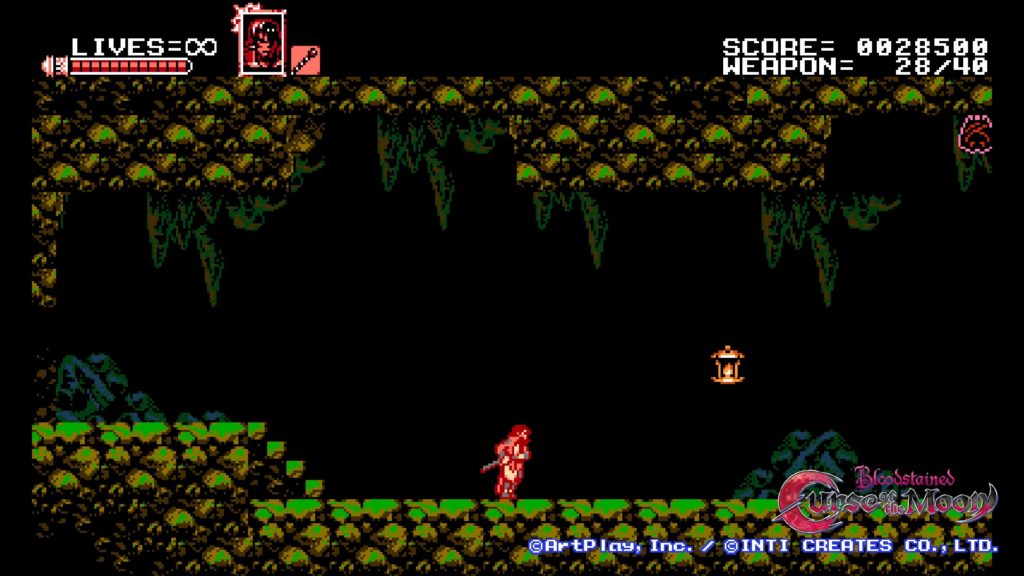
This game’s devotion to 8-bit aesthetics and limitations is breathtaking. Screenshot taken by the author.

Bloodstained: Curse of the Moon had no right to be as complex and clever as it is, since it’s an afterthought for a larger, much more expensive and modern game that earned a lot of money through a Kickstarter campaign. The main, still unreleased Bloodstained game is the brainchild of Koji Igarashi, a former game designer for the Japanese developer Konami. Igarashi (or “Iga” as he’s come to be called) designed the seminal installment of the very long-lasting Castlevania series, Castlevania: Symphony of the Night, for the Playstation.

However, Curse of the Moon pulls from the NES Castlevania games, specifically the underappreciated and ambitious Castlevania 3: Dracula’s Curse, a game that pushed the hardware of the NES to impressive limits. Like Castlevania 3, Curse of the Moon lets you cycle through multiple characters that offer different play styles and quirks––and the levels are built to showcase those styles at points––which allows for multiple avenues through stages and encourages multiple playthroughs. Not to mention, you have choices you can make throughout the game that make successive playthroughs wholly different experiences.

Lovingly rendered in the 8-bit graphics of the NES, it evokes the hardware limitations of that system as well, despite developed for and playing on hardware that is more than capable of what the game is trying to do.

For me, this game came out of nowhere––an old school “Nintendo Hard” style (it can be very challenging) blended with modern sensibilities toward player choice and alternate paths through the same story (as well as accessibility; it allows you to lower the difficulty without any penalty to the player)––and I wanted to probe every nook this game hid. I think I played through it about four or five times before walking away, but its inviting challenge, devoted aesthetic, and playful structure stuck with me as much as any of the big money, narrative-heavy, time-consuming games I also played this year.

–––––––––––––––––––––

An interesting thing about my trend away from more linear, narrative-focused console role-playing games (RPGs) like the aforementioned Final Fantasy series is that my tendencies have actually steered toward the more mundane. Apparently, my power fantasy is to be someone who is, ostensibly, just doing their job and I get enjoyment from doing that job well. From the space opera of Bioware’s Mass Effect series or Batman stopping crime in Rocksteady’s Arkham series to the incredibly problematic raiding of tombs in the new Tomb Raider series, with the addition of the fun traversal in Marvel’s Spider-Man and the depth of character and choice found in Red Dead Redemption 2, I come to love these games that––through the thrust of immediate high-stakes danger––just asks you to do your job.
2 Comments

The Year – 2018 : Comics

Dec28
by DBethel on 28 December 2018

I’m going to end the year by making individual posts about the things that really stuck with me this year. These will be the things that I kept coming back to and kept thinking about and, if possible, kept diving into the hole it created in my wallet.

I figured it would be best to start by talking about comics. For this, I’m only focusing on the trade collections and graphic novels instead of blending them with ongoing series I collect in individual issues. I could render a list of reasons as to why I’m not including ongoing series on this list, but it would be elaboration to cover a specific point: there are no ongoing series that really struck a meaningful chord in me. All of the series I read are good and have enjoyed what I collect, but they’re more entertaining than inspiring, and that’s okay.

Even so, what you read below is by no means an exhaustive list, but it’s meant to single out the books that paint a picture of where my head space was at during the year.

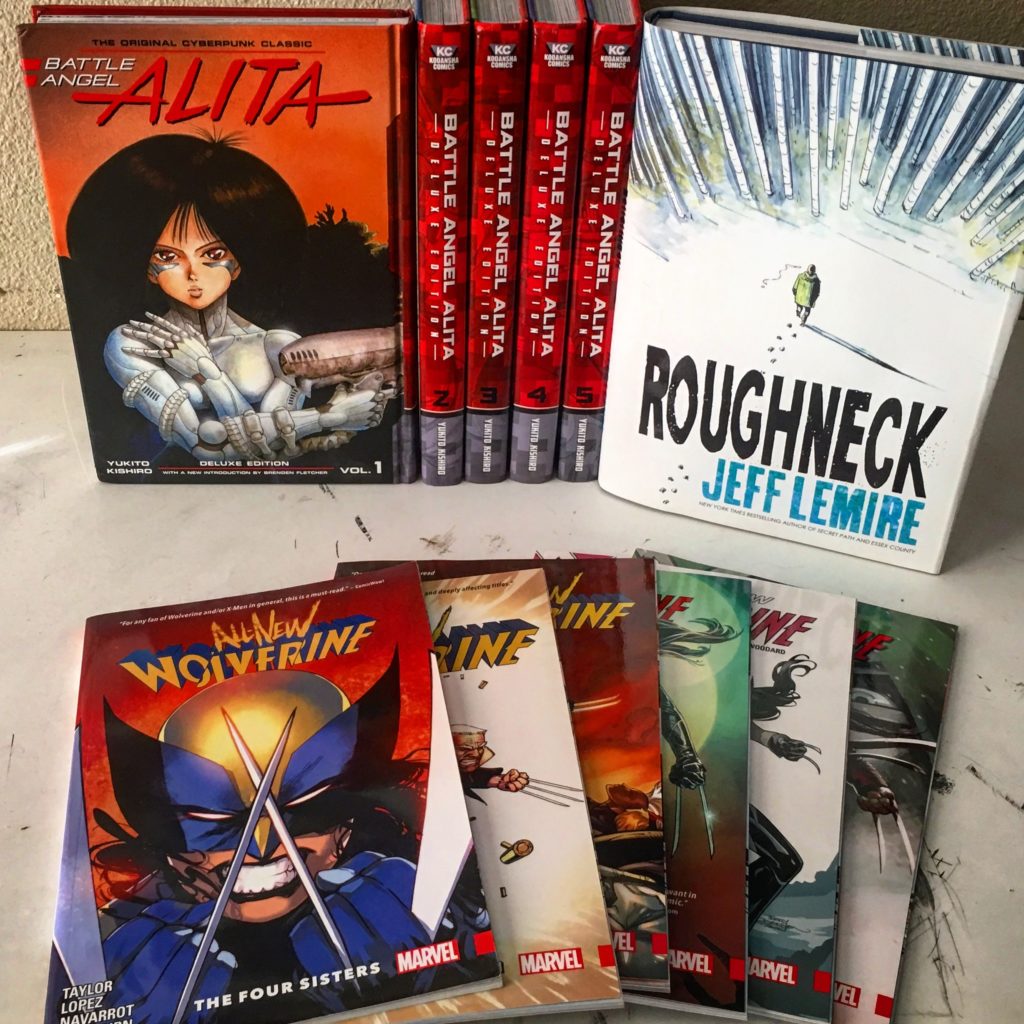
1. Battle Angel Alita Deluxe Editions

Written and illustrated by Yukito Kishiro, published by Kodansha Comics.

The road of my year’s comics reading was paved by Yukito Kishiro’s masterpiece, Battle Angel Alita. Stunningly reprinted by Kodansha Comics into five oversized volumes, this year offered me the chance to check a major item off of my bucket list by allowing me to read through a series whose art and story played such a fundamental part of my creative development during my teenage years.

I read the first few arcs back in the ‘90s, but going back into the entire series in these gorgeous deluxe editions were an interesting case study in the art of comics. Though I didn’t love how it ended, the overall progression showcases Kishiro’s talent and creativity.

I don’t know how much of the series was planned out by Kishiro, but it certainly seems guided by whim for most of it, and––despite my dissatisfaction––the ending does an admirable job of bringing the major story threads to a close.

More than anything, Kishiro’s art––though much more violent than I remembered it being––is stunning in its expressiveness of character and environment, pushing me to try a bit more patience with my art since even a little more effort could yield exponentially greater results.

2. Roughneck

Written and illustrated by Jeff Lemire, published by Gallery 13.

My appreciation for the work of Jeff Lemire is no secret by this point, much less that of his most recent graphic novel, Roughneck, a subdued but gritty tale about a family’s loss and redemption with a dash of Canada and hockey thrown in.

Lemire is a very cinematic artist, though not one who tends toward realism. Because of that, his style is a very interesting mix. To be honest, his work, on its surface, isn’t something I’m innately drawn toward. It seems to lack confidence of line and composition, though whatever lack of rendering he may have he makes up with his pacing, page design, and narrative clarity. It may sound diminutive, but his work is made for adaptation to tv or film and it’s frankly surprisingly we haven’t seen an adaptation of Lemire’s work yet on screen (though much of his work has been optioned).

Though Roughneck, in my eyes, is a lesser work than his absolutely compelling series, Royal City, the graphic novel acted as a perfect encapsulation of what makes Lemire’s self-illustrated, capital-L Literary graphic novels great––simple, clear storytelling, smart “cinematography”, and a confidence of character (and associated nuance) that makes for a gripping dramatic read. While reading Royal City may have been more inspiring to the point of making me say, “this is a comic I want to make,” Roughneck provided a more immediate and important reaction, provoking me to think, “this is a comic I could make.”

3. All-New Wolverine

Written by Tom Taylor, with art by David López (among others), published by Marvel Comics.

Though I had jumped back on the current X-Men bandwagon by following, from first to last, the Marvel series X-Men Gold (and being wholly underwhelmed by it), it wasn’t until I started reading the collected trades of All-New Wolverine that I actually got introduced to what I’ve internally dubbed “modern Marvel.”

Taylor’s All-New Wolverine pulls from the more whimsical direction of books that have actually kept Marvel’s comics relevant, because the success of their movies haven’t driven many new readers to the original medium. In my head, All-New Wolverine sits on the daïs alongside The Unbeatable Squirrel Girl, Captain Marvel, and Ms. Marvel––a.k.a. the books that have actually brought new readers to the Marvel Universe––and they’re all linked by a style marked by earnestness and humor over melodramatics and action (although both are still very present).

Although I felt the pacing was a bit fast, I found the characterizations in All-New Wolverine compelling, and the stories, too, were always engaging.

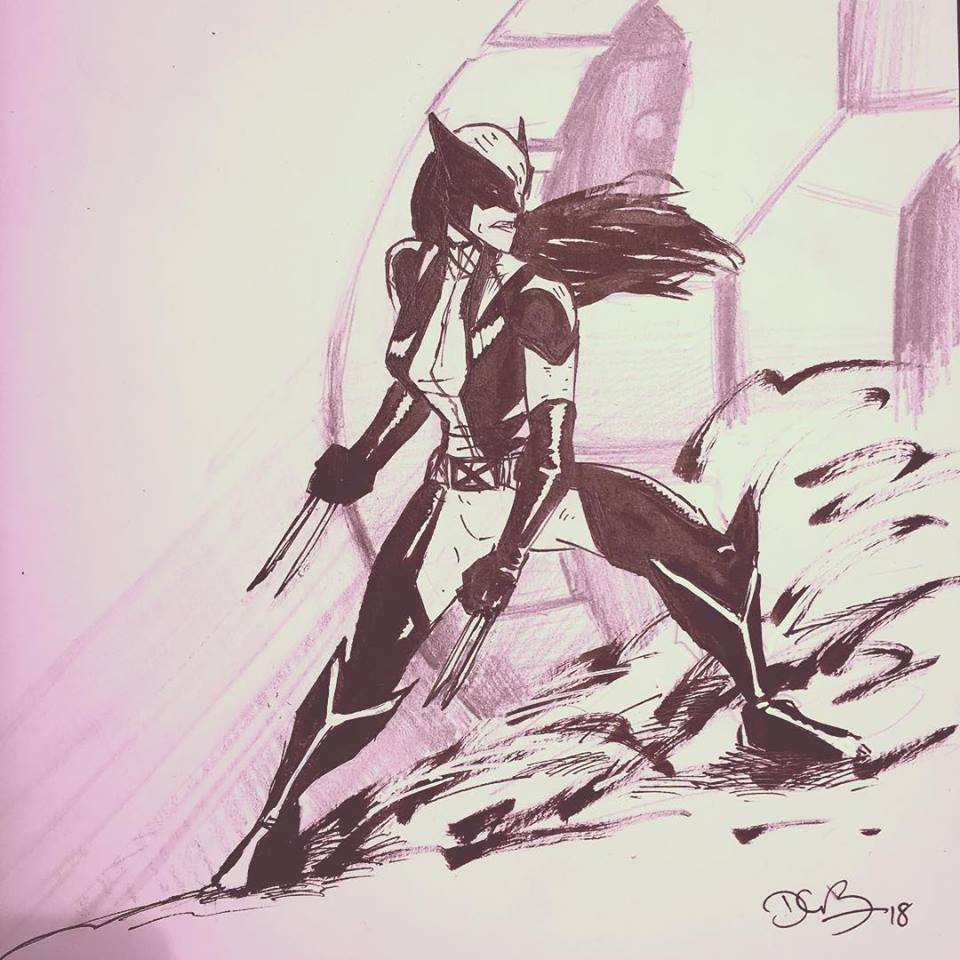
Wolverine (Laura Kinney). Drawn at FCBD 2018.

On a more personal level, the original Wolverine, the inimitable Logan, was my favorite character growing up. He and I shared enough characteristics to find in his contrived plights a sense of camaraderie and, of course, power fantasy. He was Canadian, I am a quarter Canadian (the son of a very proud half-Canadian father). Logan has anger issues, which is something I’ve fought against my entire life.

As I aged, I realized the silliness of the character but I still held onto that nostalgic loyalty, to the point of when they introduced his young, female clone, Laura Kinney a.k.a. X-23––and then made her into the new Wolverine––I had my hesitations.

However, guided by better sentiments and maturation I ventured into this new series and found myself wholly won over by its charm. Not only that, but what I loved about it was Laura’s contrast to Logan and even though she was diametrically different in history and motive, there were aspects of both story and art that really showed her as a step forward from what Logan represented, embodying aspects of what made him great and actually doing new and interesting things with those base traits.

So, this book was a salve on my dying nostalgia, a book that was more of a gateway into modern superhero comics than a banner for my own creative goals, but with making comics––an endeavor that requires me to keep my head down––it’s nice to find something that really allows me to keep apprised of what’s going on in the greater scene.

––––––––––––––––––––––––––––––––

These books form the broader strokes of what I consumed as a reader this year and the finer lines between them are no doubt just as important. However, these books really pushed me forward in different ways, leaving me––as a creator and as a fan––feeling much more confident at the end of 2018 than I did at its start.


2 Comments

The Week – 30 November 2018

Nov30
by DBethel on 30 November 2018

Ironically––as well as coincidentally––this week was full of westerns in a variety of forms. To boot, they were all very good as well.

WATCHING:

Image Source: Annapurna Pictures/Netflix.

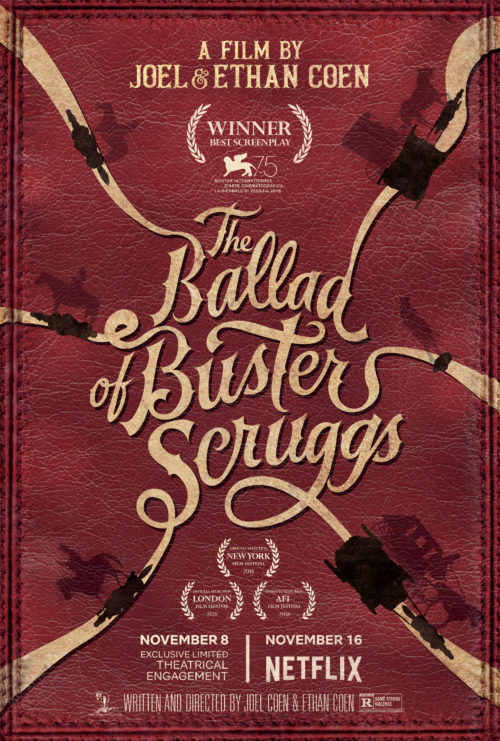
  • The Ballad of Buster Scruggs – A Netflix-original Western anthology film by the Coen Bros.

The Coen Bros. are a legacy all their own by this point as their output has been steady and reliable since their 1984 debut with Blood Simple––a neo noir made with the swagger of competence far beyond what one could presume from their empty resumé. Though they have wandered throughout a panoply of film genres, those quirky noir roots have permeated every movie, whether obvious or not. Aside from crime films, they haven’t returned to a specific genre too often, though after 2007 they added another genre to their repertoire.

No Country for Old Men––adapted from the novel by inimitable Cormac McCarthy––marked a toe into the pool of westerns, albeit a modern western, and it seems it was enough to keep bringing them back to the well; first in 2010 with their brilliant adaptation of True Grit and again, this year, with their inspired and very strange anthology film, The Ballad of Buster Scruggs.

Image Source: Annapurna Pictures/Netflix

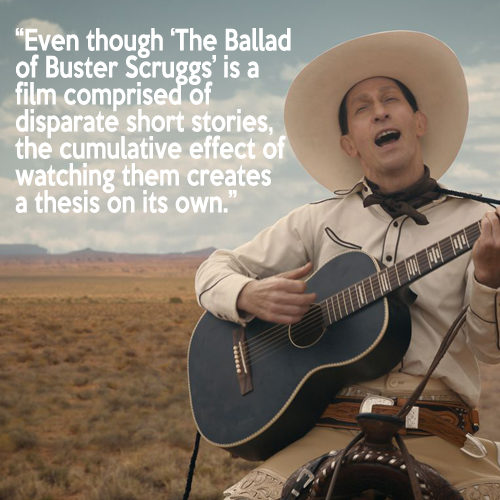
What is intriguing about Buster Scruggs is that it is the Coens’ first original entry into the genre. Even though it is a film comprised of disparate short stories, the cumulative effect of watching them creates a thesis on its own. The stories range from absurdly silly to philosophically poetic, but when you step back to not only assess your judgement of the film but its place within the brothers’ oeuvre, the film takes on a metatextual quality: this movie is the Coen Bros.’ career in a nutshell, wrapped in a Wild West ribbon.


PLAYING:

Image Source: Rockstar Games

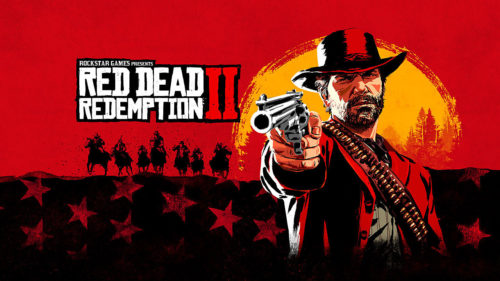
  • Red Dead Redemption 2 by Rockstar Games

Despite being the worst-named game in the history of video games (RDR2 is actually a prequel to Red Dead Redemption, and is actually the third game in the series, with Red Dead Revolver being the first, albeit completely unconnected, narratively, to the two Redemption games), Red Dead Redemption 2 had a huge hurdle to clear. Red Dead Redemption was, culturally, a major landmark for video games when released in 2010. Red Dead Redemption created and offered a (at the time) living, breathing, changing world that seemed less a playground and more an actual setting you had to work and live within.

That being said, on a recent conversation I had on my podcast, Rockstar––who is probably more well-known for creating the morally dubious Grand Theft Auto game series––knew how much cultural weight people were placing on to the sequel to what some have labeled “The Greatest Game of its Generation” and did what they wanted to do anyway.

The previous game was loaded with powerfully cinematic and ludic moments where they made the player feel like they were playing something special and momentous and as powerful as any movie, novel, or tv show could ever be. So far, those moments don’t really exist in RDR2. However, it’s a very well-written game that is compelling in the face of its subtlety.

Image Source: Rockstar Games

And it’s complicated. Its mechanical complexity is at the core of a lot of the criticism against the game (surfacing from the expected and hollow criticism that comes with a game having to live up to a highly regarded predecessor) and I completely understand such criticism. In fact, I’d say that criticism is true. I don’t even know if it’s a game that I can recommend (a similar experience happened when I enjoyed the extremely flawed and derided Mass Effect: Andromeda)

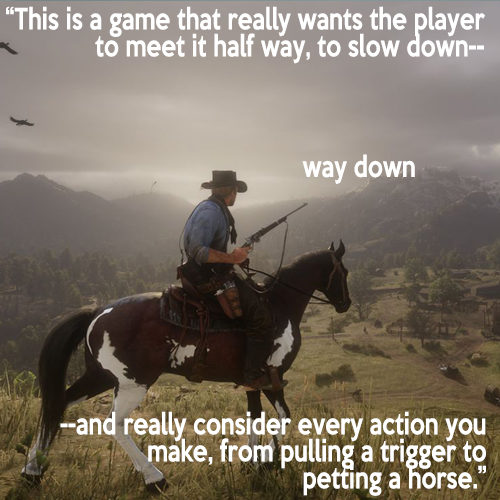
What it seems to be is a game that really wants the player to meet it half way, to slow down––way down––and really consider every action you make, from pulling a trigger to petting a horse. Once I adjusted my speed and learned the language of the game, I absolutely fell in love with the sandbox of zen that makes up Red Dead Redemption 2 and even though I can sit down for two hours and basically get nothing done in the game, I enjoy every second of it.

3 Comments
  • Page 63 of 114
  • « First
  • «
  • 61
  • 62
  • 63
  • 64
  • 65
  • »
  • Last »
  • Instagram
  • Facebook
  • YouTube
Privacy & Cookies: This site uses cookies. By continuing to use this website, you agree to their use.

To find out more, including how to control cookies, see here: Cookie Policy
  • Newest Comic
  • About
  • Archive
  • Links
  • Shop
  • YouTube

©2014-2026 D. Bethel | Powered by WordPress with ComicPress | Subscribe: RSS | Back to Top ↑