• Newest Comic
  • About
    • Synopsis
    • Characters
    • Author
    • F.A.Q.
  • Archive
    • Comic Archive
    • Blog Archive
  • Links
    • Press
    • Connect
    • D. Bethel’s Work
    • Contact
    • Friends of Long John
  • Shop
    • Online Store
    • E-Books
  • YouTube

Long John

Losing Every Thing Changes Everything

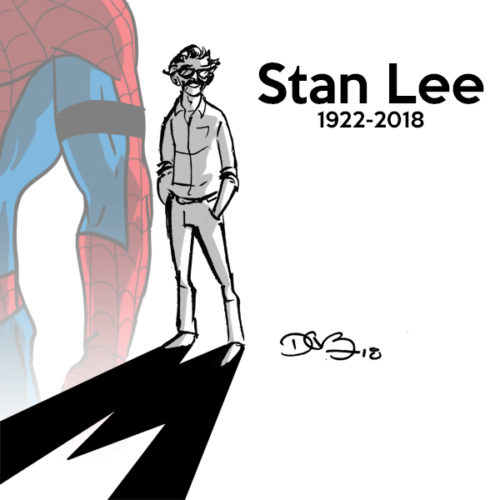
Sketch Fridays #50 – Stan Lee – 1922-2018

Nov13
by DBethel on 13 November 2018

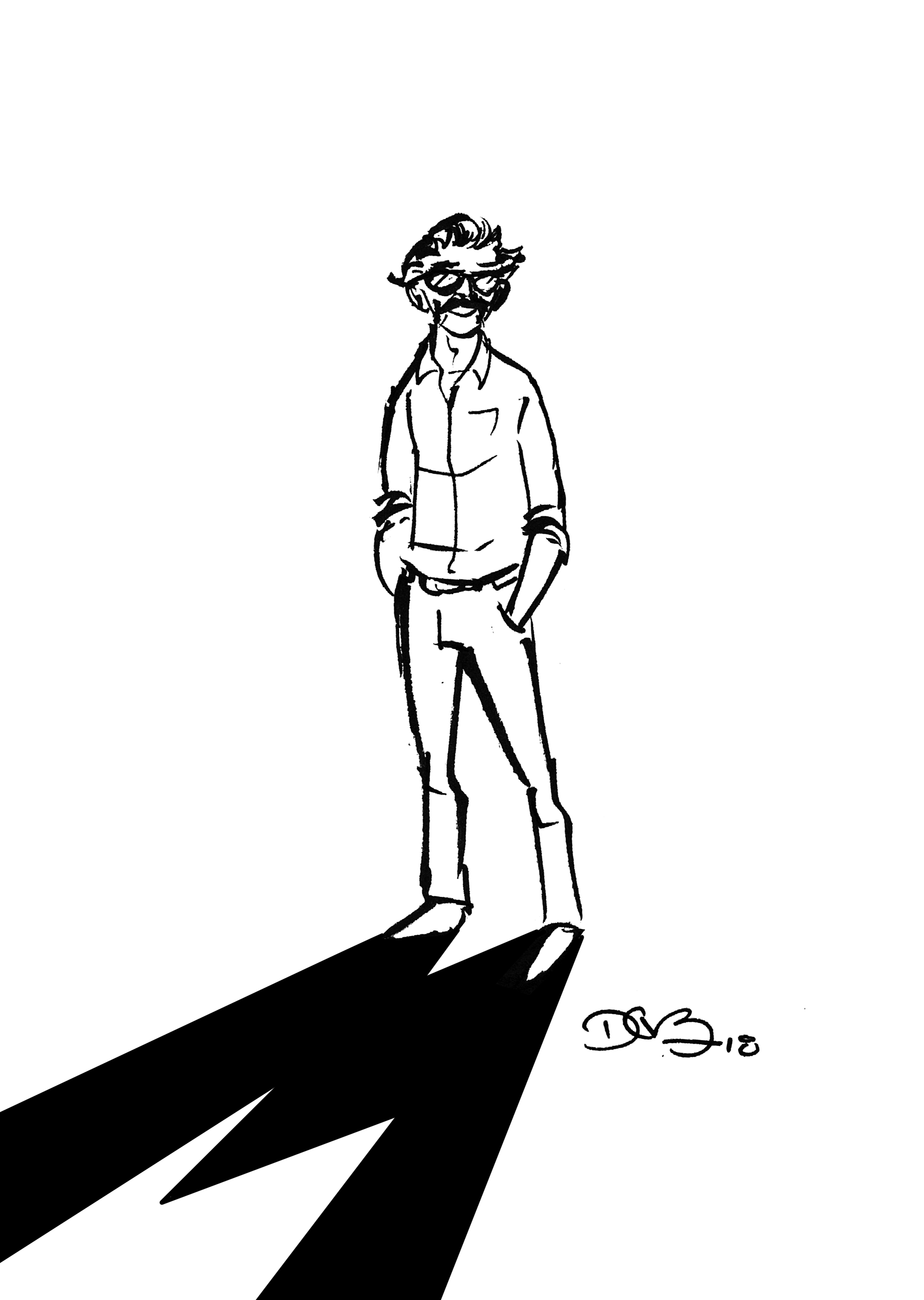
I remember seeing an interview with Stan Lee where he cited his biggest inspiration as being William Shakespeare. I took that to mean less the content and more the breadth of his work, the volume of output, and his lasting impact on culture and history.

While Stan’s work may not be as labored over by academics, published in leather-bound volumes for prestigious libraries, nor assigned as part of 11th grade English literature curricula, in terms of breadth, volume, and especially impact, Stan Lee definitely met that high standard and the world is better for it.

For those that don’t know, Stan Lee––with the help of many artists, especially Jack Kirby and Steve Ditko––built Marvel Comics into what it is today. Starting with The Fantastic Four, before making other now-famous characters like Iron Man, The Hulk, The X-Men, and what was no doubt his most personal favorite creation, Spider-Man, Lee and crew brought a humanity to superheroes that didn’t exist in the monolithic emblems of purity at their competitor, DC Comics, with the likes of Superman, Batman, and Wonder Woman.

It was Lee who built in the idea of continuity, of heroing with consequences, and made comics a medium.

An edit I did for social media purposes.

He died at 95 years old and lived what can only be defined as a complete life, one without dangling threads (from what we could see, at least). The wake of his death should be a celebration of a life well-lived, leaving behind a legacy of generosity, ambition, kindness, and gratitude. There was only one moment, however, where I got a little choked up:

He changed the way we look at heroes, and modern comics will always bear his indelible mark. His infectious enthusiasm reminded us why we all fell in love with these stories in the first place. Excelsior, Stan.

— DC (@DCComics) November 12, 2018

This is a tweet from the official DC Comics Twitter account. Even though they posted a longer remembrance, it was this tweet that really took the wind out of me.

Stan Lee never worked for DC in any serious or extended capacity. Again, Lee spearheaded Marvel Comics into becoming what it is, forcing DC Comics and all that wanted to break into the industry, to step up their efforts tenfold. Since the sixties, the industry has been dominated by “The Big Two” and, at times, it was a friendly, playful rivalry––at other times, less so. But this tweet really captures the unity of comics creation, that we all want to succeed and, ultimately, we want everyone involved to elevate the industry so that the entire thing becomes something greater.

Despite all the nit-picking people can do, it is undeniable that Stan Lee did that, probably more than anybody else.

So, instead of saying “RIP” or even “Thank You,” I feel the best word to close it on would be the word that defined for ages Stan’s modus operandi:

 Comment 

The Week – 26 October 2018

Oct26
by DBethel on 26 October 2018

WATCHING:

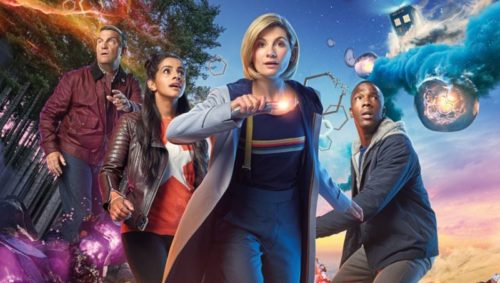
source: BBC

  • Doctor Who – Series 11

I’ve been an ardent fan of Doctor Who for awhile, and what I love about the show is how much it changes. In fact, change is built into the premise of the show. So, as much as I love a lead actor or head writer or general cast of characters, I tend to always hit a point where I start getting antsy for things to change.

The nice thing about Doctor Who is that regular change is built directly into the show. The main character, the titular Doctor, is an alien who doesn’t die but “regenerates”––their body ostensibly evaporates and reconstitutes into a new and different form (i.e., a new actor). And even though there are slight personality shifts and new ticks and mannerisms, the character of “the Doctor” is indelible throughout any casting changes. With that change comes a sense of renewal, of opportunity, of continuity. Partly because of this conceit of rejuvenation, it’s a show built around optimism and as dark as it can get (and it can get very dark, re: “Midnight”) it is always fun to watch because the Doctor not only always finds a way out of the problem, but does so with an eagerness and faith in the ability to make things better.

Doctor Who started in 1963 in England for the BBC and ran continuously until 1989 at which point it was cancelled. It remained so (with an attempted return in 1996) until 2005, and has been running steadily since. Up until last Christmas, thirteen actors have officially played the lead role of the Doctor for the show. However, with last year’s Christmas Special, current Doctor, Peter Capaldi, regenerated after three years in the role (which tends to be the average length of a Doctor’s tenure).

In his place steps Jodie Whittaker whose full premier as the Doctor started a few weeks ago. Some people had been voicing worry or outright hostility to the upcoming season because they haven’t enjoyed the previous work of the incoming showrunner, Chris Chibnall, or that the new Doctor is a woman when only men have played the role throughout its history. Luckily, anyone that actually loves the show––its tone, its writing, its silliness, its melodrama––will be calmed within five minutes of the first episode. So far, the season has been a delight, doing some cool new stuff including subtle nods to the show’s long history as well as pushing the show into challenging new realms of narrative. It’s invigorating to watch and I can’t wait to see where it goes.

Image source: BBC

While this conversation could go off on a variety of tangents, the one I’ll address is fairly universal without falling into any political traps. I despise people that judge things––books, comics, movies, tv shows, video games––based on casting news or staffing news or trailers. DESPISE. I don’t like it because those judgements literally mean nothing. They mean nothing because the judge has not actually encountered the final text, and if you haven’t done that then you have no opinion worth a whit.

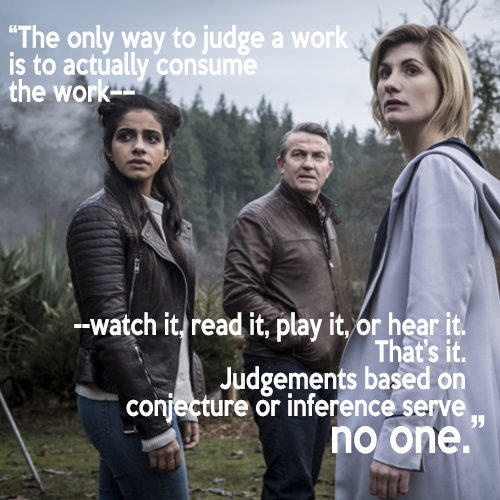
Even on my own nerd culture podcast, we try to not spend too much time talking about trailers because it’s just a trailer or it’s just a press release. The only way to judge a work is to actually consume the work––watch it, read it, play it, or hear it. That’s it. Judgements based on conjecture or inference serve no one. Remember when Heath Ledger was cast as the Joker in The Dark Knight? “Fans” on the internet lost their mind with despondency when, in actuality, they should approach such announcements with a slight nod and a “Hmm… That’s interesting.” Because that’s the only logical response to news of an actor getting a job. Remember when everyone saw the first image of Heath Ledger as the Joker? All the naysayers shut up. Fast.

While I get that the internet thrives on hot takes, so much of it is actually just hot air because it doesn’t mean anything. A bad trailer means nothing for a movie because, by definition, a trailer is not a movie. Just judge the trailer (if you must) or the casting news (if you must) but only for what they are, because those are the only things upon which you can confidently comment.

If you don’t want to watch the new season of Doctor Who because you don’t like who is cast in the role, then don’t watch it. But if you say it’s going to be (or already is) terrible because of who was cast in it, you literally don’t know what you’re talking about. However, if that’s the reason why you’re not watching the new season, the loss is wholly and completely on you, because it is fantastic so far.


LISTENING:

source: The Ringer

  • Halloween Unmasked – a limited series docu-podcast hosted by Amy Nicholson for The Ringer.

The movie that defined slasher movies, John Carpenter’s 1978 classic Halloween, turns forty this year. If you haven’t seen the film in a while (or at all), go back and take a look for the sake of the season! It’s a taut movie with no fluff (partly due to also having no budget) and it’s relatively bloodless. Pack on a few novel, nuanced, and thoughtful ideas that its progeny (both in-series and copycats) have completely missed or forsaken and you’ll find yourself reasonably impressed after its 90-minute run time.

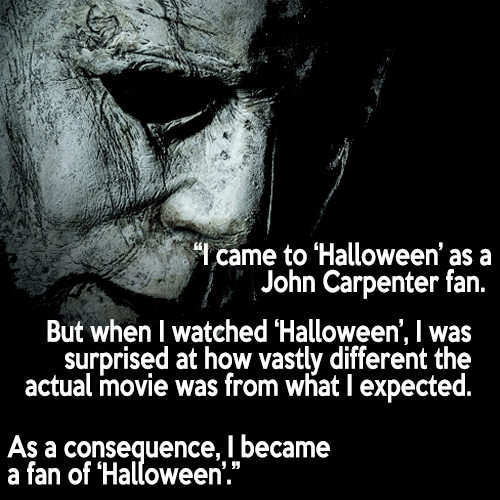
I came to Halloween as a John Carpenter fan––specifically of The Thing and Escape from New York––but when I watched Halloween I was surprised at how vastly different the actual movie was from what I expected. As a consequence, I became a fan of Halloween. Admittedly, I haven’t seen its sequels aside from Halloween III: Season of the Witch (but it was rented under pretense––we heard it was bad so we rented it to laugh at it) and part of me doesn’t want to because the first movie is so solid an experience.

However, a new movie has hit theaters with a John Carpenter score and Jamie Lee Curtis returning as the hunter rather than the prey, so it’s safe to say that my excitement is a bit stoked.

Image source: Universal Pictures

Further stoking occurred when I found Halloween Unmasked, an eight-part documentary podcast that’s mostly about Halloween and its cultural impact, though it does address the sequels and new movie, too.

What I like about it is how well it’s structured. It’s not a review podcast talking about what’s good and bad with each movie. Instead, it’s thematically constructed. The first few episodes are about the history of John Carpenter and how the first film got made, but after that it looks at the series holistically based around specific ideas. There’s an episode about psychology as it relates to the behavior of the monster of the series––Michael Myers (referred to as “the Shape” in the script)––as well as the behavior of the prominently featured psychologist character as well as our psychological response to Halloween and movies that do what it does. There’s an episode focusing on Jamie Lee Curtis, discussing her experience growing up a celebrity child, getting cast in Halloween, and her career since then. There’s also an episode about the film’s sequels and other slasher films it inspired (and what they got wrong). There’s even one about the fandom that has erupted from the smashing success of the first movie and how it has evolved over time.

Ultimately, the podcast is iterating on what has been happening a lot more in the last ten years or so: re-examining John Carpenter’s mark on cinema. While he started with strong box office receipts, he was met with a prolific string of “duds” in terms of returns on budget. To a point, he was regarded largely as a Hollywood failure despite having mounds of talent. He has always been regarded as a very thoughtful filmmaker, but many of his films seemed to miss the mark to connect with moviegoers upon release. However, critical retrospectives reveal what superfans already know––Carpenter’s works are more than superficial exercises, unlike a lot of other genre work. His films have a superficial value with regard to whatever genre they are playing within, but his movies are ultimately always trying to say something, usually about the human condition, and it is present––as Halloween Unmasked proves––in his work as early as Halloween.

Halloween Unmasked is exactly what I’m looking for in a non-fiction podcast about a specific subject––a thoughtful, well-written and researched look at a property, a show with something to say, just like Carpenter himself.

1 Comment

The Week – 19 October 2018

Oct19
by DBethel on 19 October 2018

WATCHING:

Source: Variance Films

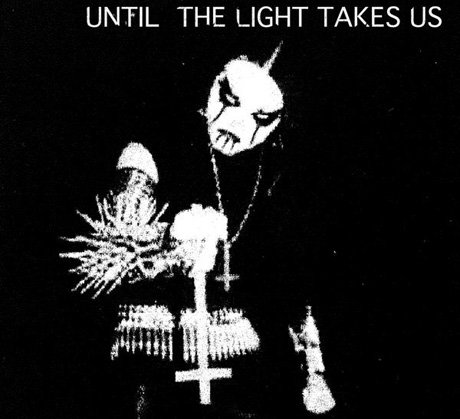
  • Until the Light Takes Us documentary

My appreciation for the heavy metal musical genre is not a secret. I don’t admittedly look or publicly play the part of the stereotypical heavy metal fan, but much of the message the genre promotes profoundly speaks to me. That being said, it’s fair to say that the style of heavy metal I listen to the most is fairly mainstream or was: Twisted Sister, Dio, Judas Priest, Metallica, and––most importantly for Long John––the work of Professor Black (Dawnbringer, High Spirits). Sometimes this “classic” metal or “power” metal is jokingly referred to as “dad metal,” and I’m fine with that.That being said, there are subgenres within metal that I have, at least, tried and while I may respect them (most of the time) they were just clearly not something I wanted to listen to. Black Metal––an extreme, low-fi, highly melodramatic subgenre emerging out of Norway and Sweden––is definitely one of those subgenres. It is just not for me.

However, I am also a bit of a true crime fanatic (thanks, mom), and the Norwegian Black Metal scene has seen its fair share of controversy. During the ’90s, I remember the reports of the church burnings and murders attributed to the scene, and this documentary covers that time period in particular, interviewing many of the people involved (including convicted murderers). So, despite being a subgenre that doesn’t particularly interest me, its culture and history were very intriguing. The controversial beginnings of this subgenre have been chronicled in books, articles, and documentaries, but, of them all, one documentary, Until the Light Takes Us, had the highest profile and has always been on the docket to see.

Sadly, Until the Light Takes Us is a bad documentary albeit a very interesting one. I’m not sure what the filmmakers’ intent was, but as evocative and weird as the interviewed people are––as are their values and ideals––the documentary doesn’t problem pose at all. It feels more like a puff piece about these musicians despite barely covering any music. It’s clear the filmmakers are fans, but their idolatry of the musicians is at odds with their making a documentary about the destructive history of the scene. This results in forcing the inquisitive viewer to ask the questions the filmmakers could have asked only to seek answers elsewhere.
image source: Variance Films

For me, the question humming throughout the entire movie is what’s more important in an artistic movement––the art or the movement? The documentary only covers the movement––it’s the story of really angry kids (late teens, early twenties) who are trying to make the most thematically and sonically disturbing music possible. At first, it’s because it’s cool and gives the disaffected a sense of power. Later, as the musicians and fans start to commiserate and find where their personal ideologies align, it becomes something much darker than loud guitars and “corpse paint” could ever be.

It becomes a scene whose music may be about Norse mythology, murder, and the occult, but whose musicians start spouting about racial and cultural purity, homophobia, and militant anti-religious rhetoric. And while they do burn down churches (and other violent acts, such as suicide and murder) and such acts do align with their ideology, it comes across as disingenuous for a few reasons. First, the escalation from back room banter to actual destruction and violence––although rooted in their despondent values––seems to grow less from actually an organized effort to enact change on the world and more from a sense of posturing and one-upmanship. It was all talk for awhile, but as soon as someone actually acted on it, it all snowballed from there. From that we get, second, the only people they seem to be hurting is each other. Aside from one murder of an innocent person and a firefighter who died while trying to extinguish a burning church (the latter death was unintended), all the focused animosity on display in the documentary is toward their fellow musicians for being not legitimate or metal enough.

Their other enemies are general and abstract––Christianity, homosexuals, American influence, trend music. The only enemies that they levy specific machinations against are other bands and musicians who they perceive as “weak”, “false”, or “posing”––accusing them of simply dressing like and playing black metal music without being bold enough to actually carry out the destruction their ethos promotes. Flinging insults of this sort seems to be their main activity because, apparently, just wanting to play music was not enough. Honestly, it is a culture more concerned with gatekeeping than acting on its values, which is the product of being created by angry youths. The musicians who survived these early years lament that the music has become a genre and isn’t as “real” as it used to be, but it’s in iteration that art survives.

While it’s easy to laugh at these people who did all this stuff in their late teens and early twenties for being passionate but myopic, it stops being funny when they start harming and killing each other and, worse, when innocent people die as a result of their misplaced passion, one that overcame the actual art that inspired it to the point that the music became a secondary aspect in the eyes of some of the movement’s leaders. To me, that’s where the cherry gets placed on top of this pie of sadness, and even though I don’t particularly like the music it’s still too bad that it’s the musicians themselves that ultimately made their work trite and unimportant.

READING:

Source: Read-Only Memory

  • 500 Years Later: An Oral History of Final Fantasy VII by Matt Leone

In 2014, video game journalist Matt Leone started doing research with the idea that he would create a retrospective look at the creation of the video game, Final Fantasy VII, by SquareSoft (now Square Enix). It was a huge game culturally (it has sold over 11 million copies to date) and literally (the content was spread across three discs for the Sony Playstation) and the move from being a 2D sprite-based game (like Super Mario Bros. in look) to 3D polygonal-based assets was a tremendous leap forward for gaming and the series. Obviously, FFVII was a continuation of the already popular Japanese Role-Playing Game (JRPG) series, of which I was a big fan.

For those that don’t know, FFVII was the seventh game in the series, but only the fourth to be released in the States and was the only accurately-titled game stateside since the first one. Final Fantasy II in the US was actually Final Fantasy IV in Japan and our Final Fantasy III was VI originally. However, Square took a bold step with FFVII by releasing it worldwide as Final Fantasy VII regardless of the number of the last Final Fantasy game you played.

Until that point, JRPGs were a fairly niche genre in the world of video gaming––even the nerds who played video games called those who played RPGs and/or JRPGs “nerds”, and I was one of those super nerds. I had played every stateside Final Fantasy release since the day the first one dropped for the Nintendo Entertainment System in 1990. I loved the deliberate pace of the narrative and the battles, and the need for thoughtful decision-making spread across the convoluted menu systems and relatively simple visuals (rather than a lot of other, more action-based games where you were tasked to dispatch as many enemies as possible by pressing a button as much as possible). When I came around to the Super Nintendo, I played Final Fantasy II incessantly but my fandom became rabid with the release of Final Fantasy III. That game became my personal holy text. So, when Final Fantasy VII was announced for release in 1997, you can probably imagine how difficult I was to deal with as a nerdy, over-zealous fanboy (not to mention it was released a few days after my birthday, so it felt like some weird gift from the universe directly to me).

I obsessed over my playthrough, but in the end I only kind of liked it. From there, my fandom for the series began to wane.

That aside, the game is solely responsible for shifting JRPGs out from its niche into the mainstream. Everybody played it and loved it. In that regard, I was extremely happy. It was a validation of my own tastes and it was nice to finally talk to people about a game series and genre that I loved.
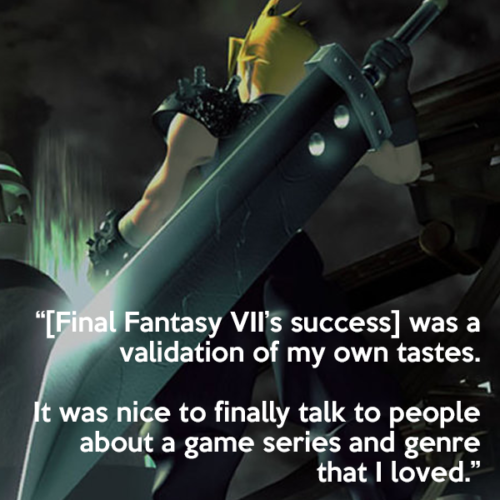
Image Source: Square Enix

Twenty––TWENTY––years later, the game is still talked about regularly and fondly regarded, easily ranking near the top of many “Best Games of All Time” lists without fail. It is a game that will be remembered.

Sadly, the chronicling of gaming history exists in a nascent state with much getting lost to time as people behind great games die or become unreachable. There has been a recent streak to record not only criticism and historical records of a game but also of development. Most importantly, more historians and journalists have begun to reach out to the people who created these games to get their voices on record for posterity, specifically using the oral history format (such records have been made for Bungie’s Halo, BioWare’s Mass Effect: Andromeda, and even in comics with Jim Lee’s Wildstorm Studios) so the history of games can be recorded in the words of the people who made them.

As the scope of research kept expanding to the point where Leone was having conversations with more and more people from the team that made FFVII, it culminated in January 2017 when he published to the gaming site, Polygon, “Final Fantasy 7: An Oral History.” Much like the game it covered, the document was a big hit across gaming culture.

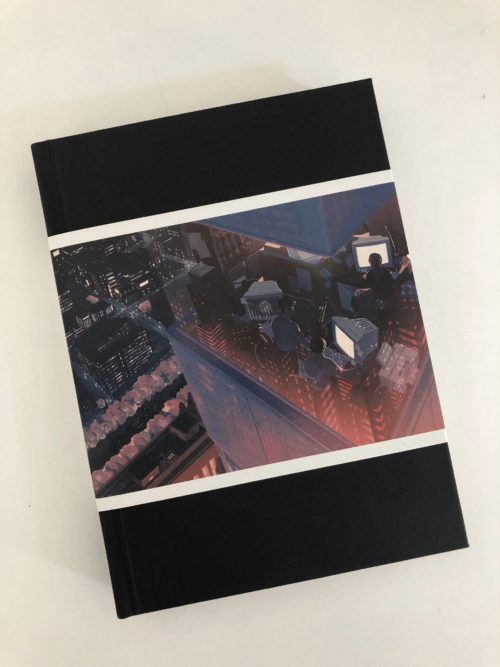
With the piece’s success, Leone and his team crowdfunded a high quality, absolutely beautiful book that collected it along with extra, new material, including a forward written by the creator of Final Fantasy himself, Hironobu Sakaguchi. As you can probably guess, I was among the crowd that funded the publication and, having just received the book (and reading the forward) all I can really say (based on when I read the article back when it was originally published) is that even though I wasn’t the biggest fan of the game itself, it does rekindle the excitement in those memories because it brings new information. It sheds light about a company and a game series, especially at a time when I was a super fan, and treating that information, the series, and even the game with the utmost respect that it deserves.

 Comment 
  • Page 64 of 114
  • « First
  • «
  • 62
  • 63
  • 64
  • 65
  • 66
  • »
  • Last »
  • Instagram
  • Facebook
  • YouTube
Privacy & Cookies: This site uses cookies. By continuing to use this website, you agree to their use.

To find out more, including how to control cookies, see here: Cookie Policy
  • Newest Comic
  • About
  • Archive
  • Links
  • Shop
  • YouTube

©2014-2026 D. Bethel | Powered by WordPress with ComicPress | Subscribe: RSS | Back to Top ↑