• Newest Comic
  • About
    • Synopsis
    • Characters
    • Author
    • F.A.Q.
  • Archive
    • Comic Archive
    • Blog Archive
  • Links
    • Press
    • Connect
    • D. Bethel’s Work
    • Contact
    • Friends of Long John
  • Shop
    • Online Store
    • E-Books
  • YouTube

Long John

Losing Every Thing Changes Everything

Sketch Fridays #13 – Building on Napkins

Jan08
by DBethel on 8 January 2016
Sketch Fridays #13 - Drawing for Dad. Click for larger version.

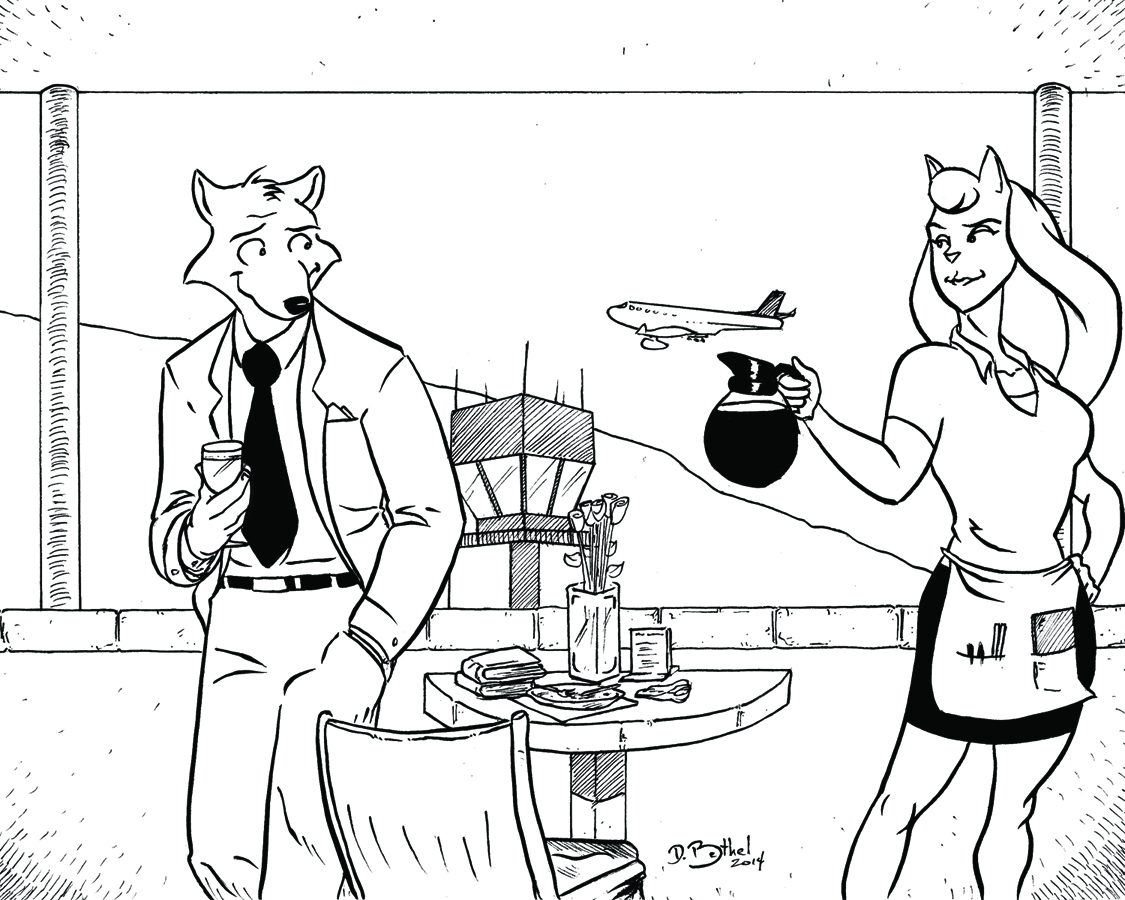
Sketch Fridays #13 – Building on Napkins. Click for larger version.

When discussing influence and inspiration, artists tend to look outward at things and people and objects, using those as maps of talent showing how to get to where we currently stand. It makes sense because artists are, by the very nature of how drawing works, construction workers on a less physically demanding scale. A drawing is built not grown or blossomed. It takes a lot of work to make a world, with paper or canvas or screen becoming the window through which the viewer observes and reflects, so to speak.

I do the same thing, looking outward at my inspirations. I have written about many of them already.

However, I am in the position––perhaps the lucky position, perhaps damning––of being the third generation artist in my family. We all used the skill to varying degrees, but it is safe to say that my grandfather, my father, and I all gravitated toward art and practiced it even if the reasons and goals differed.
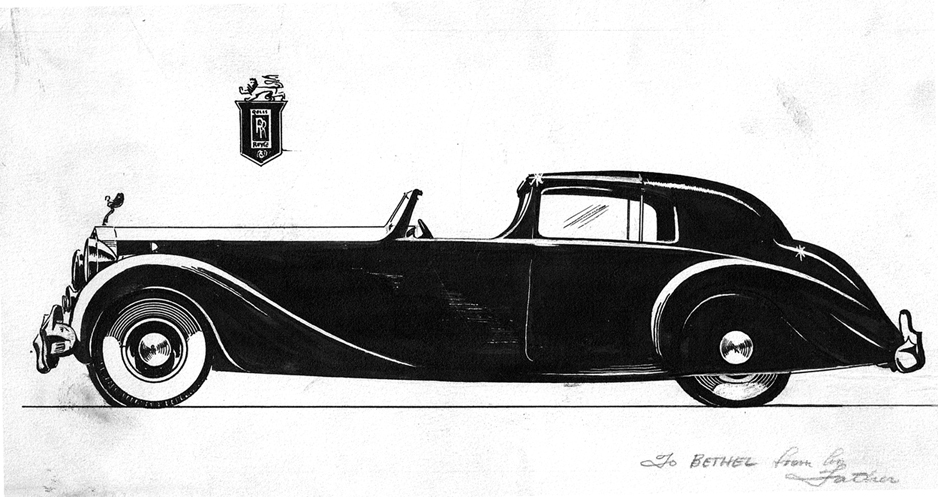
A drawing by my grandfather for my father.

A drawing by my grandfather for my father. Date unknown. Likely early 1950s.

My grandfather, A.C.W. Bethel––but who went by “Charlie”––worked as a professional commercial artist, making adverts for a relative’s pharmaceutical company while pulling down some commission work on the side.

My father, A.C.W. Bethel––but who goes by “Walt” (and is, interestingly enough, not a junior)––showed incredible talent very young. He seemed to have pursued it with serious focus for awhile, but got drawn away by the lure of academia (I guess that also runs in the family) and became a Philosophy professor. However, he still draws all the time, mostly cartoons on napkins at restaurants for whomever he dines with or for the wait staff. And that’s where this week’s sketch starts.
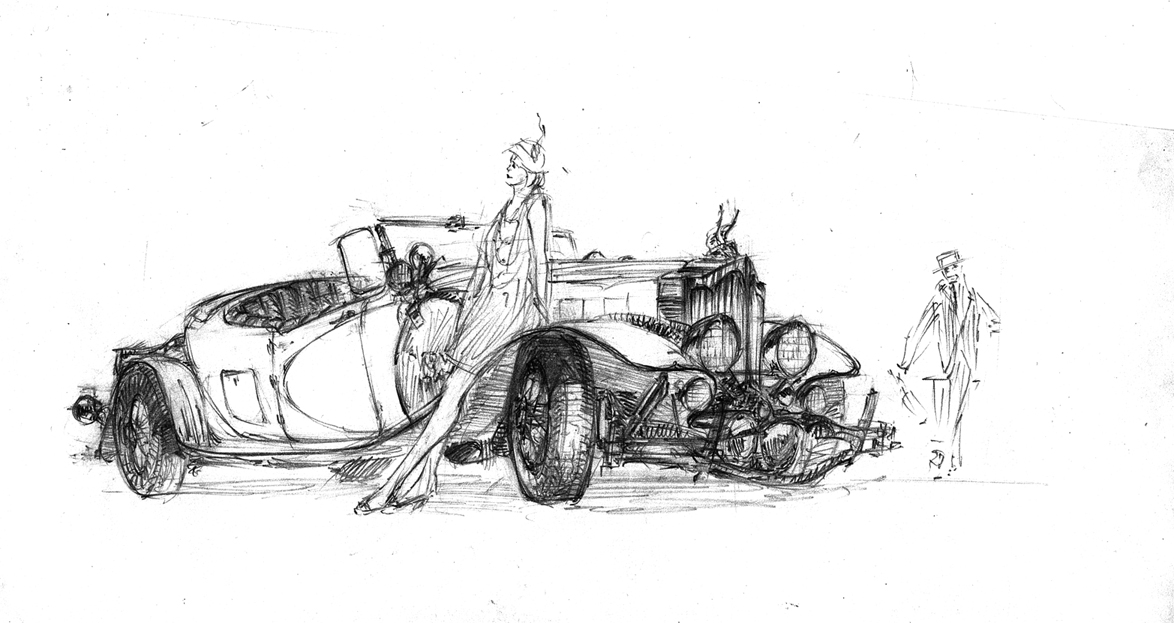
Pencil drawing my father made at 18.

Pencil drawing by my father at 18. I don’t draw cars, by the way.

Over the years––since college, I believe––my father has drawn his cartoons with a recurring character that, despite being unnamed, has acquired a fullness of character all his own, though based heavily on my father and acting as a vehicle for his own cheesy jokes (by my father’s own admission; he lives for polite laughs and groans from recipients). In nearly every cartoon, he draws an anthropomorphic wolf who is usually sitting at a table with a glass of wine. The wolf falls in love too easily and, in the concise mythos of his world, exists solely to be rejected by women (represented as cats) out of his league.

The cartoons are Sisyphean in scope: the wolf always tries and he always fails. However, the emotional clarity of the art (always drawn in a matter of seconds with a fountain pen on a napkin or small notepad my dad keeps in his jacket pocket) makes what could be a pathetic or, perhaps, uncomfortably self-effacing cartoon instead innocuous and charming.

It has gotten to the point that, at the restaurants my father frequents, he is well-known as the “cartoon guy” and that, combined with his pleasant demeanor, he is always very well-treated. However, it’s a recursive relationship in that the great treatment the staff show him at restaurants is a major reason why he regularly dines there.

A fascinating aspect of the art my dad practices is its sense of impermanence. Being that they are drawn with such speed on canvases meant to be disposable––receipts, napkins, etc.––they are hard to keep around. I have looked around my house, knowing that I have many, but it’s almost as if they secret themselves away between shelves or spines of books. Or, perhaps, they just wither with time.

In 2014, my father moved. After forty years living on the central coast of California, he pulled up stakes and settled in San Diego county. He and I talked a lot about his decision, and a lot (not all, of course) of what he would end up missing about his long-time home would be the restaurants he regularly attended. The particular restaurant that became his haunt was the Spirit of San Luis, an eatery adjacent to the San Luis Obispo County Regional Airport. He became close friends with the owners––they exchange Christmas cards––and all of the staff knew my dad by name and vice versa. He would say hello to every employee by name as he entered and headed toward his table; the staff would ask him how recent plans or events had turned out since they last saw him. The feeling was not one of entitlement but familial; it was just how things were, a relationship built over decades. From his regular table he looked out over the runway with a glass of chardonnay and prime rib, watching planes take off and land while reading a book or magazine. It’s a sense of belonging that touches on Romanticism.

Shortly after the 2015 New Year I went down to visit him. I knew he missed home, but was excited at his future in San Diego. On this occasion, I decided I wanted to give him something that not only represented his former home but also showed that I had thought of him (and continue thinking about him), his situation, and understood, to a degree, what he left behind but was also eager to move forward. So, I decided to try and fold the things he loved into one: his wolf, his restaurant, and my art.

I’ve been able to draw his wolf character for awhile; it’s not that difficult but capturing the linework that comes with the speed at which he draws is inimitable. But in terms of basic construction, I can get it down pretty well. However, this was a drawing for him and not just be a pastiche of his style, which could be morbid. When this project first percolated, it started by asking the simple question: What would his wolf look like in my style? It went easier than expected, and my first attempt pleased me. To my eyes, it not only captured the basic look of his wolf (the necessary shapes), but also the relaxed, slightly sarcastic, and hopeless romantic attitude he exuded.
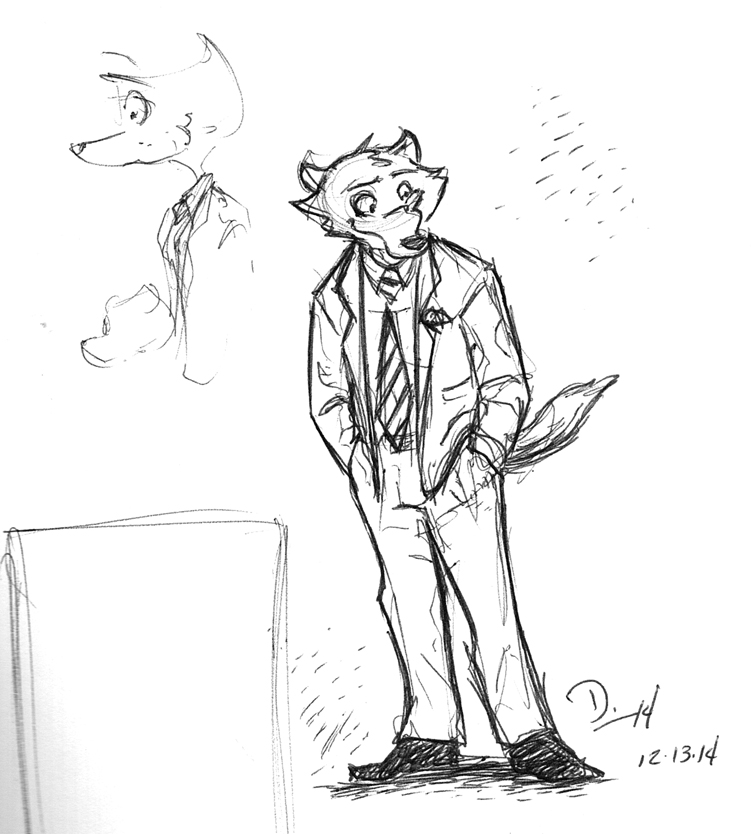
Translating Dad's wolf into my style.

Translating Dad’s wolf into my style. A sloppy version of how my father draws it is at the top left.

I tried to create a basic amalgam of everything his cartoons do into a single image, and have it take place at the Spirit of San Luis. Most of his cartoons are of the wolf trying to charm a cat-waitress and the punchline usually revolves around the waitress rejecting him through the gesture of offering him a cup of coffee. These are accompanied by a light, entendre-based question from the wolf and a very concise and clear declaration from the waitress. Rather than coming up with a joke, knowing it would probably be too forced and/or something he had already used and, thus, fall into pastiche territory, I decided to try it silent, with the sentiment intimated through posture and structure. So, with research and memory I tried to put the pieces together.
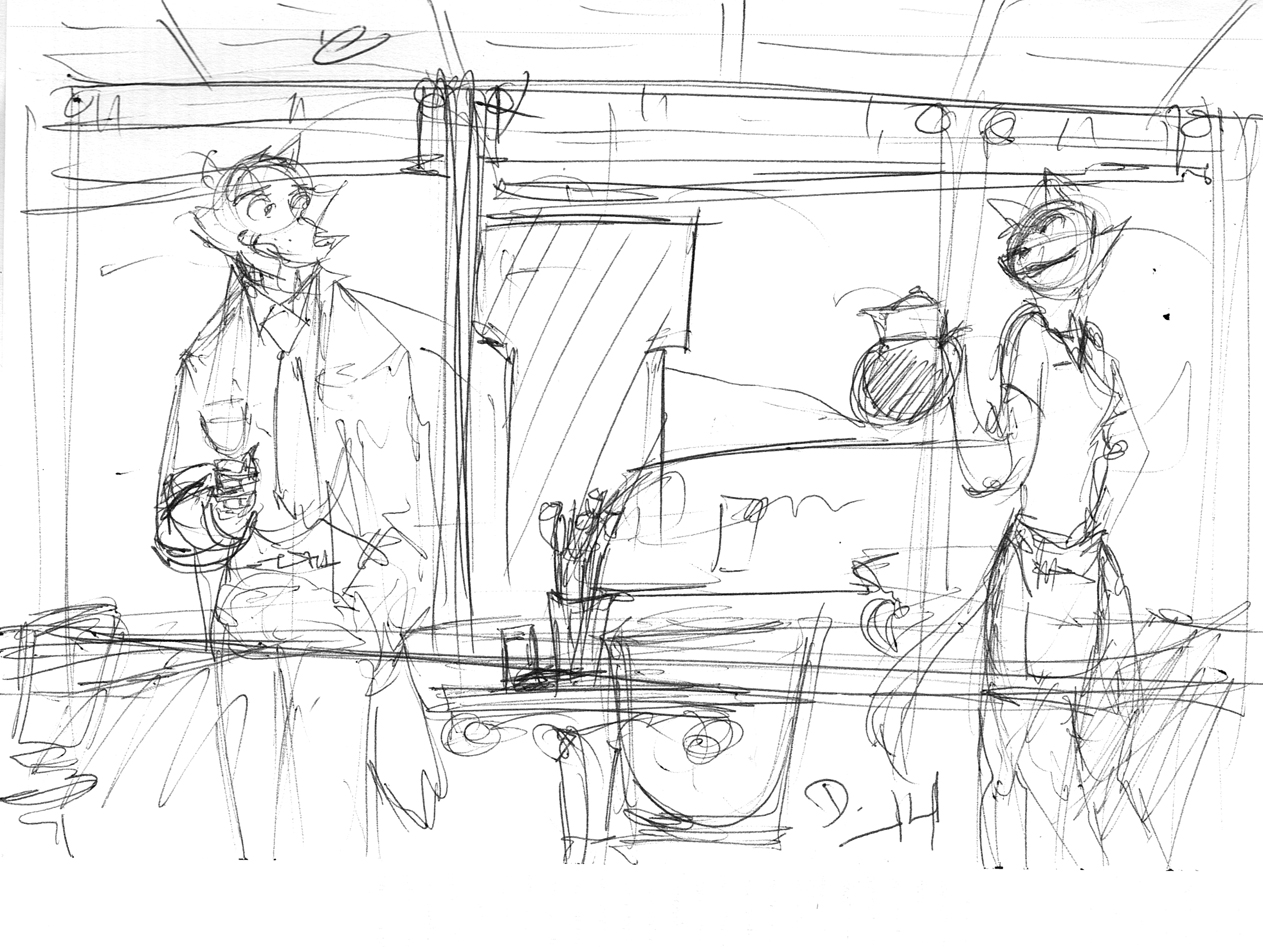
Figuring out the layout in ballpoint pen.

Figuring out the layout in ballpoint pen.

I had never really drawn anything as an expression before. My art rests heavily on narrative. But I found that I was going by feel a bit while drawing this; not in the sense that I was eyeballing proportions or things like that, but I course-corrected whenever the pose/background/layout didn’t capture a sense of “dad.” In that sense, this is probably the only piece of “art” I’ve ever made in that I was not only telling a story but I was trying to say something, albeit something incredibly personal to a very specific audience of one.

In the final drawing, I see all of the influences; there’s a little bit of Chuck Jones, a little bit of Dave Stevens (which I never thought would come out in my art), a bit of the European artists that have also popped up in Long John, and of course I see my dad’s work in here. However, just by sitting down and writing this out, thinking about the nearly century’s worth of my family putting pen to paper, I can’t ignore the bedrock of inspiration that supports this drawing and all of my art in general. All three of us came to art independently. I think my dad eventually asked my grandfather for advice or lessons, but we all started with a desire to try and make lines connect. Even though it’s not something I can point to or show, it’s good to know that it’s there, a figurative set of tools each generation seemed to find on their own that I’m happy to use even if they’ve been in more skilled hands. At the very least, I can build something.
 

2 Comments

Vorpal in Print!

Jan07
by DBethel on 7 January 2016
Keith Houin and Jason Tudor from Vorpal: Shoot Between Heartbeats

Keith Houin and Jason Tudor from Vorpal: Shoot Between Heartbeats

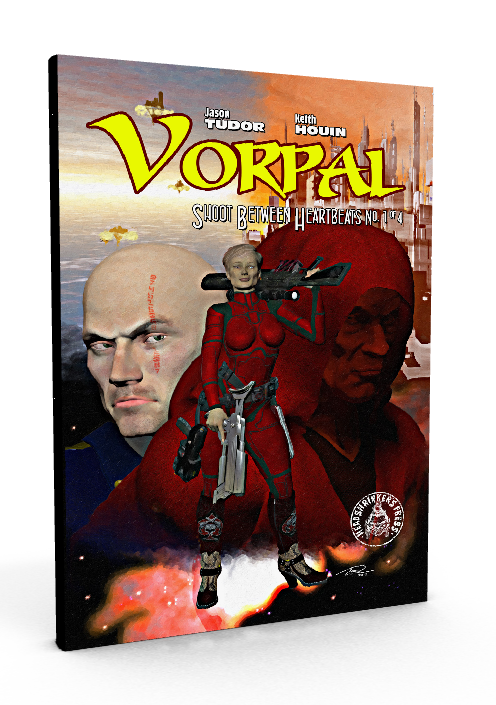
Just to let you know, friends of Long John––Jason Tudor and Keith Houin––have officially released the print version of their sci-fi noir comic, Vorpal.

Jason is a long-time friend, stretching back to early Eben07 days during which he was a vocal fan and big supporter, and it’s great to see him make strides with his creative work over that amount of time.

Since the interview I conducted with Jason back in April, Vorpal was picked up by the independent publisher, Headshrinkers Press, and it is through their combined efforts that the print version of Vorpal became available. The Headshrinkers Press website has a nice press release that gives a succinct overview of Vorpal‘s trajectory.

Jason and Keith are very passionate about this project and I know getting a copy of the book in-hand is a tremendous personal achievement. You can check out the first chapter here (though it’s been revised and updated for the print version) and you can click on the image below to get to the Headshrinkers Press store. I’m incredibly proud for another webcomic to get to the printing stage, but––more importantly––I’m happy for my friends. If you want to support not only independent comics but also the creative efforts of veterans, please take the time to check it out.vorpal_product_icon_blank

 Comment 

Workspace

Jan05
by DBethel on 5 January 2016
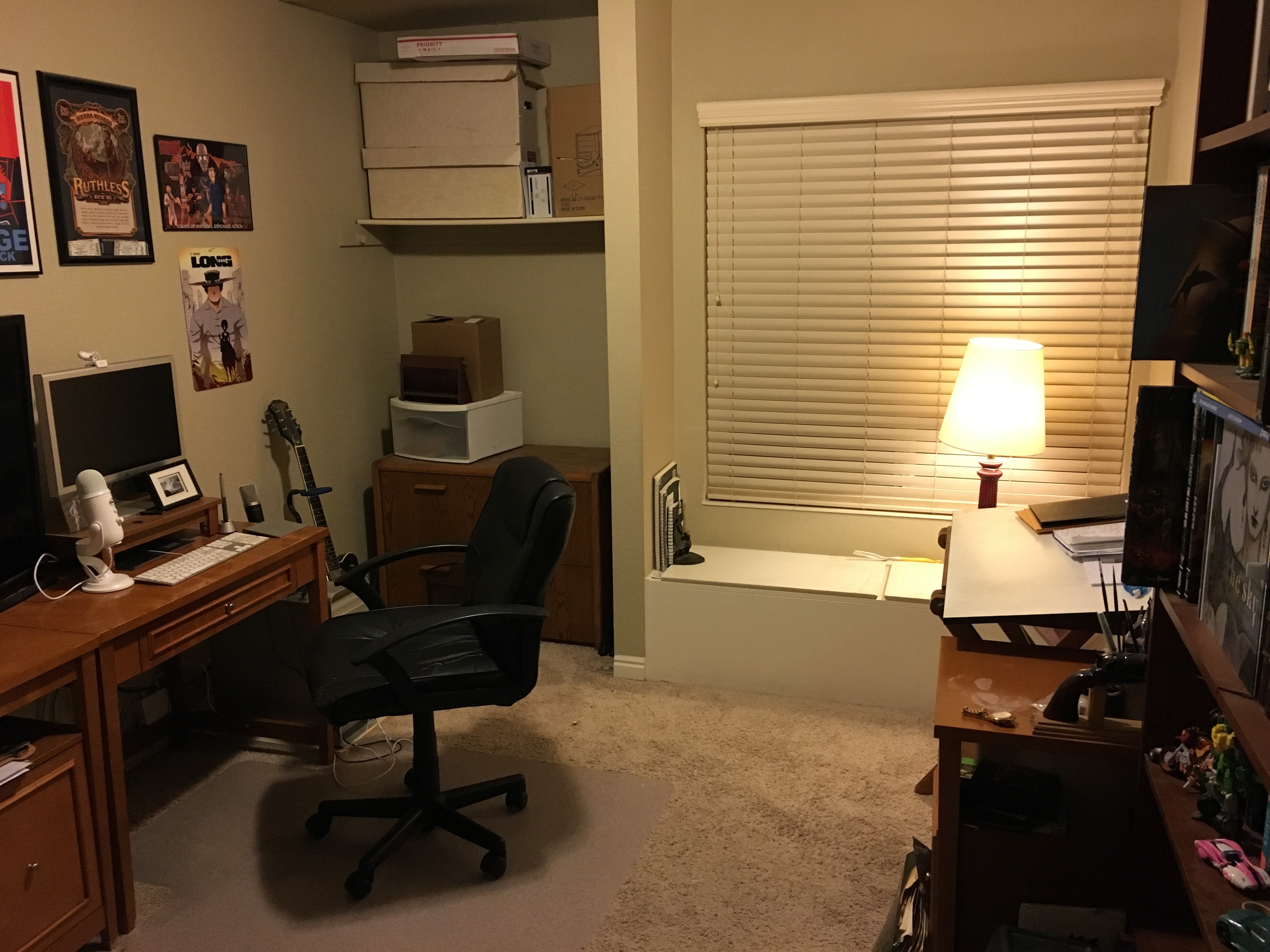
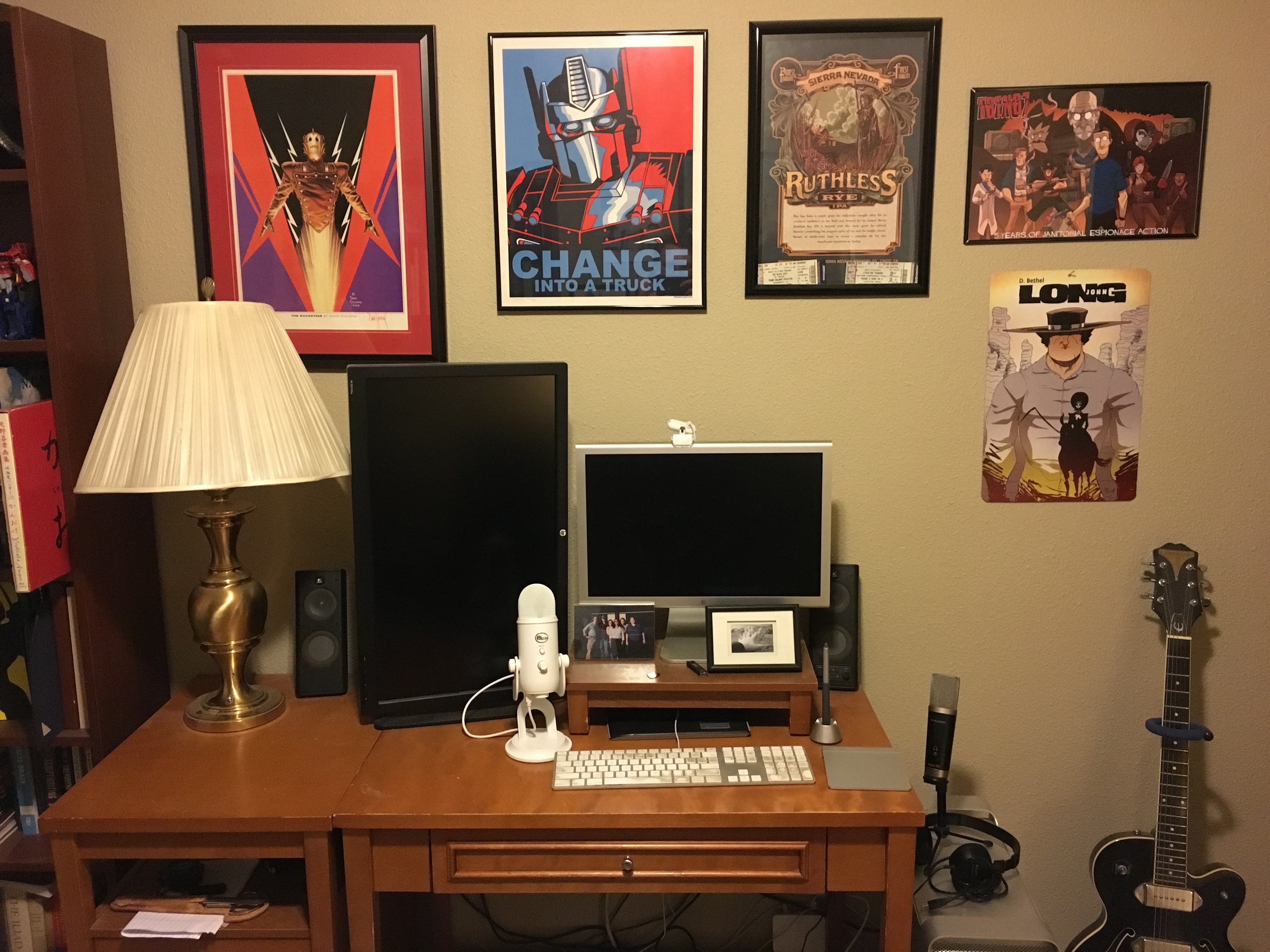
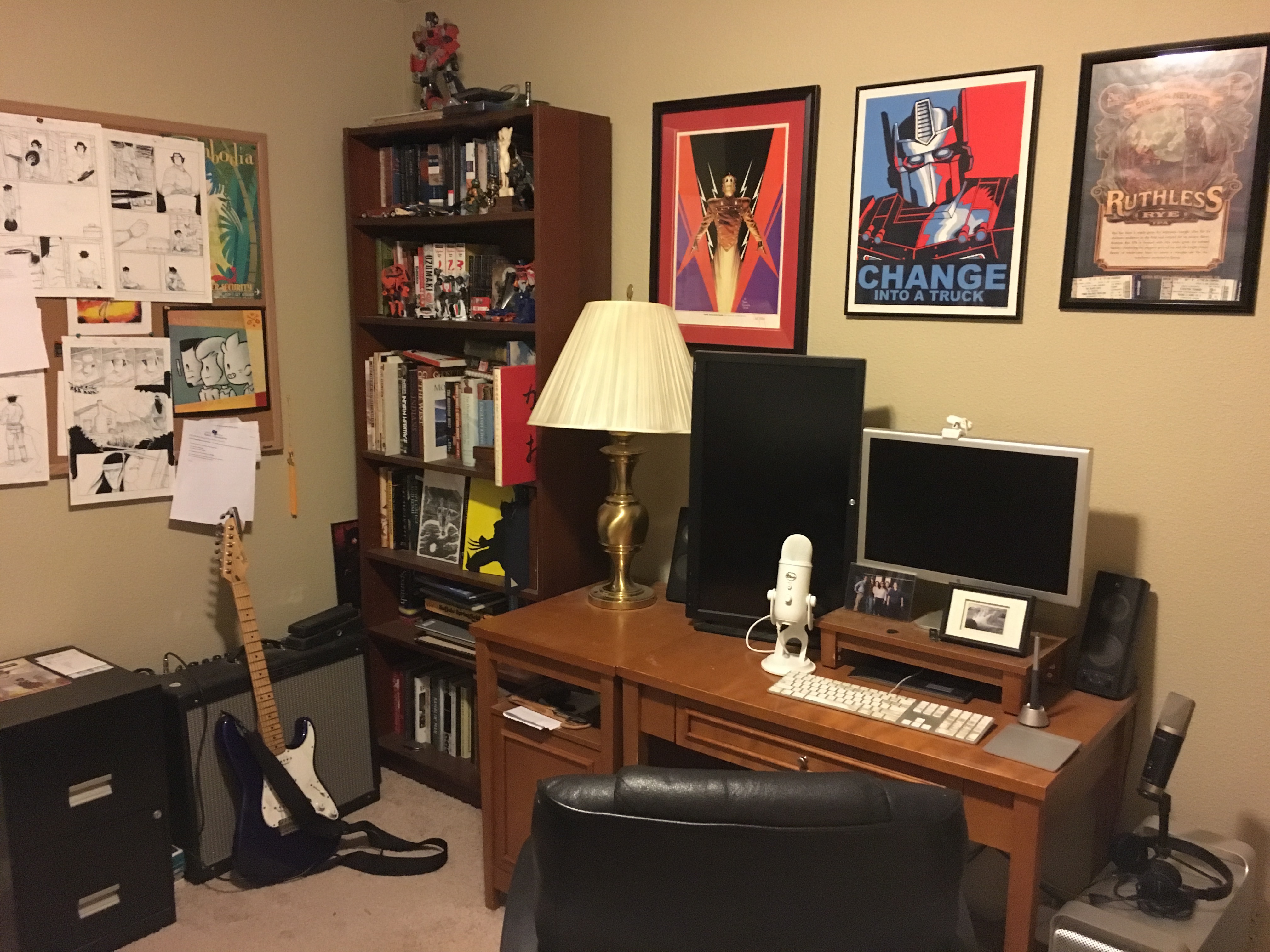
Where I do my stuff.

Where I do my stuff.

The clothes we wear––the visage we reveal––for the world to see arguably has a two-fold purpose. Firstly, it is our personal billboard; we project the summarized self as outerwear of sometimes many layers so the world outside can actually read us as easily as possible, no matter how much we may struggle against that fact. The problem comes down to how people interpret such language.

Secondly, it is our armor. The clothing we wear––with the image we project––is protection against the soft inner core of our being. A lot of effort may go into the creation and projection of that persona and diamond-sharp aesthetic definition of ourselves as mode of expression, but doing so simultaneously grants us protection. Beneath it all, our complicated, interwoven rat kings of experiences, neuroses, prejudices, and talent are vulnerable and sore; too raw for constant exposure and interaction. I argue this is true for everybody, to an extent. Some are more vulnerable than others, so we wear more layers––figuratively or literally––than others, but we all protect ourselves to some degree because, at the baseline, we all have things we need to do and can’t always be bothered to stop and explain and/or defend ourselves.

For the solitary creative, the inverse is true for our workspaces. For me, my office is a chrysalis inside of which I can metaphorically disrobe because I am surrounded by “me.” It’s the compartmentalization of the “me” in the area that allows for focus and work; I get to hang “myself” up on a hanger through the arrangement of inspiration, nostalgia, and tools of my trades. These disparate tapestries signal safety to me, so I can just concentrate on what needs to get done. The office is, in many ways, a more careful construct than my outward presentation (for some, this is not a surprise; nor is it a larger effort), because here I need to actually produce.

However, being a creative person, I often feel like an inadequate impostor.

Inspiration comes from any angle since many pieces go into inspiration and production of creative output, and one piece of inspiration that I can usually count on getting me going is seeing the workspaces of creative people. I pour over the pictures and revel in the messes (or cleanliness) that people I admire and respect create within.

Because of that––and because people have asked me over the years what my creative space looks like––I figured, because of a recent cleaning, to share my office as it has been for the last few years.

Things and stuff

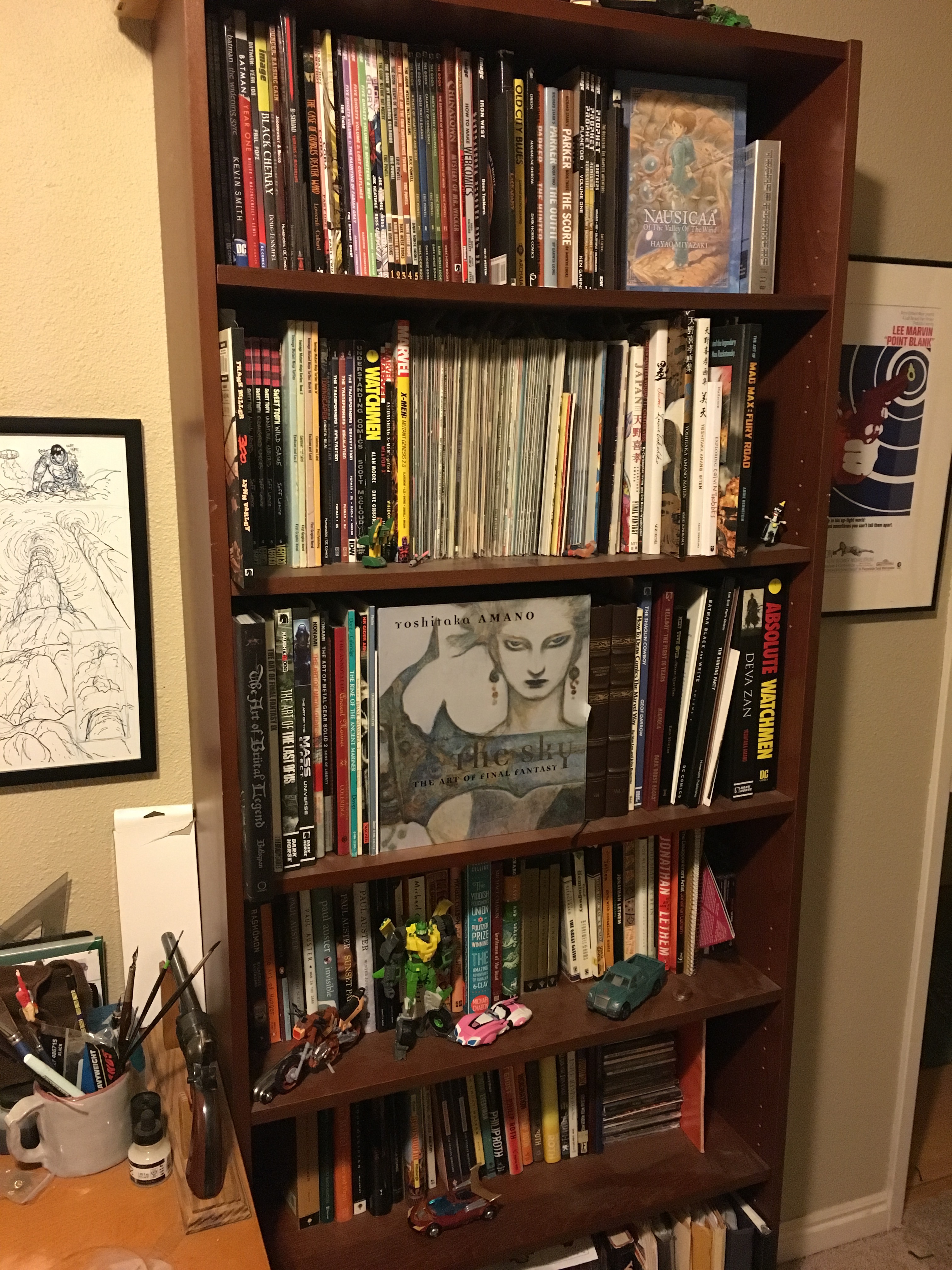
The first bookshelf coming into the room holds all my comics/graphic novels, art books, select fiction, and sundry other––mostly oversized––books (and CDs, apparently). And, yes, Transformers (this bookcase is devoted to stars from the 1986 animated film, but whatever). The intended purpose for this bookcase being so close to my drawing table (out of view, to the left) is that these would be the items which would work best as reference or inspiration while actually making comics (the comics and stuff, not the Transformers). The idea is also that all inspirational/referential art on this shelf would be rotated out with time, and it’s been a refreshing experience to got through everything and ask how much each item would really push me forward on a project. Lastly, a print reproduction of the one-sheet from one of my most favorite movies, Point Blank, peeks out from behind the bookcase on the right.

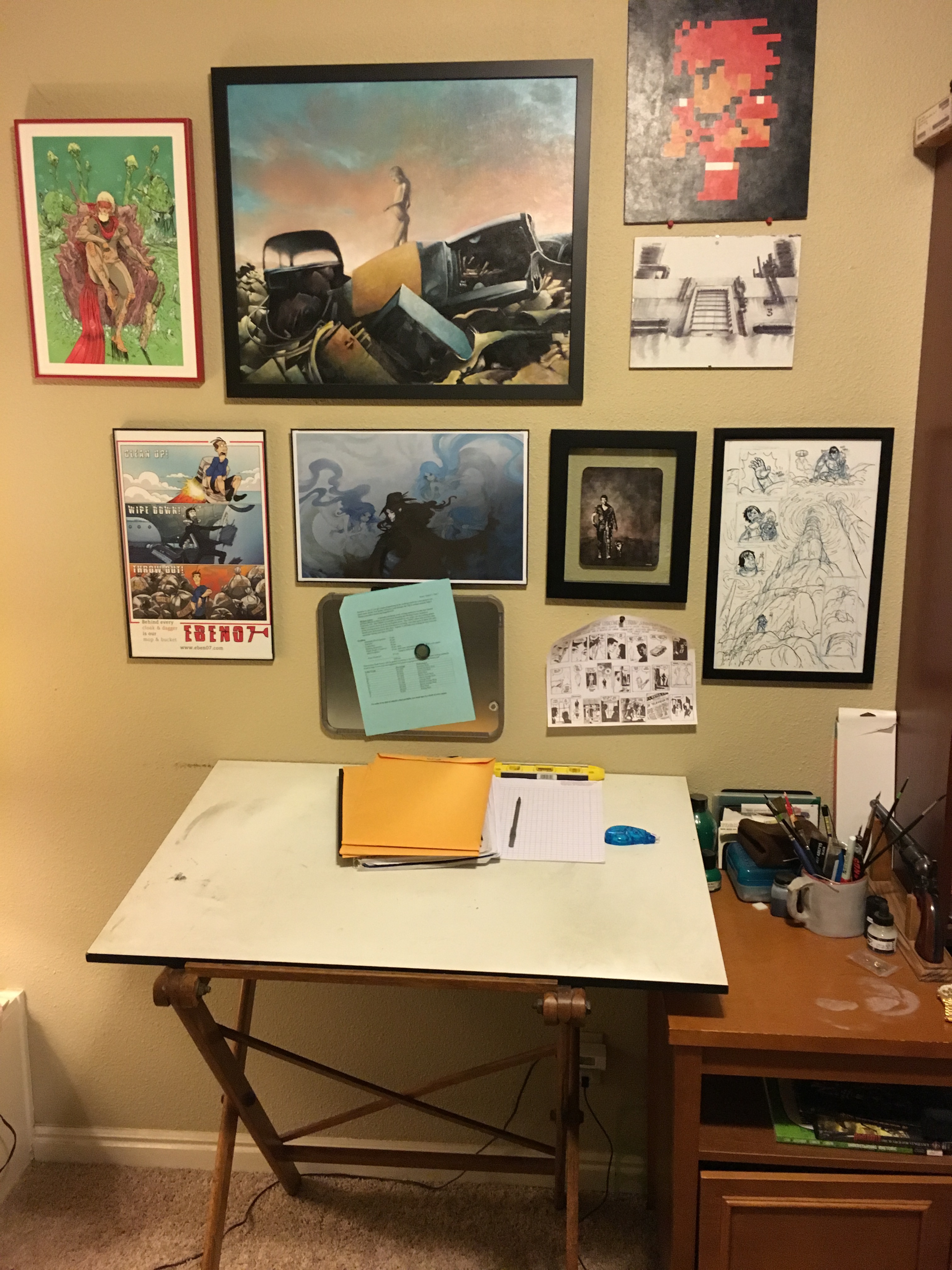
Art table (with some student portfolios I need to grade). Artwork by Giannis Milonogiannis, Josh Tobey, Melissa Pagluica, and Simon Roy are there to inspire me.

Continuing left, we come to the drawing portion of the room. The art table belonged to my grandfather, a commercial artist in the Mad Men-iest sense of the word (though he worked for a vitamin company and not an ad agency). The board itself is not original, but it gets the job done. I’ve surrounded the table with inspirational work, naturally. Clockwise from the top left is a Prophet print by Giannis Milonogiannis, a painting based off a short story I wrote called “Hunter’s Moon” done for my be Josh Tobey. To the right is, on top, a painting of the “Fighter” game sprite from the original Final Fantasy, and beneath it is a ballpoint pen background drawing for an animation project, both done by Josh Tobey. Next is an original page from Prophet #23 by Simon Roy. To the left is a picture from the Mad Max Trilogy Blu-Ray tin above a printout of Wally Wood’s famous “22 Panels That Always Work” schematic. These are followed by a Vampire Hunter D print by Melissa Pagluica (read her amazing webcomic, Above the Clouds, right now). And, lastly, is a copy of the third-year anniversary print I did for Eben07. The little magnetized dry-erase board is the vessel on which I travel the river of life, and use it for any immediate purpose. As of this photograph, it’s supporting the grading breakdown for my Fall 2015 classes, but often also sports hastily written to-do lists or problem-posing questions about story beats, etc. It really is half of the heartbeat of how I work (followed by the corkboard, to be featured later).

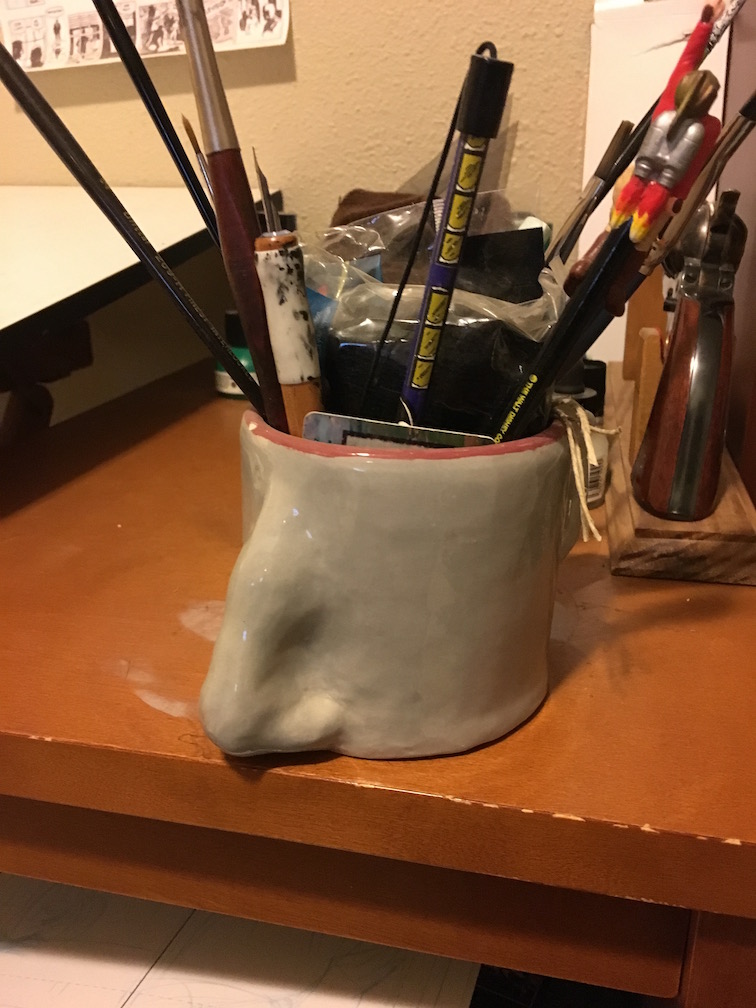
The mug full of stuff is an original work by Josh Tobey as well; it’s got a big nose on the front of it, which makes it the best thing ever made.

IMG_3363

Nose mug by Josh Tobey. Be jealous.

And a replica 1860 Colt Army is a thing, too.

Things and stuff

The computer workstation is a Mac Pro from a hundred years ago. The vertical display is used for writing, in order to see as much text as possible, which is nice. Underneath the cinema display, tucked away, is my Wacom Intuos3 tablet, which I think is all the art stuff I have at my computer. It, too, is surrounded by inspirational art. From the left, a Rocketeer print signed by the late creator Dave Stevens followed by a goofy Optimus Prime parody print by artist Tim Doyle. Then is a print of the label from Sierra Nevada’s “Ruthless Rye” IPA. Then is the five-year anniversary print I did for Eben07 above a Long John print that was printed onto a sheet of tin by RA Comics Direct.

As cool as those things are, the desk is falling apart, and surely will do so at a moment’s notice. The keyboard drawer regularly falls to the floor if bumped. Despite knowing that, it’s still full of stuff. Also, an Epiphone Wildkat to the right.

Woo!

Rounding out the tourism the last corner of the room, which features my poorly organized bookshelf with a bunch of Transformers on it. This is where I keep the fiction––history, mostly––as well as my manga collections. The top shelf is dedicated to translations of The Iliad and The Odyssey; I try to collect as many different versions as possible and speak to my secret desire to become a Classicist.

The bookshelf does have some original art, though; first is an ink and marker drawing by Mark Rudolph recreating a panel from his comic adaptation of the H.P. Lovecraft short story, “Dagon.” Next to that is a great silhouette painting of Wolverine by Seattle artist whose name I can’t read from the back, and I’m ashamed to admit that.

The main thing to note is the huge cork board where, right now, I post pages in pairs so I can see how they read. I draw my layouts in two-page increments and actually hanging them up to view them in final form really helps me see how the story is progressing and, next to my computer, focus the dialogue. When not covered in finished pages, it is a kind of tone chart for whatever I’m working on. I hang upon it images and texts that evoke the emotions and atmosphere of whatever I’m working on at the time. Usually, this means a bunch of shoddy printouts from stuff I find on the internet; it has, at different times, housed printouts of paintings, character/clothing reference, animal reference, song lyrics, sketches, and scripts, among myriad other things. It was the last major piece to be added to the room and really helped productivity “click” in my brain and I recommend anybody to go find the largest corkboard available and hang it in the office as soon as possible.

Also, a Frankenstein Fender Stratocaster on a Fender Hot Rod DeVille 212.

And that is how my things look. If you want to imagine the workspace in action, imagine all of this but with paper everywhere and at least two mugs either full, or half-full, of tea on each of the desks and you’ll have it quite right. And, in a sense, you have seen “me” inasmuch as “D. Bethel” can be broken into pieces and given the space to stare at anybody in the room. These things, though nerdy, I would argue keep it from being the cliche “man cave” and are more the necessary pieces for me to actually sit down and work. This isn’t blatant nostalgia––though nostalgia is, indeed present––and it isn’t a sanctuary from the real world; the room is a construct that provides the necessary blend of expression and protection so I can do my best work without worry or hesitancy. You want to know about Long John? Check out this room. You want to know about me? Look at this room. You want to know about what I’ll be doing in the future? Look at this room. It is me and it is my work; it will change yet it will always be me. As it should be.

1 Comment
  • Page 97 of 114
  • « First
  • «
  • 95
  • 96
  • 97
  • 98
  • 99
  • »
  • Last »
  • Instagram
  • Facebook
  • YouTube
Privacy & Cookies: This site uses cookies. By continuing to use this website, you agree to their use.

To find out more, including how to control cookies, see here: Cookie Policy
  • Newest Comic
  • About
  • Archive
  • Links
  • Shop
  • YouTube

©2014-2026 D. Bethel | Powered by WordPress with ComicPress | Subscribe: RSS | Back to Top ↑