• Newest Comic
  • About
    • Synopsis
    • Characters
    • Author
    • F.A.Q.
  • Archive
    • Comic Archive
    • Blog Archive
  • Links
    • Press
    • Connect
    • D. Bethel’s Work
    • Contact
    • Friends of Long John
  • Shop
    • Online Store
    • E-Books
  • YouTube

Long John

Losing Every Thing Changes Everything

Sketch Fridays #09 – Jessica Jones

Dec04
by DBethel on 4 December 2015
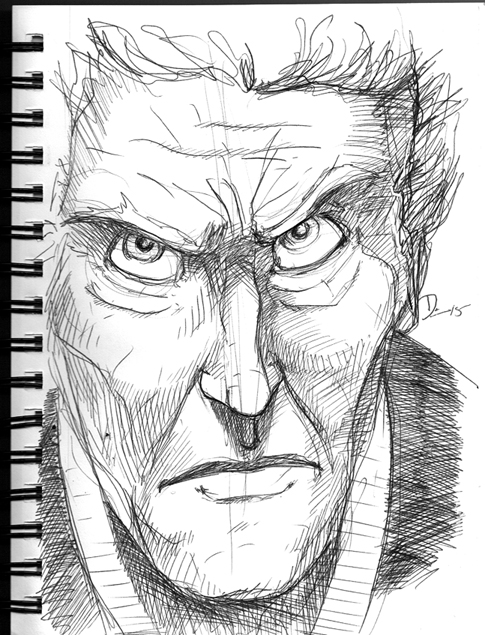
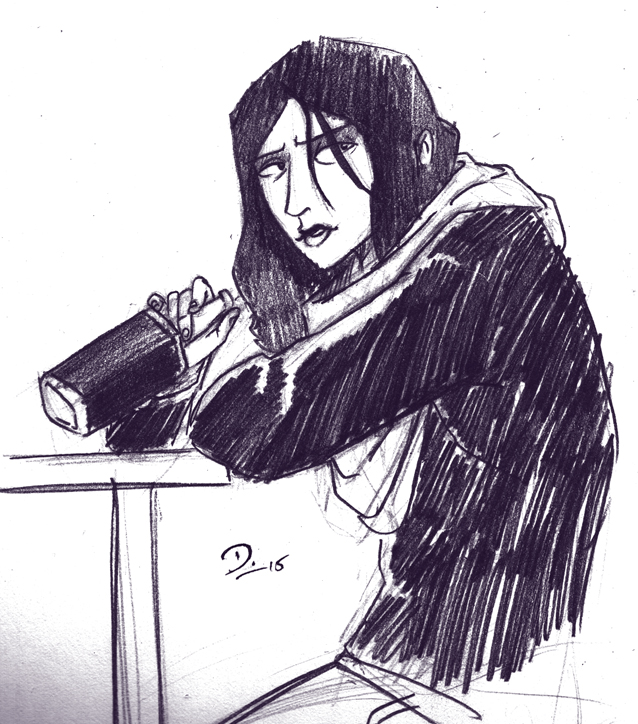
Sketch Friday #09 - Jessica Jones. Click to enlarge.

Sketch Friday #09 – Jessica Jones. Click to enlarge.

Jessica Jones, the latest product of the Marvel and Netflix team-up, has only been available for a few weeks and has, just as quickly, fostered its share of discussion both of the binge-watching, water cooler variety as well as more academic and/or socially conscious discourse. I don’t have much to stand on as of yet as I have not actually finished watching the thirteen episodes (as of this writing, Nicole and I have only watched eight), but even with a mere 60% of available episodes under my belt I have strong feelings about what has been brought to not only the Marvel Cinematic Universe, but to Netflix and to television (as much as it is actually television, which is debatable).

I hesitate to start lobbing superlatives around because, as informed and objective as I think I am being, it’s hard to really parse out what aspect of these feelings are genuine, deep-seated, thoughtful response and what is hyperbolic reaction simply because it’s new and different. For once, it’s absolutely true to say this: only time will tell. Despite that, I think Jessica Jones is a rather important text––more important than any other Marvel cinematic entry so far (movie, television, or digital)––because it is actually using the superhero genre not only as a narrative framework for a fascinating and original story, but it is also using superpowers as a powerful and meaningful metaphor and allegory.

What Jessica Jones is doing differently from all other Marvel properties (and DC, as well) is that it is transcending its super-heroic roots, baggage, and narrative (though it uses all of those very well and pushes that general genre forward) and became art. It is the epitome of what Art, or Literature, or Cinema does and becomes a vessel for a time and a place, for a people and a struggle––a voice screaming at the top of its lungs but is so well-crafted you could miss it if you don’t listen. Jessica Jones is a subversive commentary dressed as a hard boiled detective story using superhero, comic book language, and it is beautiful.

It embodies a concept I have discussed before but like to reintroduce when I can because it had such a profound effect on me as an artist and human being. While taking a “Great Books” class during my undergraduate education, we were reading various examples of Roman poetry/philosophy (such distinctions were undefined back then; a concept whose return I wouldn’t mind in many ways) and I came across Horace. He coined a concept that––more than any other codified theory or book about writing––made so much sense to me that it changed the way I looked at art, like putting on glasses for the first time and seeing the linework (so to speak) in the surrounding world. Horace argued that all art (including anything that can fit under that umbrella) should embody the principle of dulce et utile; that is, art should be “sweet and useful.” It should be entertaining––popularly so––but even the most aesthetically-minded of reader would walk away with a piece of some universal truth that may surface at any time and make that person’s life better. Art should inform how we live our lives, not just be an escape from it. Art should be a tool that unites ideas and knowledge like a hammer or screw.

Batting between being the best and worst praise for the Marvel cinematic content is that it’s “popcorn” or “blockbuster” or “stupid fun.” While that’s fine, for some––I hate to say it––that may be all they are: links in a chain.

Jessica Jones is not particularly fun. It’s brutal and heartbreaking and horrifying and scary. It’s not for binging. It’s for processing. It’s about the mystery of the main character and rooting for her to avoid a tragic hero’s fate, but it’s also about what she has gone through, metaphorically and literally, and a safe place to discuss those ideas and their cultural implications.

I speak in the abstract because I want to discuss no details; it’s best to see those with your own glasses on rather than having someone tell you about it anyway. Also, I’m not done with the show.

While predictions of the show’s impact are futile and possibly colored by its immediate praise or cultural trending, I honestly feel that what Jessica Jones is doing for live action superhero drama is what The Dark Knight Returns or Watchmen did for comic books. It’s saying something very, very important about our culture while breaking and bending the tropes of the genre it’s using. It’s not perfect, but that’s what makes it perfect for discussion.

I can’t stop thinking about the show; it swirls in my mind like a perfect song while simultaneously haunting me like a nightmare. For that, today’s sketch was more catharsis as it was an exercise. I can’t necessarily recommend the show, but when you think you’re ready for it you should definitely give it a chance. Just don’t expect it to do what Avengers or even Daredevil did for you. As with the character herself, Jessica Jones needs to walk its own path.
 

 Comment 

Sketch Fridays #08 – Sketch Pile

Nov28
by DBethel on 28 November 2015
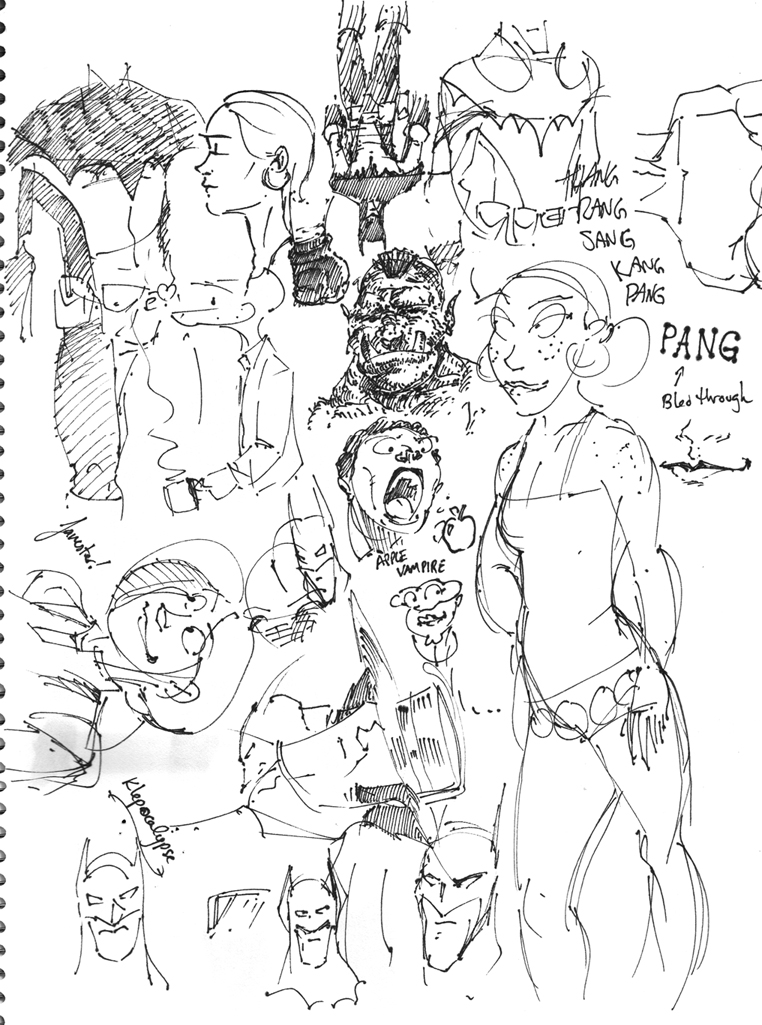
A Pile of Sketches. Click to enlarge.

A Pile of Sketches. Click to enlarge.

As I’ve alluded to in previous posts, I’ve been swamped since August. Since October, especially, things have been particularly rough.

I’m teaching a full load of classes (technically) this semester, which I’ve done before but it’s all sections of the same class, so everything is due on the same day, usually. This week is the pinnacle of such problems as I have six days to grade about 100 papers. Because of that, I’ve been creatively and mentally wiped.

I have sat down a few times to draw and, in addition to the exhaustion, I’m having a spate of “everything I draw looks like garbage.” Trust me, it does.I even tried doing a specific drawing for Sketch Fridays, but it was a disaster and I even committed the cardinal sin of trying to fix it in Photoshop. No doubt, there are aspects of the drawing that looks fine, but as a composition it stinks and isn’t something I want to share with everybody. But whatever:

Sometimes drawing with a pen results in "drifting eye" disease. Ugh. Click to enlarge, I guess.

Sometimes drawing with a pen results in “drifting eye” disease. Ugh. Click to enlarge, I guess.

Sometimes when I am just sitting on the couch with Nicole watching tv or something, I try to just doodle in a sketchbook and see if anything happens. As I’m sure I’ve mentioned before, I’m not a doodler, or a sketcher; when I draw, it tends to be for a specific purpose. However, I want to get better and I know that a major part of that is drawing as often as possible, even if it doesn’t feel like I’m doing anything productive. Hence these evening doodles. I call these collections of assorted miscellanea “sketch piles” because that’s what it looks like. However, even when I tried to sit down and do that it was pretty lackluster, but I figured I’d share it with you anyway.

Sketch piles don’t start out with any rhyme or reason, which drives me crazy. So, I just draw lines and shapes and see where it takes me.

This particular pile was all drawn with a fine-tipped Sharpie, so I had to move fast and really make each line count or else it would be plagued by bleed-through and a complete obscuring of whatever it was I was trying to draw. With that in mind, most of the stuff on this page is just random (I even start playing with the bleed-through a bit). At some point, I got interested in redesigning Batman’s costume which lead nowhere. There are also some characters on there: Long John, obviously; Janester, a character from Eben07; there’s a wolf holding a mug of coffee which is one of my dad’s cartoons he leaves on napkins and receipts at restaurants with groan-worthy one-liners.

But back to the work thing, because I think it’s best to come clean if only for the fact that is impacted Long John so severely.

I’m a teacher, as stated above, and this semester I have been given new responsibilities as well as an ostensible full load of classes. I say ostensible because teaching five classes is considered full time and I’m only teaching four; however, I have the role of being a coordinator of a small program within the English department that I’m very proud to lead, and it counts the same as teaching a class.

Not only has grading been tough––I knew what I was getting into––but I’ve been hit with a major “first time” event that, with hope, most teachers don’t have to experience.

Without relaying the story in detail (and risk a tl;dr situation; though I’ll probably write it up at another time), in October I was informed by a student that another student––her close friend––had died in a car accident over the weekend. He sat in the back and was quiet. But he laughed at my dumb jokes (and my good ones) and, otherwise, didn’t stand out too much. He worked when he was supposed to and he asked questions when he had them. Like a student does. He was a student.

It was a tough thing to bring up with the rest of the class, and we talked about it and have moved through it.

At the beginning of November, Human Resources informed me that another student had died in a car accident. I didn’t know this one as well; I had never met him (he was a student in the program I coordinate which is a small class tutorial, divvying students between a number of tutors I employ), but I had the responsibility to tell the tutor what had happened.

But the semester doesn’t stop and I have to keep going. I have papers to grade and remaining students to get through the class. I had surgery a few weeks ago, with another one in March (nothing serious, but a long process nonetheless) and the healing, and medication, knocked me out for a solid week or so.

Like I said, it’s been rough. I’m not telling you this as an excuse, because it’s not. I’m sure more dedicated people than me would work right through this, using it as a cathartic exercise, but I can’t. Instead, I am eagerly looking forward to the winter break where I can just draw and let the stress go (until I have to go in for jury duty, ugh…). For the first time in a long time, drawing is all I want to do. I can’t wait for you to see it.

1 Comment

Sketch Fridays #07 – Long John Preview

Nov20
by DBethel on 20 November 2015
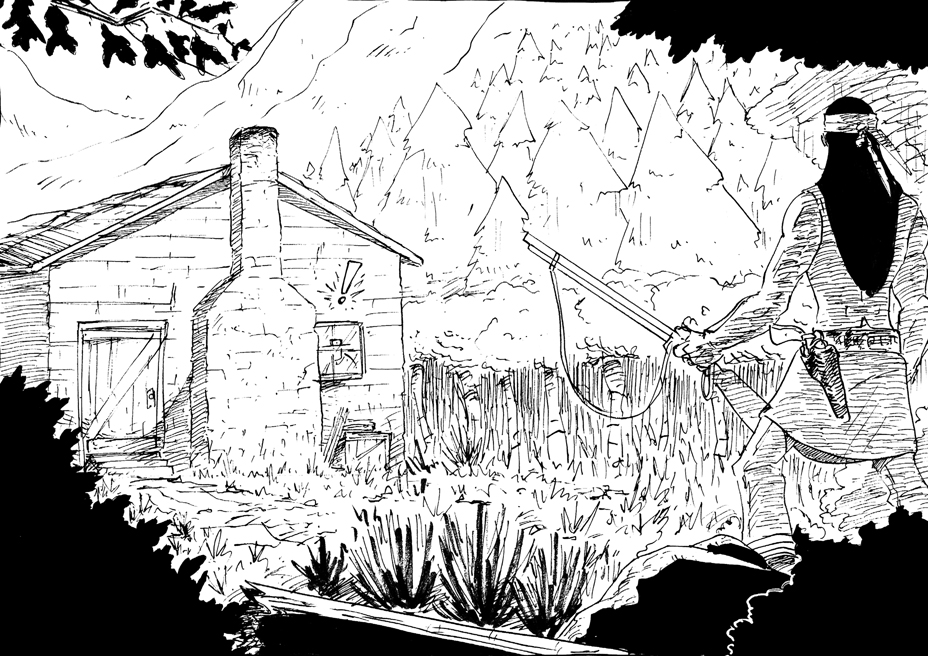
A preview from an upcoming Long John page. Click to enlarge.

A preview from an upcoming Long John page. Click to enlarge.

This week’s Sketch Friday––a panel from an upcoming page––serves at least two purposes. First, it’s proof that pages for Long John are being made, albeit slowly. Second, it’s a way to introduce a new character who has, up until this point, been featured only in conversation. Welcome the backside of Jonny Mono.

I’ll explain more about him in future posts, when his character is actually a part of the story. The reason I wanted to share this drawing is that it shows a type of shot that I pepper throughout Long John as the story progresses. Big open establishing shots add to the cinematic quality of the story, plus it really presents a challenge for me as an artist (a challenge I often put off as long as possible). With the opening shot of chapter one, Long John’s saunter into Poverty Flat, the third panel of the second page of chapter 2, I really want to emphasize place in Long John as much as I want to focus on character.

What was one of the most aggravating issues with designing this panel was how to pose Jonny Mono. It’s about really knowing the character before he really has had any time on the page and knowing how he should be feeling before and on this page. Of course, I feel I have a soft concrete understanding of Jonny so far, but even with my staunch stance on the artist controlling the art (and not giving authorship over to “the story,” “the characters,” or “the moment” controlling direction––none of those are real; the author is, and is always in complete control) I submit to the fact that characters change once they get into a story. Drawing them a lot changes them literally on the page and also in my head, which makes the story and character more clear. Mix into that recipe the need for it to look good or––in the parlance of my generation––cool, and suddenly I have a lot to think about for a panel that needs “Long John sees Jonny from inside the cabin a good distance away.”

This actually speaks to an issue that I see a lot of comic artists fall into when they decide to write their own stories. I have been a proponent of artists striking out from the writer/artist paradigm (and hierarchy, in some circles), but with the caveat that artists should study the art of storycraft as much as art (because it’s not that hard, it’s a matter of commitment). Many artists, instead, simply resort to drawing things that “look cool”––the style over substance argument––which, undoubtedly, is cool but does it amount to anything? Does it last? These artists create 150-page graphic novels that can be read in fifteen minutes because it’s padded with really cool-looking action and splash pages.

Luckily, there are many artists that have dynamic styles that also present thoughtful, developed stories. This is important for artists because even if your art on its own is kinetic, dynamic, and cool, working on the story only enhances the art. I am thinking of artists like Kazu Kibuishi and his Amulet series (though I’m partial to his one-shot sci-fi western, Daisy Kutter), Sean Murphy with his Punk Rock Jesus (though his recent work has been with writers as well), Becky Cloonan, and Eric Powell’s The Goon (which, despite its standard chaotic nature, Powell has shown he can craft a solid story). These are artists that love to draw and do so well, but they have––through their own means––also included, as part of their art, the study of narrative. Because of that––especially in the cases of Cloonan and Powell, though exhibit this in completely different ways––they create something wholly unique. It’s not just cool art with no story, and it’s not just good story with rote art. It’s comics narrative, taking advantage of both arts and weaving them together to create something wholly unique to comics themselves.

Part of committing to story as much as art is the willingness to stop and take a breath and let the art speak in its own language, which is why I actually enjoy drawing scenes such as the one above and dropping them throughout the story, as infuriating as it may be to get there.

 Comment 
  • Page 99 of 114
  • « First
  • «
  • 97
  • 98
  • 99
  • 100
  • 101
  • »
  • Last »
  • Instagram
  • Facebook
  • YouTube
Privacy & Cookies: This site uses cookies. By continuing to use this website, you agree to their use.

To find out more, including how to control cookies, see here: Cookie Policy
  • Newest Comic
  • About
  • Archive
  • Links
  • Shop
  • YouTube

©2014-2026 D. Bethel | Powered by WordPress with ComicPress | Subscribe: RSS | Back to Top ↑