• Newest Comic
  • About
    • Synopsis
    • Characters
    • Author
    • F.A.Q.
  • Archive
    • Comic Archive
    • Blog Archive
  • Links
    • Press
    • Connect
    • D. Bethel’s Work
    • Contact
    • Friends of Long John
  • Shop
    • Online Store
    • E-Books
  • YouTube

Long John

Losing Every Thing Changes Everything

The Week – 30 November 2018

Nov30
by DBethel on 30 November 2018

Ironically––as well as coincidentally––this week was full of westerns in a variety of forms. To boot, they were all very good as well.

WATCHING:
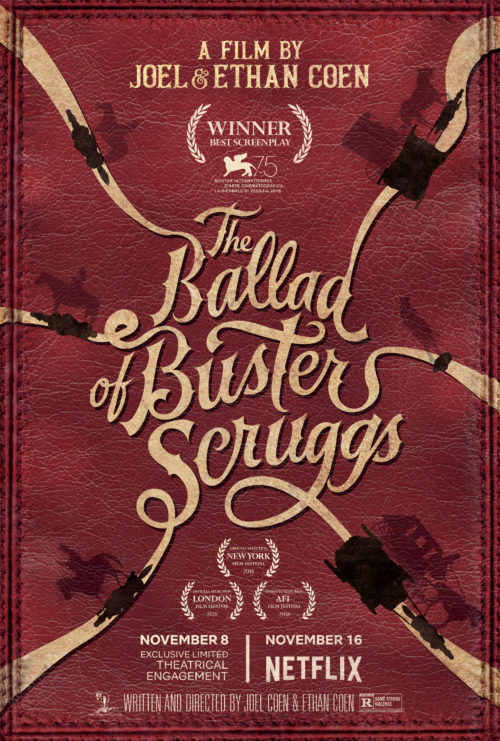
Image Source: Annapurna Pictures/Netflix.

  • The Ballad of Buster Scruggs – A Netflix-original Western anthology film by the Coen Bros.

The Coen Bros. are a legacy all their own by this point as their output has been steady and reliable since their 1984 debut with Blood Simple––a neo noir made with the swagger of competence far beyond what one could presume from their empty resumé. Though they have wandered throughout a panoply of film genres, those quirky noir roots have permeated every movie, whether obvious or not. Aside from crime films, they haven’t returned to a specific genre too often, though after 2007 they added another genre to their repertoire.

No Country for Old Men––adapted from the novel by inimitable Cormac McCarthy––marked a toe into the pool of westerns, albeit a modern western, and it seems it was enough to keep bringing them back to the well; first in 2010 with their brilliant adaptation of True Grit and again, this year, with their inspired and very strange anthology film, The Ballad of Buster Scruggs.
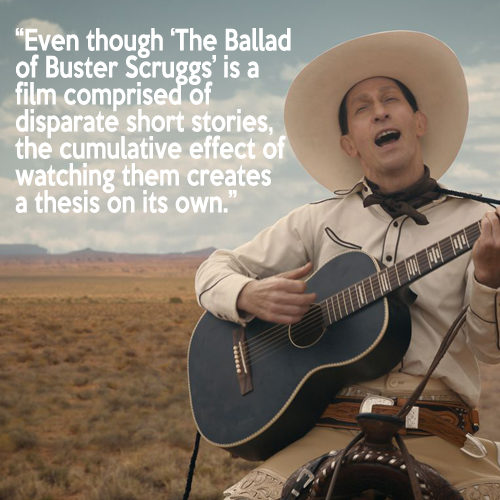
Image Source: Annapurna Pictures/Netflix

What is intriguing about Buster Scruggs is that it is the Coens’ first original entry into the genre. Even though it is a film comprised of disparate short stories, the cumulative effect of watching them creates a thesis on its own. The stories range from absurdly silly to philosophically poetic, but when you step back to not only assess your judgement of the film but its place within the brothers’ oeuvre, the film takes on a metatextual quality: this movie is the Coen Bros.’ career in a nutshell, wrapped in a Wild West ribbon.


PLAYING:
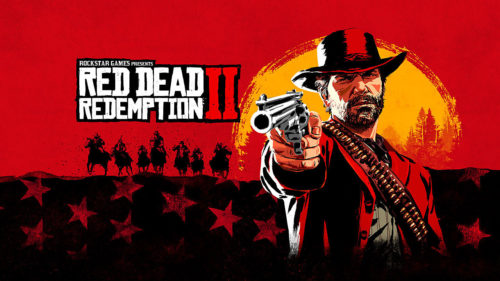
Image Source: Rockstar Games

  • Red Dead Redemption 2 by Rockstar Games

Despite being the worst-named game in the history of video games (RDR2 is actually a prequel to Red Dead Redemption, and is actually the third game in the series, with Red Dead Revolver being the first, albeit completely unconnected, narratively, to the two Redemption games), Red Dead Redemption 2 had a huge hurdle to clear. Red Dead Redemption was, culturally, a major landmark for video games when released in 2010. Red Dead Redemption created and offered a (at the time) living, breathing, changing world that seemed less a playground and more an actual setting you had to work and live within.

That being said, on a recent conversation I had on my podcast, Rockstar––who is probably more well-known for creating the morally dubious Grand Theft Auto game series––knew how much cultural weight people were placing on to the sequel to what some have labeled “The Greatest Game of its Generation” and did what they wanted to do anyway.

The previous game was loaded with powerfully cinematic and ludic moments where they made the player feel like they were playing something special and momentous and as powerful as any movie, novel, or tv show could ever be. So far, those moments don’t really exist in RDR2. However, it’s a very well-written game that is compelling in the face of its subtlety.
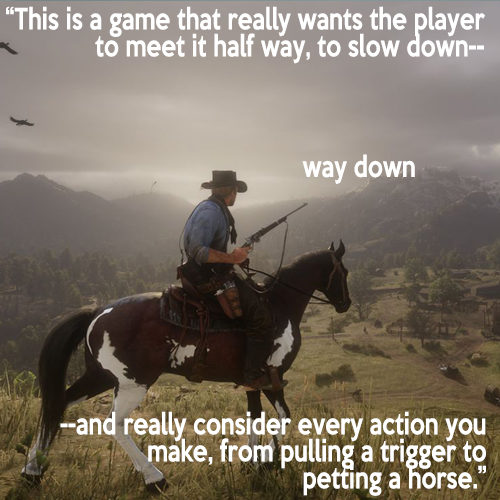
Image Source: Rockstar Games

And it’s complicated. Its mechanical complexity is at the core of a lot of the criticism against the game (surfacing from the expected and hollow criticism that comes with a game having to live up to a highly regarded predecessor) and I completely understand such criticism. In fact, I’d say that criticism is true. I don’t even know if it’s a game that I can recommend (a similar experience happened when I enjoyed the extremely flawed and derided Mass Effect: Andromeda)

What it seems to be is a game that really wants the player to meet it half way, to slow down––way down––and really consider every action you make, from pulling a trigger to petting a horse. Once I adjusted my speed and learned the language of the game, I absolutely fell in love with the sandbox of zen that makes up Red Dead Redemption 2 and even though I can sit down for two hours and basically get nothing done in the game, I enjoy every second of it.
3 Comments

Sketch Fridays #50 – Stan Lee – 1922-2018

Nov13
by DBethel on 13 November 2018

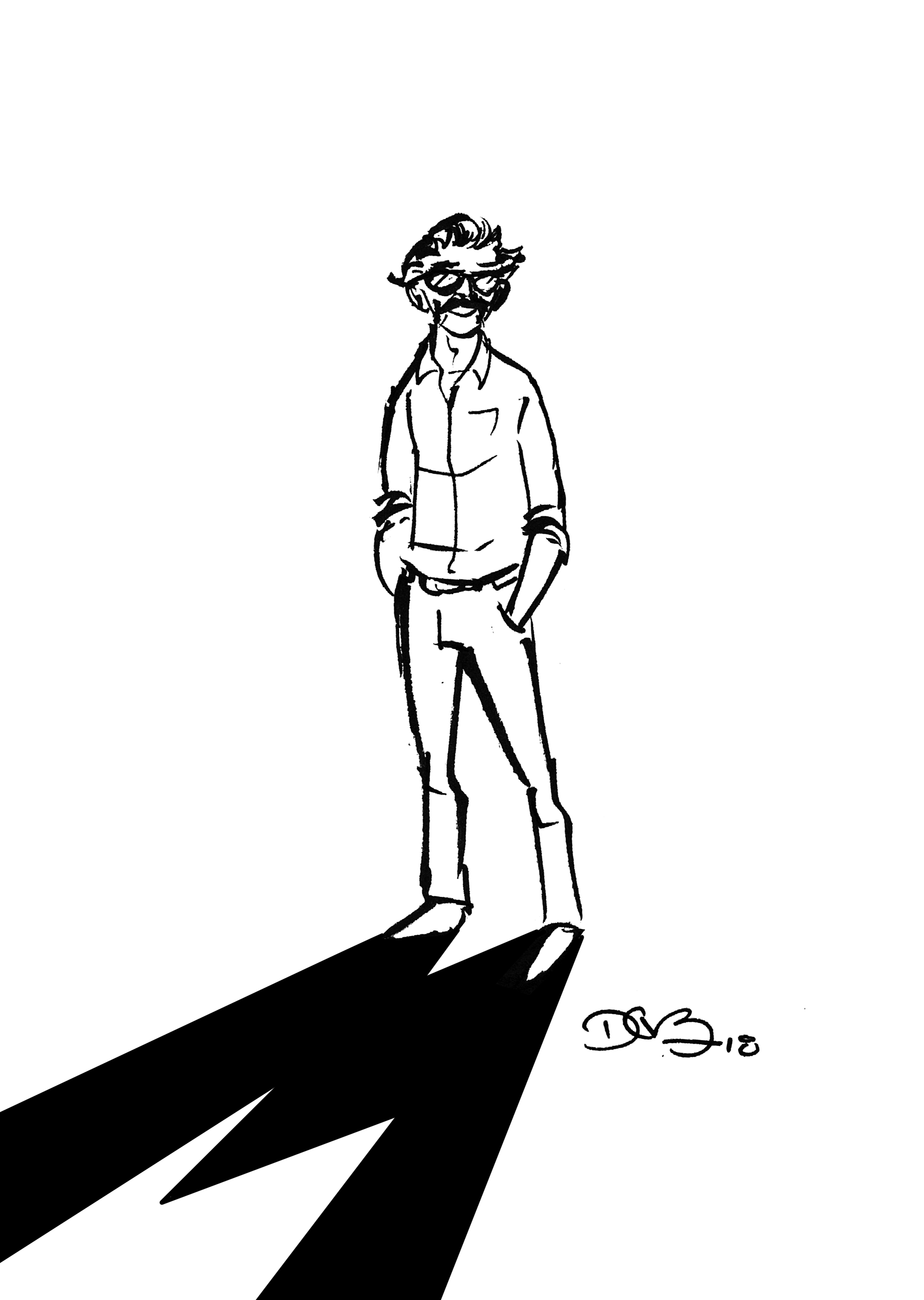
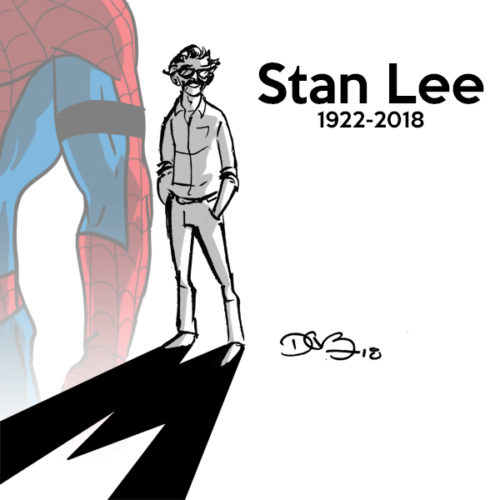
I remember seeing an interview with Stan Lee where he cited his biggest inspiration as being William Shakespeare. I took that to mean less the content and more the breadth of his work, the volume of output, and his lasting impact on culture and history.

While Stan’s work may not be as labored over by academics, published in leather-bound volumes for prestigious libraries, nor assigned as part of 11th grade English literature curricula, in terms of breadth, volume, and especially impact, Stan Lee definitely met that high standard and the world is better for it.

For those that don’t know, Stan Lee––with the help of many artists, especially Jack Kirby and Steve Ditko––built Marvel Comics into what it is today. Starting with The Fantastic Four, before making other now-famous characters like Iron Man, The Hulk, The X-Men, and what was no doubt his most personal favorite creation, Spider-Man, Lee and crew brought a humanity to superheroes that didn’t exist in the monolithic emblems of purity at their competitor, DC Comics, with the likes of Superman, Batman, and Wonder Woman.

It was Lee who built in the idea of continuity, of heroing with consequences, and made comics a medium.

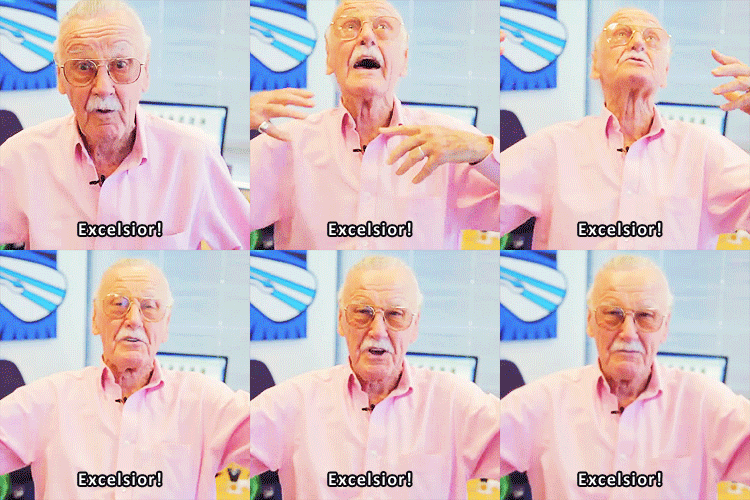
An edit I did for social media purposes.

He died at 95 years old and lived what can only be defined as a complete life, one without dangling threads (from what we could see, at least). The wake of his death should be a celebration of a life well-lived, leaving behind a legacy of generosity, ambition, kindness, and gratitude. There was only one moment, however, where I got a little choked up:

He changed the way we look at heroes, and modern comics will always bear his indelible mark. His infectious enthusiasm reminded us why we all fell in love with these stories in the first place. Excelsior, Stan.

— DC (@DCComics) November 12, 2018

This is a tweet from the official DC Comics Twitter account. Even though they posted a longer remembrance, it was this tweet that really took the wind out of me.

Stan Lee never worked for DC in any serious or extended capacity. Again, Lee spearheaded Marvel Comics into becoming what it is, forcing DC Comics and all that wanted to break into the industry, to step up their efforts tenfold. Since the sixties, the industry has been dominated by “The Big Two” and, at times, it was a friendly, playful rivalry––at other times, less so. But this tweet really captures the unity of comics creation, that we all want to succeed and, ultimately, we want everyone involved to elevate the industry so that the entire thing becomes something greater.

Despite all the nit-picking people can do, it is undeniable that Stan Lee did that, probably more than anybody else.

So, instead of saying “RIP” or even “Thank You,” I feel the best word to close it on would be the word that defined for ages Stan’s modus operandi:

 Comment 

The Week – 26 October 2018

Oct26
by DBethel on 26 October 2018

WATCHING:

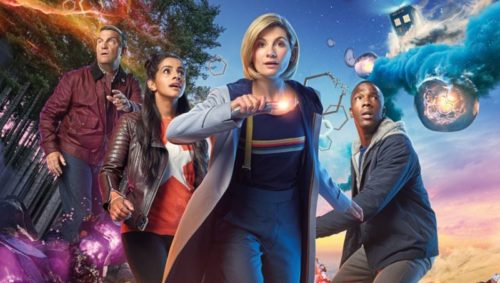
source: BBC

  • Doctor Who – Series 11

I’ve been an ardent fan of Doctor Who for awhile, and what I love about the show is how much it changes. In fact, change is built into the premise of the show. So, as much as I love a lead actor or head writer or general cast of characters, I tend to always hit a point where I start getting antsy for things to change.

The nice thing about Doctor Who is that regular change is built directly into the show. The main character, the titular Doctor, is an alien who doesn’t die but “regenerates”––their body ostensibly evaporates and reconstitutes into a new and different form (i.e., a new actor). And even though there are slight personality shifts and new ticks and mannerisms, the character of “the Doctor” is indelible throughout any casting changes. With that change comes a sense of renewal, of opportunity, of continuity. Partly because of this conceit of rejuvenation, it’s a show built around optimism and as dark as it can get (and it can get very dark, re: “Midnight”) it is always fun to watch because the Doctor not only always finds a way out of the problem, but does so with an eagerness and faith in the ability to make things better.

Doctor Who started in 1963 in England for the BBC and ran continuously until 1989 at which point it was cancelled. It remained so (with an attempted return in 1996) until 2005, and has been running steadily since. Up until last Christmas, thirteen actors have officially played the lead role of the Doctor for the show. However, with last year’s Christmas Special, current Doctor, Peter Capaldi, regenerated after three years in the role (which tends to be the average length of a Doctor’s tenure).

In his place steps Jodie Whittaker whose full premier as the Doctor started a few weeks ago. Some people had been voicing worry or outright hostility to the upcoming season because they haven’t enjoyed the previous work of the incoming showrunner, Chris Chibnall, or that the new Doctor is a woman when only men have played the role throughout its history. Luckily, anyone that actually loves the show––its tone, its writing, its silliness, its melodrama––will be calmed within five minutes of the first episode. So far, the season has been a delight, doing some cool new stuff including subtle nods to the show’s long history as well as pushing the show into challenging new realms of narrative. It’s invigorating to watch and I can’t wait to see where it goes.

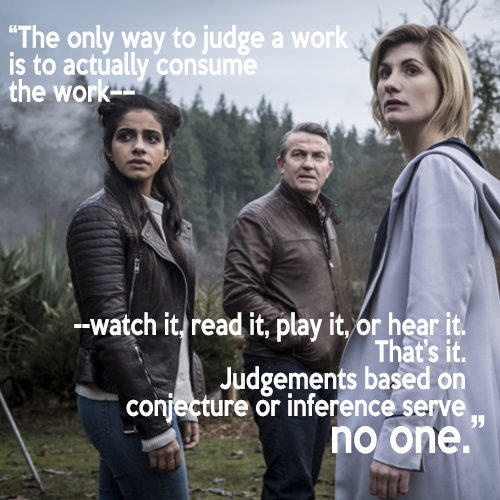
Image source: BBC

While this conversation could go off on a variety of tangents, the one I’ll address is fairly universal without falling into any political traps. I despise people that judge things––books, comics, movies, tv shows, video games––based on casting news or staffing news or trailers. DESPISE. I don’t like it because those judgements literally mean nothing. They mean nothing because the judge has not actually encountered the final text, and if you haven’t done that then you have no opinion worth a whit.

Even on my own nerd culture podcast, we try to not spend too much time talking about trailers because it’s just a trailer or it’s just a press release. The only way to judge a work is to actually consume the work––watch it, read it, play it, or hear it. That’s it. Judgements based on conjecture or inference serve no one. Remember when Heath Ledger was cast as the Joker in The Dark Knight? “Fans” on the internet lost their mind with despondency when, in actuality, they should approach such announcements with a slight nod and a “Hmm… That’s interesting.” Because that’s the only logical response to news of an actor getting a job. Remember when everyone saw the first image of Heath Ledger as the Joker? All the naysayers shut up. Fast.

While I get that the internet thrives on hot takes, so much of it is actually just hot air because it doesn’t mean anything. A bad trailer means nothing for a movie because, by definition, a trailer is not a movie. Just judge the trailer (if you must) or the casting news (if you must) but only for what they are, because those are the only things upon which you can confidently comment.

If you don’t want to watch the new season of Doctor Who because you don’t like who is cast in the role, then don’t watch it. But if you say it’s going to be (or already is) terrible because of who was cast in it, you literally don’t know what you’re talking about. However, if that’s the reason why you’re not watching the new season, the loss is wholly and completely on you, because it is fantastic so far.


LISTENING:

source: The Ringer

  • Halloween Unmasked – a limited series docu-podcast hosted by Amy Nicholson for The Ringer.

The movie that defined slasher movies, John Carpenter’s 1978 classic Halloween, turns forty this year. If you haven’t seen the film in a while (or at all), go back and take a look for the sake of the season! It’s a taut movie with no fluff (partly due to also having no budget) and it’s relatively bloodless. Pack on a few novel, nuanced, and thoughtful ideas that its progeny (both in-series and copycats) have completely missed or forsaken and you’ll find yourself reasonably impressed after its 90-minute run time.

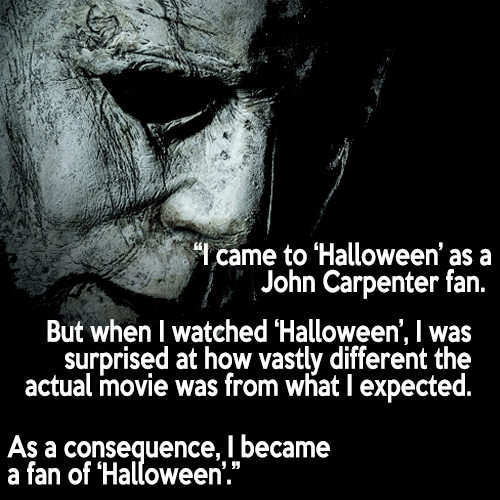
I came to Halloween as a John Carpenter fan––specifically of The Thing and Escape from New York––but when I watched Halloween I was surprised at how vastly different the actual movie was from what I expected. As a consequence, I became a fan of Halloween. Admittedly, I haven’t seen its sequels aside from Halloween III: Season of the Witch (but it was rented under pretense––we heard it was bad so we rented it to laugh at it) and part of me doesn’t want to because the first movie is so solid an experience.

However, a new movie has hit theaters with a John Carpenter score and Jamie Lee Curtis returning as the hunter rather than the prey, so it’s safe to say that my excitement is a bit stoked.

Image source: Universal Pictures

Further stoking occurred when I found Halloween Unmasked, an eight-part documentary podcast that’s mostly about Halloween and its cultural impact, though it does address the sequels and new movie, too.

What I like about it is how well it’s structured. It’s not a review podcast talking about what’s good and bad with each movie. Instead, it’s thematically constructed. The first few episodes are about the history of John Carpenter and how the first film got made, but after that it looks at the series holistically based around specific ideas. There’s an episode about psychology as it relates to the behavior of the monster of the series––Michael Myers (referred to as “the Shape” in the script)––as well as the behavior of the prominently featured psychologist character as well as our psychological response to Halloween and movies that do what it does. There’s an episode focusing on Jamie Lee Curtis, discussing her experience growing up a celebrity child, getting cast in Halloween, and her career since then. There’s also an episode about the film’s sequels and other slasher films it inspired (and what they got wrong). There’s even one about the fandom that has erupted from the smashing success of the first movie and how it has evolved over time.

Ultimately, the podcast is iterating on what has been happening a lot more in the last ten years or so: re-examining John Carpenter’s mark on cinema. While he started with strong box office receipts, he was met with a prolific string of “duds” in terms of returns on budget. To a point, he was regarded largely as a Hollywood failure despite having mounds of talent. He has always been regarded as a very thoughtful filmmaker, but many of his films seemed to miss the mark to connect with moviegoers upon release. However, critical retrospectives reveal what superfans already know––Carpenter’s works are more than superficial exercises, unlike a lot of other genre work. His films have a superficial value with regard to whatever genre they are playing within, but his movies are ultimately always trying to say something, usually about the human condition, and it is present––as Halloween Unmasked proves––in his work as early as Halloween.

Halloween Unmasked is exactly what I’m looking for in a non-fiction podcast about a specific subject––a thoughtful, well-written and researched look at a property, a show with something to say, just like Carpenter himself.

1 Comment
  • Page 62 of 112
  • « First
  • «
  • 60
  • 61
  • 62
  • 63
  • 64
  • »
  • Last »
  • Instagram
  • Facebook
  • YouTube
Privacy & Cookies: This site uses cookies. By continuing to use this website, you agree to their use.

To find out more, including how to control cookies, see here: Cookie Policy
  • Newest Comic
  • About
  • Archive
  • Links
  • Shop
  • YouTube

©2014-2026 D. Bethel | Powered by WordPress with ComicPress | Subscribe: RSS | Back to Top ↑